
7 Best Compliance Software for SaaS Companies in 2026

Key takeaways
- Understand the core concepts and terminology behind 7 Best Compliance Software for SaaS Companies in 2026.
- Learn practical steps to apply the guidance and stay audit-ready.
- See where SecureSlate can help centralize evidence, ownership, and ongoing compliance workflows.
Image source: Medium CDN
Running a SaaS company is thrilling. You’re building innovative products, scaling rapidly, and reaching customers globally. But amidst all that growth, there’s a lurking shadow: compliance. Data privacy, security frameworks, and industry regulations; it’s a lot to keep track of.
Getting and staying compliant can feel like a Herculean task. It involves endless documentation, constant monitoring, and the dreaded audit preparation. Without the right tools, it can consume countless hours and drain valuable resources. It’s a common pain point for many growing SaaS businesses.
This is precisely why compliance software has become indispensable. It transforms a complex, manual process into a streamlined, automated workflow. It saves you time, reduces stress, and helps you demonstrate a strong security posture to clients and auditors.
In this blog, we’ll explain what makes compliance software so critical for SaaS companies. Then, we’ll dive into a curated list of the 7 best compliance software platforms for SaaS companies in 2026. This will help you choose the ideal solution for your specific needs.
Related guides:
- Automated SOC 2 compliance: the shortcut every SaaS company needs
- Top 7 SOC 2 compliance software to take the pain out of audits
- The ultimate ISO 27001 guide
Why SaaS Companies Can’t Afford to Ignore Compliance
The modern digital landscape demands trust. Customers are increasingly concerned about how their data is handled. Regulators are introducing stricter rules, and fines for non-compliance are soaring. Ignoring compliance isn’t just risky; it’s a direct threat to your business.
A solid compliance program builds customer trust. It opens doors to new markets and enterprise clients who demand adherence to frameworks like SOC 2, ISO 27001, GDPR, and HIPAA. It also strengthens your internal security, making your company more resilient to cyber threats.
Manual compliance processes are notoriously inefficient. They lead to human error, missed deadlines, and a frantic scramble when audit time rolls around. This is where dedicated compliance software makes all the difference.
What Makes a Compliance Software “Best” for SaaS?
For SaaS companies, the best compliance software needs to offer more than just basic checklist management. Your infrastructure is dynamic. Your data is cloud-based. Your teams are agile. The software must reflect this reality.
Look for solutions that automate evidence collection. Continuous monitoring is also non-negotiable. Integration with your existing tech stack, like cloud providers and HR systems, is crucial for efficiency. User-friendliness and clear reporting are also key features.
The software should adapt to multiple frameworks. It also needs to provide real-time visibility into your compliance status. Ultimately, it should turn a manual headache into an automated breeze.
7 Best Compliance Software for SaaS Companies in 2026
Choosing the right platform can be tough. There are many options, each with its own strengths. We’ve compiled a list of the top 7 best compliance software solutions for SaaS companies. This should help you make an informed decision.
1. SecureSlate
SecureSlate is a modern compliance automation platform built specifically for SaaS companies. It simplifies the process of achieving and maintaining frameworks like SOC 2, ISO 27001, HIPAA, and GDPR. Its strength lies in real-time control monitoring, prebuilt policy libraries, and seamless integration with popular tools.
SecureSlate continuously tracks system configurations and user behavior to maintain compliance posture. It also offers a centralized dashboard to manage controls, audits, and risk, all from one place. With automated evidence collection and workflow triggers, it reduces the manual overhead typically involved in audits.
The platform is designed for speed and usability, making it a solid fit for both startups and scaling teams. Its plug-and-play integrations with AWS, Google Workspace, GitHub, Okta, and more allow fast onboarding and continuous syncing.
Key Features:
- Automated Control Monitoring: Keeps compliance status up-to-date in real time.
- Policy Library & Templates: Ready-to-use policies aligned with major frameworks.
- Audit Readiness Tools: Organizes and tracks documentation with auditor-friendly exports.
- Integration with SaaS Stack: Connects with key services like cloud providers and identity tools.
- Collaborative Dashboard: Central hub for managing team tasks, controls, and risks.
Pros:
- Built for SaaS companies with fast-changing environments.
- Real-time alerts help catch issues before audits.
- Supports multiple compliance frameworks out of the box.
- Easy setup with minimal configuration needed.
- Streamlined experience for internal teams and auditors.
Cons:
- Not suited for non-SaaS or heavily regulated industries.
- Enterprise-level customization is still limited.
2. Sprinto
Sprinto is an end-to-end compliance automation platform built for modern cloud-native companies. It’s designed to put your compliance program on autopilot. It handles everything from evidence gathering to risk management.
It integrates seamlessly with your existing cloud setup and applications. This allows for continuous monitoring of controls and real-time risk assessment. You get a complete overview of your security posture.
Sprinto offers pre-built compliance programs and automated workflows. It includes audit dashboards and training modules for employees. It’s truly a one-stop shop for continuous compliance.
Key Features:
- Continuous Control Monitoring: Real-time monitoring of internal security controls.
- Automated Evidence Collection: Gathers necessary documentation automatically.
- Comprehensive Dashboard: Provides real-time, interactive insights.
- Compliance Reporting: Generates audit-ready reports with out-of-the-box templates.
- Employee Training: Built-in modules to educate staff and document completion.
Pros:
- Intuitive user interface for easy navigation.
- Provides real-time risk scoring for proactive management.
- Centralized dashboard with pre-built and custom reports.
- Excellent customer support team.
- Streamlines user access privilege management.
Cons:
- Primarily cloud-focused; not ideal for on-premise setups.
3. Vanta
Vanta offers continuous compliance monitoring with always-on certifications. It’s a popular choice for SaaS companies aiming for certifications like SOC 2 and ISO 27001. It helps automate the compliance process from start to finish.
Vanta lets you use custom controls or pre-built ones across various frameworks. It focuses on automated evidence gathering and audit preparation. It integrates with your systems and apps.
It provides real-time status dashboards. You also get automatic reminders for due or failing controls. This helps ensure you stay on track.
Key Features:
- Automated Risk Monitoring: Continuous detection and evaluation of risks.
- Real-time Notifications: Alerts for potential issues and valuable insights.
- Adaptable Policy Templates: Customizable formats for various security policies.
- Cloud Gap Analytics: Identifies vulnerabilities in cloud configurations.
- Data Loss Prevention: Tools to help prevent sensitive data breaches.
Pros:
- Strong interface for automated testing and user access reviews.
- Centralized hub for security policies, practices, and controls.
- Prioritizes and evaluates possible risks effectively.
Cons:
- Some users report unreliable monitoring, with remediated vulnerabilities reappearing.
- Maintaining policies can be challenging at times.
4. Drata
Drata is another robust security compliance tool. It provides ongoing monitoring, evidence gathering, and audit preparedness. It supports many widely used compliance frameworks.
It features extensive control libraries and automatic mapping. Users have limitless evaluation modification options. It offers real-time visibility into your compliance readiness.
 Image from https://drata.com/
Drata also includes built-in self-risk evaluations. It supports role-based access controls for internal management. This makes it a comprehensive tool for compliance automation.
Key Features:
- Built-in Self-Risk Evaluations: Facilitates internal risk assessments.
- Role-Based Access Controls: Manages user permissions within the platform.
- Real-time Compliance & Security Info: Provides current status updates.
- Actionable Analytics: Insights to guide decision-making.
- Employee Training: Offers security awareness courses.
Pros:
- Reusable controls across multiple frameworks save time.
- Proprietary control libraries for broad coverage.
- Customizable guidelines for specific compliance needs.
- Includes training modules for employee awareness.
Cons:
- Can be difficult to integrate with certain external security and compliance tools.
- Some reported issues with its evidence collection feature.
5. LogicGate
LogicGate offers a comprehensive solution to support security compliance frameworks. It centralizes data for audit, policy, and risk management. It helps organizations make more informed decisions.
It provides risk quantification and control evaluations. It also assists with audit preparation and detailed reporting. LogicGate focuses on engaging graphics and predictive risk ratings.
The platform includes automation for various compliance procedures. Automated log management and evidence gathering streamline workflows. This makes compliance less manual and more efficient.
Key Features:
- Integrated Risk Register: Facilitates collaborative risk management.
- Customizable Dashboards: Pre-built and customizable reports for insights.
- Real-time Risk Monitoring: Provides immediate visibility into risks.
- Automated Compliance Procedures: Streamlines repetitive compliance tasks.
- Automated Log Management: Simplifies evidence collection and storage.
Pros:
- Ability to create custom forms without requiring coding.
- Effective and flexible reporting features.
- Easy record-keeping and documentation processes.
Cons:
- Lacks a global search function for finding information quickly.
- Doesn’t offer a sandbox mode to test changes before deployment.
6. AuditBoard
AuditBoard excels at collecting and organizing audit, risk, and compliance data. This makes reporting and monitoring much easier. It enhances insight into security weaknesses and compliance status.
It provides interactive dashboards and robust reporting. AuditBoard automates the scheduling of repetitive requests and assessments. This allows you to build a more effective compliance program.
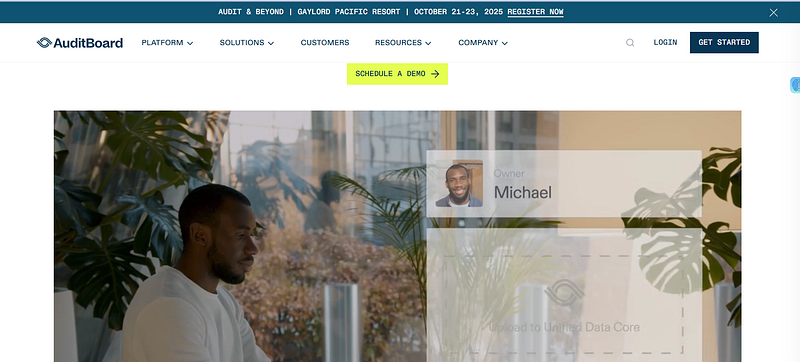 Image from https://auditboard.com/
The platform offers customizable workflows. These can automate routine compliance duties. It also includes strong collaboration tools for efficient communication across teams.
Key Features:
- Customizable Workflows: Automate routine compliance tasks.
- Collaboration Tools: Facilitate efficient communication and management.
- Comprehensive Audit-Friendly Reporting: Detailed reports for auditors.
- Customizable Risk Assessment Modules: Tailor risk evaluations.
Pros:
- Implements a clear scoring methodology for survey results.
- Ability to send questionnaires to vendors based on criticality.
- Offers customizable compliance policy templates.
- Automates data gathering for external audits, simplifying the process.
Cons:
- Somewhat restricted risk management capabilities compared to dedicated tools.
- Cannot use labels instead of unique IDs for bulk uploads, which can be cumbersome.
7. Hyperproof
Hyperproof simplifies the entire process of producing, reviewing, and submitting compliance reports. It streamlines collaborative processes for security and report assessments. It centralizes the collection of evidence effectively.
This platform offers extensive integrations. It also provides version control and robust permissions management. Automated reminders help ensure tasks are completed on time.
Hyperproof features integrated reporting modules. It offers a single spot for managing all compliance documents. It also provides 24/7 monitoring of your compliance status.
Key Features:
- Integrated Reporting Modules: Streamlined report generation.
- Centralized Document Management: One place for all compliance documents.
- 24/7 Compliance Monitoring: Continuous oversight of your security posture.
- Automated Workflows: Customizable modules for efficient compliance management.
- Real-time Compliance Actions: Monitors actions and status in real time.
Pros:
- Strong audit scoping capabilities.
- Features for intelligent risk assessment.
- Efficient audit evidence management.
- Tracks variations in common control implementations.
Cons:
- Offers somewhat restricted customization functionality.
How to Choose the Right Compliance Software for Your SaaS Company
Choosing compliance software isn’t just another item on your to-do list. It’s a big call. The right compliance platform can make audits smooth and stress-free. The wrong one? That’s hours lost, money wasted, and a frustrated team.
Here’s what to look for before you commit:
Does it Cover the Frameworks You Need?
Start with the basics — does it support SOC 2, ISO 27001, HIPAA, GDPR, PCI DSS, NIST, or whatever frameworks your business actually needs to follow? Don’t assume. Check the fine print.
Is it Keeping Up with the Rules?
Regulations change. A lot. You want a platform that updates regularly so you’re not left chasing changes after the fact. Ask how often the tool is updated and how fast it reacts to new laws or security standards.
Will it Help You During Audits?
Some tools just track stuff. Others guide you through the actual audit process — recommending auditors, helping prep docs, and answering questions when you’re knee-deep in it. Go for the latter.
Does it Play Nice with Your Stack?
Does it integrate with your cloud provider? HR system? GitHub? Google Workspace? The more it connects with tools you already use, the less time your team spends on manual work.
Is it Easy to Use (Really)?
You shouldn’t need a week of training just to get started. A clean interface and simple setup mean faster onboarding — and fewer complaints from your team.
Is Support Actually Helpful?
When things go sideways (and they will), how responsive is support? Can you get a real person? Is there onboarding help, guides, or live chat when you need answers fast?
Does the Price Make Sense for Your Stage?
Are you paying per user, per feature, or flat monthly? Can you scale without your bill doubling overnight? Find something that matches your growth and budget.
Conclusion
Staying on top of compliance demands is more than just a regulatory burden; it’s a strategic advantage for any SaaS business. However, ensuring all your employees, procedures, and policies adhere to countless rules can be incredibly challenging.
With the correct compliance software , you can automate your security procedures. You can also ensure adherence to all regulations with minimal manual effort. It’s truly a game-changer for modern SaaS businesses.
Ready to Streamline Compliance?
Building a secure foundation for your startup is crucial, but navigating the complexities of achieving compliance can be a hassle, especially for small teams.
SecureSlate offers a simpler solution:
- Affordable: Expensive compliance software shouldn’t be a barrier. Our affordable plans start at just $284/month.
- Focus on Your Business, Not Paperwork: Automate tedious tasks and free up your team to focus on innovation and growth.
- Gain Confidence and Credibility: Our platform guides you through the process, ensuring you meet all essential requirements and giving you peace of mind.
Disclaimer (legal note)
SecureSlate is not a law firm, and this article does not constitute or contain legal advice or create an attorney-client relationship. When determining your obligations and compliance with respect to relevant laws and regulations, you should consult a licensed attorney.
Need compliance without the complexity?
SecureSlate automates ISO 27001, SOC 2, GDPR, HIPAA, and more. Built for growing teams. See it in action.
No credit card required
May 4, 2026 · Tools & SoftwareComparisons and reviews
5 best GRC software solutions for enterprise teams in 2026
SecureSlate Team
May 4, 2026 · Tools & SoftwareComparisons and reviews
The best compliance audit software for 2026
SecureSlate Team
May 4, 2026 · Tools & SoftwareComparisons and reviews
The best compliance management software for 2026
SecureSlate Team
