
Cloud Compliance Updates for 2026: What’s Changed and How to Respond

Cloud compliance is no longer something you can treat as a one-off task. In today’s fast-moving digital world, especially in 2026, it has become a daily priority, and for good reason.
The rules and regulations around data protection have changed significantly. With new global laws coming into effect, governments around the world are cracking down harder on how businesses store and manage data in the cloud.
At the same time, new technologies like artificial intelligence are introducing both opportunities and risks. Combine that with a rise in cyberattacks, and it’s clear companies can no longer afford to take a passive approach.
Whether you’re running a lean startup or managing a multinational enterprise, the cloud has become a key part of doing business. It’s not just a technical decision anymore; it’s a strategic one. The way you handle cloud compliance can shape your company’s reputation, customer trust, and bottom line.
This shift means staying informed, adapting your processes, and building compliance into your day-to-day operations. In the sections ahead, we’ll break down what’s changed, how those changes affect your organization, and what steps you can take now to stay compliant and avoid expensive penalties later.
What Is Cloud Compliance in 2026?
Cloud compliance refers to adhering to laws, standards, and policies that govern the storage, processing, and transfer of data in cloud environments. In 2026, this includes both traditional regulations (like GDPR and HIPAA) and newer, cloud-native frameworks (such as ISO/IEC 27017 and CSA STAR).
Why does it matter now more than ever?
Cloud compliance is under more pressure than ever before, and the risks of ignoring it are only growing.
Regulators are cracking down. In 2024, GDPR fines alone topped €2.7 billion across the EU. That kind of financial impact can cripple even well-established companies.
Meanwhile, privacy laws are expanding rapidly. More than 25 U.S. states now have their own unique data regulations, making it harder for businesses to keep up without a clear, flexible compliance strategy.
And as technology evolves, the challenges grow. With AI, edge computing, and multi-cloud systems becoming standard, companies can’t afford to treat compliance as an afterthought. It needs to be built into the core of how systems are designed and run.
GDPR Compliance for SaaS: What Every Founder Needs to Know
Keep Your SaaS Business on the Right Side of EU Law
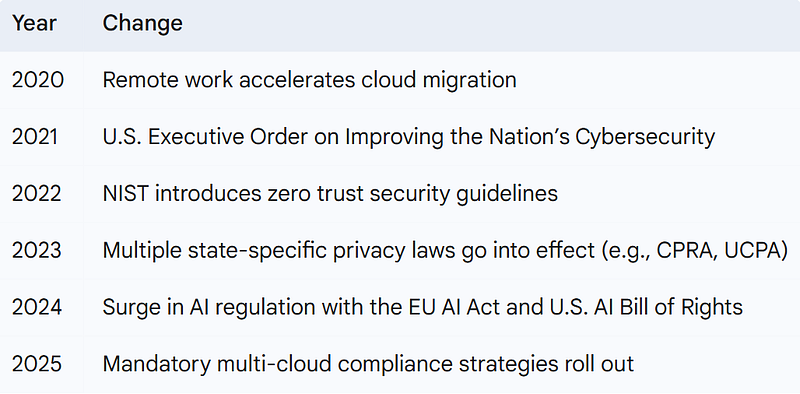
Key Changes in Cloud Compliance Since 2020
Since 2020, compliance has undergone a massive transformation. Here’s a quick timeline:
Rise of Region-Specific Cloud Mandates
Fragmented Regulatory Landscape
The world hasn’t settled on a single, global cloud compliance framework yet. Instead, individual regions are creating their own specific mandates, reflecting local privacy concerns, legal traditions, and security priorities.
UK’s “Secure-by-Default” Mandate
The National Cyber Security Centre (NCSC) requires that any cloud platform handling public sector data must be secure by design.
This means security measures aren’t optional extras but are built into the infrastructure from the start. This ensures government data in the cloud remains protected against evolving cyber threats.
EU’s GDPR+ and AI Transparency
The EU continues to strengthen its data protection framework by proposing GDPR+ enhancements. Notably, new rules focus on AI transparency, requiring companies to clearly explain how AI systems collect, process, and use personal data.
This aims to build trust and accountability around automated decision-making in cloud environments.
U.S. State-Level Privacy Laws
Unlike the EU’s centralized GDPR, the U.S. sees a patchwork of privacy laws at the state level. California’s CPRA, Virginia’s CDPA, and Utah’s UCPA impose stringent controls on data collection, consent, and breach notification.
These laws demand organizations carefully track where data resides and ensure compliance with multiple, sometimes overlapping, rules.
More Stringent Vendor Risk Management
Enhanced Shared Responsibility
The traditional shared responsibility model between cloud providers and customers has evolved. Regulators now expect organizations to take full ownership of third-party risk, rather than assuming the cloud provider handles all security responsibilities.
Comprehensive Vendor Vetting
Organizations must conduct thorough due diligence before engaging with third-party cloud providers. This includes reviewing security certifications, evaluating data processing methods, and investigating the vendor’s history of compliance and incident management.
Master Vendor Management Compliance: The Ultimate Guide to Protecting Your Business!
Learn how to master vendor risk management compliance
Continuous Monitoring and Transparency
Compliance requires ongoing visibility into vendor activities. Companies should maintain up-to-date records of how vendors handle data, monitor for any security gaps, and be prepared to act quickly in case of a breach or non-compliance.
Regular Risk Assessments
Ongoing assessments such as audits, penetration tests, and risk scoring help organizations detect new vulnerabilities introduced by vendors. These activities demonstrate to regulators and stakeholders that risks are actively managed.
Accountability for Breaches:
Even if a security incident occurs due to a cloud service provider’s fault, your organization remains accountable to customers and regulatory bodies. This underscores the importance of managing vendor risk proactively.
Top 11 Cloud Compliance Updates to Know in 2026
1. AI-Powered Compliance Checks
AI now handles about 60% of compliance reviews. That speeds things up and cuts down manual work, but it can also throw up a lot of false alarms that you might not be ready to address. Plus, some AI decisions aren’t easy to understand.
Tip: Pick tools with clear, explainable AI and keep humans involved to review results.
2. Managing Compliance Across Multiple Clouds
Most companies use two or more cloud providers like AWS, Azure, or Google Cloud. Each has different rules, making compliance trickier. The best move? Stick to shared standards like the Cloud Security Alliance’s Cloud Controls Matrix (CSA CCM).
Bonus: Clearly document who’s responsible for what on each platform.
3. Zero Trust Is Now Mandatory
Zero trust architecture isn’t optional in 2026 — it’s a requirement from regulators. This means: constant identity checks, minimal access rights, and segmented networks to reduce risk.
Look for: Cloud-native zero trust solutions such as Google BeyondCorp or Microsoft Entra.
4. Build Compliance Into DevOps
Instead of seeing compliance as a roadblock, weave it into your development process. Use tools like Infrastructure as Code (IaC) scanners and integrate compliance checks into your deployment pipelines. Automatically keep audit logs.
Framework to explore: DevSecOps models like OWASP SAMM.
5. Continuous System Monitoring
Regulators want you watching your cloud systems and data all the time. This means using Cloud Security Posture Management (CSPM) tools that alert you about policy violations and provide live dashboards to track your audit readiness.
Popular tools: Wiz, Orca, Prisma Cloud.
6. Automate Evidence Collection
Manually collecting logs and documents for audits is outdated. Modern compliance demands real-time tracking of control status, continuous evidence gathering, and instant gap reports.
Tools to try:
- SecureSlate: Great for automated control mapping and audit prep.
- Drata & Vanta: Popular with startups and mid-sized companies.
Pro tip: Connect these tools to your cloud and IT services (AWS, Azure, GitHub, Okta) via webhooks to automate data flow.
Top 7 Automated Compliance Tools to Boost Your Business in 2024
Discover top compliance tools for peace of mind
7. Data Residency and Sovereignty Are More Complex
It’s not enough to store data “in the EU” anymore. You must know exactly where your data lives and which local laws apply. For example, France’s “Cloud de Confiance” requires using cloud providers certified by their national agency.
Action: Review where your sensitive data is stored and who has access, especially for HR, finance, or health records.
8. Faster Breach Notification Rules
Regulators demand quicker alerts when breaches happen. Proposed GDPR updates call for notifications within 12 hours. In the U.S., the SEC requires public companies to disclose breaches within 4 days. Australia may cut the window to 72 hours.
Must-have: Incident detection and reporting tools built right into your compliance processes.
9. Boards Are More Accountable
Compliance isn’t just a CISO issue anymore — boards must take responsibility. Expect to provide quarterly risk updates, get executive sign-offs, and maintain audit logs that show leadership decisions.
Tip: Use tools that record timestamps and track policy changes for clear documentation.
10. SaaS Companies Need Specialized Frameworks
Generic standards like ISO or NIST aren’t enough for SaaS businesses. You’ll need certifications like SOC 2 for customer trust, ISO 27017 for cloud controls, and FedRAMP or StateRAMP if working with government clients.
Did you know? Over two-thirds of SaaS buyers now require proof of these specific compliances before signing deals.
11. ESG Is Part of Cloud Compliance Now
Environmental, Social, and Governance (ESG) goals are influencing compliance too. This means reducing cloud carbon footprints, using data centers powered by renewable energy, and being transparent about data ethics and AI use.
Example: Google Cloud offers built-in Carbon Footprint Reporting to help companies measure their impact.
How to Stay Compliant in the Ever-Changing Cloud Landscape
Navigating the rapid shifts in cloud compliance can feel overwhelming. But with a clear strategy, you can keep pace and reduce risk. Here’s a practical plan to help you stay on top.
Partner with the Right Cloud Service Provider (CSP)
Your choice of cloud provider matters more than ever. Look for providers that carry robust compliance certifications like SOC 2, ISO 27001, or PCI DSS. These attestations show they meet industry standards for security and data protection.
How to Get SOC 2 Certification and Build Strong Customer Trust
Fast Track Your Compliance Journey
Also, make sure your CSP offers clear, transparent documentation on the shared responsibility model. Knowing exactly what parts of security you handle versus what the provider manages is critical to avoid gaps.
Native compliance tools are a big plus. For example, AWS offers Artifact for easy access to compliance reports, while Azure provides Purview for data governance. These tools simplify your own compliance efforts.
Some top picks:
- AWS: Known for extensive compliance services and global reach.
- Azure: Excels with enterprise integrations and hybrid cloud options.
- Google Cloud: Stands out for sustainability initiatives and trustworthy AI tools.
Align Internal Teams Around Compliance
Compliance is no longer just an IT or security department concern. It requires collaboration across the entire organization.
Your IT and security teams are responsible for putting controls in place and continuously monitoring them. Legal teams interpret the complex landscape of laws and regulations, ensuring policies stay up to date.
HR plays a crucial role too, by enforcing employee policies that affect compliance; think training, access controls, and privacy protocols.
At the leadership level, executives define the company’s risk tolerance and allocate budgets to support compliance programs.
To keep everyone coordinated, hold quarterly compliance meetings that bring these groups together. Using shared dashboards and clear reporting helps make those meetings productive and ensures everyone understands the company’s compliance status.
Taking these steps will position your business to meet the demands of 2026’s cloud compliance environment, minimizing risk and strengthening trust with customers and regulators alike.
Common Cloud Compliance Mistakes in 2026
Cloud compliance is complex, and even experienced organizations stumble. Being aware of common missteps can save you from costly errors and regulatory headaches. Here are some pitfalls to watch out for:
Relying Solely on Your Cloud Provider for Compliance
Many assume that because their cloud provider is compliant, they are automatically covered. This is a dangerous misconception. Compliance follows a shared responsibility model
While providers secure the infrastructure, you must secure your data, configurations, and applications. Ignoring your side of the equation can lead to serious gaps and penalties.
Using Outdated Templates for Policies or Risk Assessments
Compliance frameworks and regulations evolve rapidly. Sticking with old policy documents or risk assessment templates can leave you exposed to new requirements. Always update your documentation regularly to reflect the latest standards, technologies, and threats.
The Ultimate Vendor Risk Management (VRM) Guide to Protect Your Business
Securing Your Vendor Ecosystem for Your Security Posture.
Ignoring Third-Party Vendors or Shadow IT
Your compliance isn’t limited to your own systems. Third-party vendors and shadow IT (unauthorized apps or services used by employees) can introduce vulnerabilities and compliance risks.
Failing to monitor and manage these external factors creates blind spots that regulators frown upon.
Failing to Log and Store Evidence Continuously
Manual or sporadic evidence collection is outdated and risky. Regulators expect continuous logging and storage of compliance evidence.
If you can’t produce proof of controls operating effectively at any time, you risk fines and audit failures. Automate your evidence collection to stay audit-ready.
Delaying Breach Disclosure Without Legal Backup
When a breach occurs, hesitation can be costly. Delaying notification without legal advice or a clear incident response plan can violate increasingly strict laws. Always have legal counsel involved and act quickly to meet mandatory reporting deadlines to regulators and affected parties.
Avoiding these mistakes will strengthen your compliance posture and help you navigate the evolving cloud regulations of 2026 with confidence.
Conclusion
Cloud compliance in 2026 is no longer a static checklist. It’s a dynamic, risk-based, and multi-disciplinary practice. From AI-driven audits to board accountability and ESG considerations, the cloud compliance landscape is evolving fast.
And with the right tools, partners, and mindset, you can turn compliance from a burden into a competitive advantage.
Ready to Streamline Compliance?
Building a secure foundation for your startup is crucial, but navigating the complexities of achieving compliance can be a hassle, especially for small teams.
SecureSlate offers a simpler solution:
- Affordable: Expensive compliance software shouldn’t be a barrier. Our affordable plans start at just $259/month.
- Focus on Your Business, Not Paperwork: Automate tedious tasks and free up your team to focus on innovation and growth.
- Gain Confidence and Credibility: Our platform guides you through the process, ensuring you meet all essential requirements and giving you peace of mind.
Need compliance without the complexity?
SecureSlate automates ISO 27001, SOC 2, GDPR, HIPAA, and more. Built for growing teams. See it in action.
No credit card required
Mar 24, 2026 · GDPR
Privacy Compliance Checklist: Ensuring Data Security and Legal Adherence
SecureSlate Team
Mar 15, 2026 · GDPR
How to Secure Data Privacy and Stop Breaches
SecureSlate Team
Mar 12, 2026 · GDPR
HealthHeaven Achieves Seamless GDPR Compliance and Strengthens Data Privacy with SecureSlate
SecureSlate Team