 Image from pexels.com
Related guides:
Key takeaways
- What Is a Cybersecurity Budget: A cybersecurity budget is the portion of a company’s overall IT or operational budget that is allocated specifically to protect its digital infrastructure, data, and systems from cyber threats.
- What to Consider in Your Cybersecurity Budget: Key: As businesses continue to face evolving cyber threats in 2025, building a solid cybersecurity budget is more important than ever.
- Technology, Software, and Hardware: This foundational element involves investing in the core tools and infrastructure that protect digital assets.
Cybersecurity budget isn’t just about defense, it’s about strategic advantage. Gartner forecasts a 15% spike in global security spending, while Forrester calls this the year of CISO fiscal accountability.
Boards want results. CFOs want proof. And security leaders are expected to deliver both. With AI, machine learning, and quantum computing reshaping the threat landscape, the pressure is on to invest wisely, balancing risk, innovation, and cost-effectiveness.
Whether you’re fine-tuning an enterprise-level security roadmap or building a leaner, smarter defense strategy, this blueprint will help you cut the noise, prioritize spending, and make cybersecurity a driver of business success.
What Is a Cybersecurity Budget?
A cybersecurity budget is the portion of a company’s overall IT or operational budget that is allocated specifically to protect its digital infrastructure, data, and systems from cyber threats. It covers everything from firewalls and endpoint protection to incident response plans, employee training, compliance efforts, and third-party security tools.
In practical terms, a cybersecurity budget reflects the investment an organization makes to reduce cyber risk and ensure business continuity. This includes both proactive measures (like threat detection and vulnerability management) and reactive ones (such as breach response and recovery).
Depending on the size and nature of the business, a cybersecurity budget may include:
- Technology : Security software, hardware, and tools (e.g., antivirus, SIEM, encryption).
- People : Salaries for internal security teams or payments to external consultants.
- Processes : Risk assessments, audits, compliance documentation, and policy development.
- Training : Employee awareness programs to reduce human error, which remains a top cause of breaches.
- Incident Response : Tools and services to respond quickly and effectively to security incidents.
A well-structured cybersecurity budget isn’t just about spending more, it’s about spending smart, aligning investments with real business risks, compliance requirements, and evolving threat landscapes.
What to Consider in Your Cybersecurity Budget: Key Components
As businesses continue to face evolving cyber threats in 2025, building a solid cybersecurity budget is more important than ever. While software, hardware, services, staffing, and training make up the bulk of most cybersecurity budgets, other critical areas also need attention.
Here’s a clear breakdown of the key components that should be part of every cybersecurity budget:
Technology, Software, and Hardware
This foundational element involves investing in the core tools and infrastructure that protect digital assets. Key line items in a cybersecurity budget for technology typically feature:
- Network Security: Firewalls, intrusion detection and prevention systems (IDPS), secure web gateways, and network segmentation tools are crucial investments.
- Endpoint Security: Solutions like antivirus/anti-malware, endpoint detection and response (EDR), and extended detection and response (XDR) are essential for protecting devices, requiring significant budget consideration.
- Identity and Access Management (IAM): Managing user identities, implementing strong authentication (including MFA), and controlling access are vital functions supported by the security budget.
- Cloud Security: As cloud adoption grows, allocating funds within the cybersecurity budget for CASB, CWPP, and CSPM solutions is increasingly important.
- Data Security: Encryption tools, data loss prevention (DLP), and secure backup systems are necessary investments to safeguard sensitive information.
- Vulnerability Management: Tools for scanning, assessing, and managing vulnerabilities are key to proactive security and should be funded appropriately.
- SIEM / SOAR: Platforms for collecting, analyzing, and automating responses to security alerts represent a core part of many security budgets.
- Hardware: Investment in secure servers, workstations, and keeping existing infrastructure updated is a physical aspect addressed by the cybersecurity budget.
Cybersecurity Services
Leveraging external expertise can significantly enhance an organization’s security posture and is a valuable use of the cybersecurity budget. This category includes:
- Managed Security Service Providers (MSSPs): Outsourcing security monitoring, threat detection, and incident response can optimize security spending.
- Vulnerability Assessments and Penetration Testing: Regularly scheduled testing helps identify weaknesses before attackers do and requires budget allocation.
- Third-Party Risk Management: Assessing and mitigating risks associated with vendors and partners is a crucial, funded activity.
- Incident Response Retainers: Having pre-contracted expert assistance available is a wise financial preparedness measure.
- Virtual CISO (vCISO) Services: Access to experienced cybersecurity leadership on a flexible basis can be a cost-effective use of the budget for smaller or growing organizations.
- Security Audits and Compliance Assessments: External validation of security controls and regulatory adherence requires dedicated funding.
Personnel
The human element is crucial, and staffing costs form a significant portion of any cybersecurity budget. Budgeting for skilled professionals is essential and covers:
- Salaries and Benefits: Compensation for internal security staff, from analysts to the CISO, is a primary component of the budget.
- Recruitment Costs: Expenses associated with finding and hiring qualified cybersecurity professionals also impact budget needs.
- Continuing Education and Certifications: Investing in training to keep the security team’s skills current is a necessary ongoing expenditure.
Training and Awareness
Since the human element is often targeted, educating the entire workforce is vital and must be supported by the cybersecurity budget. This involves:
- Security Awareness Programs: Regular training for all employees on recognizing threats like phishing is a fundamental budget item.
- Simulated Phishing Attacks: Testing employee vigilance through simulations helps measure effectiveness and justify training spend.
- Role-Based Security Training: Providing specific training tailored to different roles ensures targeted and efficient use of training funds.
Compliance and Risk Management
Meeting regulatory requirements and proactively managing risk are ongoing processes that demand financial resources within the security budget:
- Compliance Tools and Services: Solutions and expertise to help adhere to relevant regulations require specific budgetary allocation.
- Risk Assessments: Regularly identifying and evaluating potential cybersecurity risks is a foundational, funded activity.
- Framework Implementation: Costs associated with adopting and maintaining recognized frameworks should be included.
- Third-Party Risk Management Programs: Resources for vetting and monitoring the security posture of suppliers are crucial for a complete security investment plan.
Incident Response and Contingency Planning
Preparing for the inevitable is a critical part of cybersecurity resilience and must be addressed in the budget. This includes:
- Developing and Testing Incident Response Plans: Creating and practicing procedures requires time and potentially external expertise.
- Forensic Investigations: Budgeting for expert analysis after an incident is a necessary provision.
- Public Relations and Legal Counsel: Costs associated with managing communication and legal aspects are emergency expenses to consider.
- Backup and Disaster Recovery: Investing in robust systems to ensure business continuity is a non-negotiable part of the budget.
- Contingency Funds: Allocating resources for responding to unforeseen threats provides essential flexibility.
Cyber Insurance
Transferring some of the financial risk associated with cyber incidents through dedicated policies is a recognized best practice and a line item in the security budget.
Emerging Technologies and Strategic Initiatives
As threats evolve, a forward-thinking budget should also consider investment in newer areas:
- AI/ML Security Tools: Solutions leveraging AI for enhanced threat detection are an emerging area for funding.
- Zero Trust Architecture: Shifting to a continuous verification model is a significant strategic investment.
- IoT, OT, and IoMT Security: Specific measures for connected devices require dedicated budget attention.
- API Security: Protecting the interfaces that enable data exchange is increasingly important.
Effectively allocating a cybersecurity budget requires a thorough understanding of the organization’s specific risks, regulatory obligations, and business objectives. A risk-based approach, prioritizing investments where they will have the greatest impact, is key to building a strong and defensible posture within financial constraints.
How to Build a Robust Cybersecurity Budget in 2025
Crafting a solid cybersecurity budget isn’t just about listing expenses. It’s a strategic process that requires a clear understanding of your current security posture, future goals, and the risks your organization faces. You also need to communicate value to leadership and ensure your spending is aligned with business priorities.
Here’s a practical, step-by-step guide to help you build a cybersecurity budget that works and gets approved.
1. Evaluate Your Current Security Posture
Begin with a comprehensive audit of your existing cybersecurity environment. Review policies, technologies, security protocols, and past incidents to pinpoint gaps and vulnerabilities.
Use the following methods to gather accurate insights:
- Run vulnerability scans
- Conduct risk assessments and compliance checks
- Interview key personnel across departments
- Collect user feedback and perform security behavior audits
The goal is to map out your current maturity level and uncover blind spots, both technical and human.
2. Set Clear Priorities and Strategic Objectives
Once you’ve established your baseline, define what you’re aiming to improve. Align cybersecurity objectives with overarching business goals. Are you trying to speed up incident response times? Strengthen cloud security? Prepare for compliance audits?
Use data from:
- Threat intelligence feeds
- Emerging industry trends
- Regulatory developments
- Forecasts on evolving technologies like AI and quantum computing
This will help you prioritize initiatives and decide where to direct your funding.
3. Organize Spending by Category
Divide your cybersecurity budget into logical categories to create structure and simplify oversight. This also helps with cost forecasting and ROI analysis.
Here’s a sample breakdown:
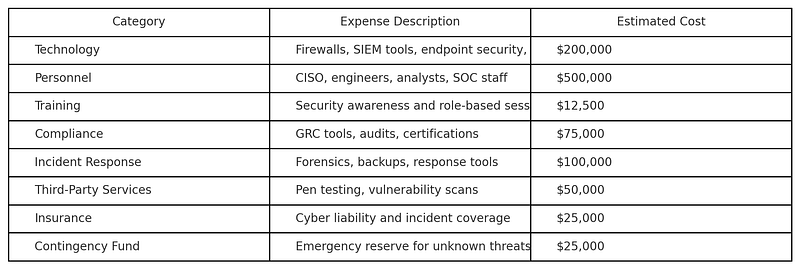
Research vendor costs, compare tools, and gather pricing benchmarks before finalizing estimates.
4. Justify Spending With Risk-Based Logic
Executives need to understand why certain areas require more funding than others. Avoid technical jargon; focus on business risk, impact, and cost avoidance.
Examples:
- This $75K investment in endpoint protection reduces the risk of ransomware by 65%, potentially saving us over $500K in downtime and legal fees.
- Automating compliance monitoring saves 300+ hours per year, allowing our team to focus on critical security tasks.
Translate cybersecurity expenses into risk reduction and efficiency gains. This helps leadership grasp the ROI more clearly.
5. Build an Implementation Timeline
Don’t just list line items. Attach them to a clear roadmap with deliverables and timelines. Break projects into milestones, prioritize based on urgency and value; and assign ownership across departments.
This approach:
- Makes it easier to track progress
- Boosts confidence among leadership
- Enables smoother execution across teams
6. Present the Budget Strategically
When presenting to executives or the board, focus on clarity, business impact, and storytelling. Use real-world examples or recent incidents to highlight potential risks and the value of prevention.
Key points to include:
- How investments support business continuity and reduce risk exposure
- Opportunities to reduce spending by consolidating tools or removing redundancies
- Potential revenue benefits, like unblocking enterprise deals or meeting compliance for high-value clients
- Consequences of underfunding security: use data or case studies to illustrate
Keep it focused on outcomes, not just expenses.
7. Incorporate Feedback and Stay Flexible
Once you’ve presented your budget, expect feedback and adjustments. Leadership may suggest reallocation or request deeper justification for certain areas. Be open to revisions, but stay focused on your strategic priorities.
Cybersecurity is a moving target; threats change, regulations evolve, and business needs shift. Build flexibility into your budget to accommodate these realities, and conduct annual (or quarterly) reviews to refine spending as needed.
Where SecureSlate Fits in Your Cybersecurity Budget
Smart cybersecurity spending starts with knowing your risks and works best when the tools you invest in deliver more value for less effort. If you’re working with a tight budget, SecureSlate is a powerful all-in-one platform that helps you stay secure and compliant without driving up costs.
SecureSlate automates the heavy lifting: from continuous control monitoring and seamless tech stack integration to collecting audit-ready evidence with zero manual overhead. It simplifies complex processes, letting your team focus on strategy instead of spreadsheets.
Everything you need, policy templates, employee training, access controls, and automated vulnerability tracking, is built in and included, with no hidden fees. And with clear, real-time reports free of jargon, SecureSlate gives you full visibility into your security posture and compliance status, so you can make smart, data-driven decisions without needing a cybersecurity degree.
Conclusion
A well-structured cybersecurity budget isn’t just a cost center, it’s a competitive advantage. By aligning your security investments with business goals, assessing real risk, and planning proactively, you not only protect your organization, but also enable growth and resilience.
Cyber threats aren’t slowing down, and neither should your strategy. Budget wisely, stay flexible, and make sure every dollar you spend supports both protection and progress.
Ready to Streamline Compliance?
Building a secure foundation for your startup is crucial, but navigating the complexities of achieving compliance can be a hassle, especially for small teams.
SecureSlate offers a simpler solution:
- Affordable: Expensive compliance software shouldn’t be the barrier. Our affordable plans start at just $284/month.
- Focus on Your Business, Not Paperwork: Automate tedious tasks and free up your team to focus on innovation and growth.
- Gain Confidence and Credibility: Our platform guides you through the process, ensuring you meet all essential requirements, and giving you peace of mind.
Disclaimer (legal note)
SecureSlate is not a law firm, and this article does not constitute or contain legal advice or create an attorney-client relationship. When determining your obligations and compliance with respect to relevant laws and regulations, you should consult a licensed attorney.
Need compliance without the complexity?
SecureSlate automates ISO 27001, SOC 2, GDPR, HIPAA, and more. Built for growing teams. See it in action.
Find compliance gaps in 30 seconds