

Related guides:
Key takeaways
- What Is a Vendor Relationship: A vendor relationship represents a dynamic, structured partnership between your company and your key suppliers or service providers.
- Why Vendor Relationships Matter More Than Ever: In a post-pandemic world, supply chain resilience and agility are critical.
- The ROI of Strong Vendor Relationships: Real: Let’s talk numbers.
Every business owner has felt that creeping inefficiency that slowly eats into productivity. The constant back-and-forth with suppliers. The misunderstandings. The missed deadlines. It’s not a lack of effort, but a lack of synergy.
Time often slips through the cracks because of weak vendor relationships. But here’s the good news: businesses that nurture strong vendor relationships consistently save 10 or more hours a week , translating directly into measurable ROI.
Your vendors aren’t just service providers; they’re extensions of your business ecosystem. When this ecosystem runs smoothly, decisions are made faster, communication is clearer, and operational bottlenecks are eliminated. Companies that excel in vendor relationship management (VRM) report a 25–30% increase in operational efficiency , according to a 2023 Deloitte report. Imagine freeing up ten hours every week, and the hours you could reinvest in strategy, innovation, or customer experience.
This isn’t just theory; it’s proven practice. Let’s explore how building and maintaining a robust vendor relationship can directly boost productivity and deliver a strong ROI.
Stop losing sleep over security: Learn the SecureSlate strategy top CTOs use to guarantee system integrity.
What Is a Vendor Relationship?
A vendor relationship represents a dynamic, structured partnership between your company and your key suppliers or service providers. Every interaction, from setting service standards and contract negotiation to performance monitoring and proactive problem-solving, is part of this critical ecosystem.
At its core, mastering the vendor relationship is about moving beyond purchasing to align resources and achieve shared, measurable strategic objectives.
In a strong vendor relationship, trust becomes the foundation. You depend on your vendors for timely deliveries, quality assurance, and consistent service. They rely on you for clarity, fairness, and reliability. It’s a two-way street where alignment drives success.
According to Gartner, 70% of businesses that manage vendors strategically outperform their peers in supply chain efficiency. Why?
Because a good vendor relationship eliminates friction, you spend less time managing errors and more time scaling results. The stronger the partnership, the smoother your operations, and the clearer your growth path.
Why Vendor Relationships Matter More Than Ever
In a post-pandemic world, supply chain resilience and agility are critical. Businesses learned that unreliable vendors can cripple entire operations. Conversely, reliable vendor relationships ensure continuity even in chaos. Today’s competitive market demands not just speed, but stability, and that comes from strong partnerships.
A study by McKinsey found that companies with strategic vendor management saved an average of 8–12 hours per week on operational tasks, like follow-ups, order corrections, and quality checks. That’s more than an entire workday recovered weekly.
Strong vendor relationships also reduce stress levels, streamline workflows, and improve forecasting accuracy.
Consider your best vendor like a trusted co-pilot. When communication flows seamlessly, you don’t need to micromanage. You trust them to execute. That trust, earned through transparency and accountability, translates into consistency, efficiency, and ultimately, profit.
The ROI of Strong Vendor Relationships: Real Numbers, Real Impact
Let’s talk numbers. Strong vendor relationships drive measurable financial impact. Businesses with structured vendor management systems experience up to 20% cost savings through reduced errors, faster turnaround times, and negotiated pricing. But the hidden ROI lies in time recovered.
Consider this: if your operations manager spends 10 hours less per week chasing vendors, that’s 520 hours a year. At an average salary of $45/hour, that’s $23,400 worth of productivity regained annually, without hiring additional staff.
Moreover, improved collaboration leads to faster go-to-market cycles. A survey by Supply Chain Quarterly revealed that companies with optimized vendor relationships cut project timelines by 18% on average. Those are real-world results that compound over time, enhancing both your bottom line and your team’s morale.
How to Automate Vendor Governance in SaaS for Zero-Stress Compliance
Govern Smarter, Not Harder
Key Components of a Strong Vendor Relationship
Building an effective vendor relationship isn’t about luck, it’s about structure and consistency. Four key components define its strength:
Clear Communication
Transparent communication prevents misunderstandings that waste time and money. Both sides should know exactly what’s expected, when, and how success will be measured.
Regular updates, shared dashboards, and proactive feedback loops can eliminate confusion.
Trust and Transparency
Trust takes time, but once established, it creates freedom. When both parties trust each other’s competence and integrity, workflows accelerate. No need for micromanagement or second-guessing, just seamless execution.
Aligned Goals and Expectations
If your goals aren’t aligned, your progress won’t be either. Ensure both sides understand not only deliverables but also business outcomes. This shared vision transforms vendors into partners working toward the same mission.
Accountability and Performance Tracking
Performance reviews shouldn’t feel punitive; they’re checkpoints for growth. Use clear metrics: delivery accuracy, response time, cost control, and satisfaction rates. Measuring keeps everyone honest, productive, and motivated.
How to Build and Strengthen Your Vendor Relationship
Building a strong vendor relationship is like nurturing a long-term partnership; it requires intention, communication, and consistency. Here’s how you can create lasting value with your vendors and reclaim those lost hours.
Start with a Vendor Onboarding Plan
Every vendor partnership should begin with clarity. Create an onboarding plan that outlines responsibilities, performance indicators, and escalation procedures.
Give vendors access to your systems, explain your communication preferences, and share success metrics early on. A well-structured onboarding can cut miscommunication issues by 40%, according to Harvard Business Review.
Set Clear KPIs and Mutual Expectations
Define what success looks like on both sides. KPIs might include delivery timelines, cost efficiency, response time, and quality benchmarks.
When vendors understand how their performance is measured, they’re more likely to stay proactive and accountable.
Schedule Regular Check-Ins
Regular meetings prevent small problems from turning into major setbacks. Use these check-ins to review performance, align on goals, and celebrate wins. Consistent feedback fosters mutual respect and encourages improvement.
A 2024 PwC survey revealed that vendors with consistent monthly reviews showed 30% higher performance reliability.
Invest in Relationship Management Tools
Technology bridges gaps. Use vendor management platforms to track performance, automate communication, and centralize contracts.
Tools like SAP Ariba, Coupa, or Monday.com provide shared dashboards that keep both sides informed. These tools can save up to 8 hours per week by replacing manual email chains with real-time updates.
The secret to building a resilient vendor relationship is simple: treat your vendors like partners, not just providers. When they feel valued, they’ll go the extra mile to help you succeed.
The Role of Technology in Vendor Relationship Management
Digital transformation has revolutionized how businesses manage vendors. Automation, data analytics, and cloud-based platforms streamline workflows and enhance transparency. A strong tech stack doesn’t replace human relationships; it enhances them.
Modern vendor management systems (VMS) can automate repetitive tasks like purchase orders, invoice approvals, and performance tracking. For instance, integrating AI-driven analytics allows you to predict supply delays before they happen. This kind of foresight saves hours in crisis management and gives teams time to focus on strategic initiatives.
Companies that invest in VMS technology report a 35% reduction in vendor-related delays and a 25% improvement in communication efficiency. Technology also democratizes information, ensuring every stakeholder, from procurement to finance, has access to real-time updates.
But beyond efficiency, technology fosters trust. With shared dashboards, both you and your vendor see the same performance metrics, removing ambiguity and building accountability. This transparency nurtures long-term partnerships rooted in mutual success.
Case Study
How a Mid-Size Company Saved 15 Hours a Week through Vendor Collaboration
Consider the case of BrightWave Manufacturing, a mid-sized electronics firm struggling with inconsistent component deliveries. Their production manager spent nearly 20 hours a week coordinating with vendors via email and spreadsheets.
After implementing a vendor management platform and redesigning their communication process, they cut coordination time down to 5 hours a week. Automated order updates, scheduled review meetings, and KPI dashboards replaced manual oversight. The results were immediate: production delays dropped by 60%, and annual savings exceeded $35,000 in reclaimed productivity.
What made the difference wasn’t just the software; it was the mindset. BrightWave shifted from “vendor control” to “vendor collaboration.” They began treating suppliers as partners, involving them in planning meetings and sharing long-term forecasts. This trust-based model led to better forecasting accuracy and reduced last-minute adjustments.
The takeaway? Strong vendor relationships don’t just save time; they strengthen your competitive edge.
Vendor Relationship Best Practices for Sustainable Growth
To maintain long-term success, vendor relationships require nurturing. Here are a few best practices followed by high-performing businesses:
- Prioritize Consistency: Keep communication steady, even when things go smoothly. Don’t just reach out when problems arise.
- Share Information Early: Give vendors visibility into your future needs and projects. It helps them plan resources efficiently.
- Reward Good Performance: Recognition goes a long way. Vendors who feel appreciated are more likely to prioritize your business.
- Document Everything: Clear records of agreements, deliverables, and feedback protect both parties and keep accountability high.
- Foster a Culture of Partnership: Encourage collaboration instead of competition. When both sides win, efficiency naturally follows.
Companies that adopt these best practices consistently outperform those that don’t. In fact, according to a 2024 CIPS study, organizations with mature vendor relationship frameworks reported a 28% higher operational efficiency and 40% better vendor satisfaction scores.
Red Flags in Vendor Relationships and How to Address Them
Even the most carefully chosen vendor can hit a rough patch. Spotting the warning signs early can save you countless hours and headaches later.
Common red flags include missed deadlines, inconsistent communication, quality issues, or a lack of accountability. The real danger isn’t one mistake, it’s a pattern of small lapses that slowly erode trust and efficiency.
Imagine a situation where a logistics vendor routinely delays shipments by “just a day.” That single day compounds into bottlenecks in production, delayed client deliveries, and hours spent on crisis management calls. Over time, this inefficiency adds up to lost opportunities and declining morale. A proactive leader doesn’t wait for major failures; they act at the first signs of misalignment.
Addressing these issues starts with open dialogue. A structured performance review meeting can bring underlying issues to light. Use data to ground your discussion: delivery times, error rates, and feedback scores. Avoid blame; focus on solutions. In many cases, the problem lies not in capability but in miscommunication or mismatched expectations.
If the problem persists, it may be time to reevaluate the partnership. Terminating a vendor isn’t a failure; it’s a strategic decision. The time recovered from managing a poor relationship can be reinvested in finding a more reliable partner. Strong businesses know that protecting time is protecting growth.
The Human Side: Building Rapport Beyond Contracts
While technology and processes matter, the true strength of a vendor relationship lies in human connection. People work better with people they trust and respect. A purely transactional approach may deliver short-term results, but it rarely fosters long-term success.
Building rapport with your vendors means understanding their challenges as much as your own. Ask questions about their capacity, upcoming projects, or market challenges. Empathy transforms the tone of every interaction. When vendors feel heard and valued, they’re more inclined to prioritize your business, even when demand peaks.
For example, a small apparel brand that treated its textile supplier as a true partner, sharing seasonal plans, early forecasts, and creative insights, found that its supplier consistently went above and beyond to meet urgent deadlines. The result? On-time deliveries increased by 40% , and the brand’s team gained hours every week that would have been spent on follow-ups.
A strong rapport also means celebrating mutual wins. Did a vendor help you land a big contract? Acknowledge their contribution. Simple gestures, thank-you emails, small recognition gifts, or public appreciation, build loyalty that no contract clause can replicate. Business is about results, but relationships make those results sustainable.
Turning Vendors into Strategic Partners
The next level of vendor relationship management is partnership. When vendors evolve from service providers into strategic collaborators, both sides innovate together. Strategic partnerships go beyond fulfilling orders ; they co-create solutions that drive mutual growth.
Take Apple and Foxconn, for instance. Their partnership is built on long-term trust and shared innovation. Foxconn doesn’t just manufacture iPhones; they help Apple optimize production, materials, and costs. This symbiotic relationship has enabled Apple to scale efficiently without compromising quality.
For small and mid-size businesses, strategic partnerships might look like vendors helping forecast demand trends, sharing market insights, or suggesting process improvements. These partnerships save time by eliminating trial-and-error learning. Instead of micromanaging vendors, you collaborate to design better systems.
The ROI of such partnerships is undeniable. Research by the Institute for Supply Management shows that companies that treat vendors as partners experience 2x faster issue resolution times and 30% shorter project cycles. In essence, every hour invested in collaboration pays back severalfold in efficiency.
When vendors see themselves as part of your success story, they bring ideas, agility, and reliability to the table, turning routine transactions into value-driven collaborations.
Measuring Success: Metrics that Define Strong Vendor Relationships
You can’t improve what you don’t measure. Strong vendor relationships are defined by clear, quantifiable metrics that reflect both performance and partnership quality. The key is to track data that reveals not just efficiency, but engagement.
Here are some essential metrics to monitor:
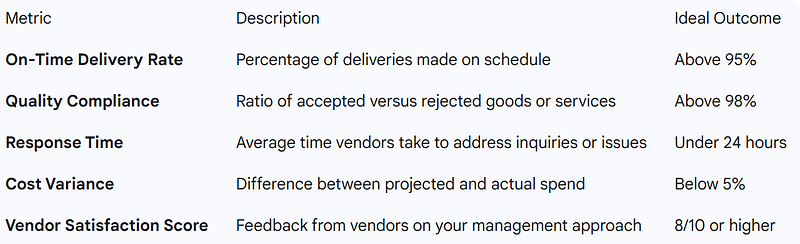
Beyond numbers, also measure relationship sentiment. How do vendors describe working with your team? Are they proactive, responsive, and loyal? A positive relationship sentiment indicates long-term stability.
Regularly reviewing these metrics ensures small inefficiencies don’t snowball into major time drains. It also provides an opportunity to celebrate improvements, reinforcing mutual accountability. Metrics, when shared transparently, keep both sides focused on continuous improvement rather than blame.
Conclusion
Every thriving business understands that time saved equals opportunity gained. Strong vendor relationships aren’t just about smoother operations; they’re about reclaiming time for strategy, innovation, and growth. When trust, technology, and communication align, your vendors transform from task executors into true business allies.
Businesses that invest in nurturing vendor relationships regularly save 10+ hours per week, reduce costs, and gain operational peace of mind. The ROI is both tangible and emotional: fewer late-night emails, fewer crisis calls, and more time to focus on what truly drives success.
Ready to Streamline Compliance?
Building a secure foundation for your startup is crucial, but navigating the complexities of achieving compliance can be a hassle, especially for a small team.
SecureSlate offers a simpler solution:
- Affordable: Expensive compliance software shouldn’t be the barrier. Our affordable plans start at just $284/month.
- Focus on Your Business, Not Paperwork: Automate tedious tasks and free up your team to focus on innovation and growth.
- Gain Confidence and Credibility: Our platform guides you through the process, ensuring you meet all essential requirements, and giving you peace of mind.
Disclaimer (legal note)
SecureSlate is not a law firm, and this article does not constitute or contain legal advice or create an attorney-client relationship. When determining your obligations and compliance with respect to relevant laws and regulations, you should consult a licensed attorney.
Need compliance without the complexity?
SecureSlate automates ISO 27001, SOC 2, GDPR, HIPAA, and more. Built for growing teams. See it in action.
Find compliance gaps in 30 seconds
