
Network Security Measures You Need in 2025 to Stop Cyber Threats
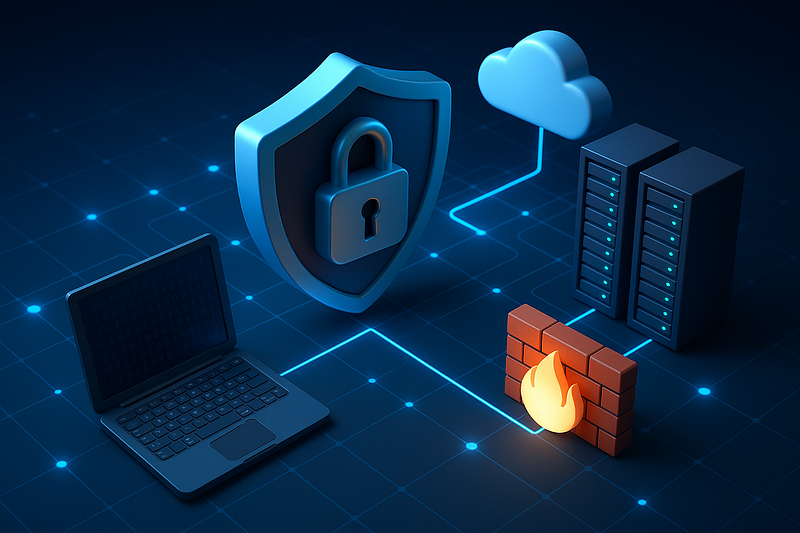
In the early days of the internet, cyberattacks relied on simple tactics to break into networks. Today, attackers use more targeted methods like phishing, spear phishing, and social engineering — fooling people instead of breaching systems directly. That’s why businesses now focus on training their teams to recognize and respond to these threats.
But the threat landscape is always shifting. Cybercriminals constantly look for faster, more effective ways to bypass defenses.
To stay ahead, organizations need to apply strong, up-to-date security practices and treat them as a continuous effort, not a one-time fix. When every part of your security strategy works together, you build a stronger, smarter defense.
What are Network Security Measures?
Network security measures are the strategies, tools, and rules an organization uses to protect its systems and data from unauthorized access, misuse, or disruption. These measures help secure the core pillars of cybersecurity — confidentiality, integrity, and availability — against evolving digital threats.
Common examples include antivirus tools, VPNs, encrypted communication, intrusion detection systems, and policies that control who can access what. Together, they create a layered defense that keeps your network environment safe and resilient.
Why Network Security Measures Matter
Network security measures are fundamentally important for several critical reasons in today’s interconnected world:
**Protecting Valuable Assets
** Networks carry and store an organization’s most valuable assets: sensitive data (customer information, intellectual property, financial records), critical systems, and essential infrastructure. Security measures are the primary defense against unauthorized access, theft, or damage to these assets.
**Defending Against Evolving Threats
** The landscape of cyber threats is constantly changing and becoming more sophisticated, including malware, ransomware, phishing attacks, denial-of-service (DoS) attacks, and advanced persistent threats (APTs). Network security measures are necessary to detect, prevent, and respond to these diverse and dynamic risks.
**Ensuring Business Continuity
** Security incidents like breaches or malware infections can disrupt operations, cause downtime, and halt business processes. Effective network security measures help prevent such disruptions, ensuring that the network and critical systems remain available and functional.
 Image from pexels.com

**Preventing Financial Losses
** Data breaches and cyberattacks can lead to significant financial costs, including recovery expenses, legal fees, regulatory fines, increased insurance premiums, and lost revenue due to downtime or reputational damage. Security measures are an investment to mitigate these potentially massive financial impacts.
**Maintaining Trust and Reputation
** A security breach can severely damage an organization’s reputation and erode the trust of customers, partners, and stakeholders. Demonstrating a commitment to strong network security helps maintain credibility and build confidence.
**Meeting Compliance and Regulatory Requirements
** Many industries and regions have strict regulations (like HIPAA, GDPR, SOC 2, PCI DSS, etc.) that mandate specific network security controls to protect sensitive data. Implementing these measures is essential to avoid legal penalties and maintain compliance.
**Controlling Access and Activity
** Security measures ensure that only authorized individuals and devices can access the network and its resources, and they provide visibility into network activity, helping to identify and investigate suspicious behavior.
10 Best Network Security Measures You Must Use
1. Firewall
Firewalls are a fundamental part of network defense. Both Windows and macOS come with built-in firewalls designed to block unauthorized access and alert you to suspicious activity. To avoid unnecessary risk, make sure your firewall is enabled before going online, it’s your first layer of protection.
So, how does it work? A firewall monitors incoming and outgoing data packets, checking them against predefined security rules. If a packet aligns with known threat patterns, it gets blocked before it can do harm. This process, known as packet filtering, helps keep your system clean and secure.
Modern businesses also rely heavily on Next Generation Firewalls (NGFWs). These go beyond basic filtering and inspect traffic at the application level, making it easier to catch advanced threats like malware, ransomware, and exploit attempts before they reach your systems.
2. NetworkAccess Control
Network Access Control (NAC) ensures that users only gain entry to the data and tools necessary for their specific roles, reducing the chance of sensitive information being exposed either intentionally or accidentally.
Whether through traditional credentials (like usernames and passwords) or advanced methods such as biometric scans and multi-factor authentication, access control plays a crucial role in shaping a secure digital workspace.
Segregating access by job function or department creates internal firewalls, ensuring that even if one user account is compromised, the damage is contained. When properly configured, NAC helps organizations enforce the principle of least privilege, which is essential in today’s complex threat landscape where insider risk is as real as external attacks.
3. Security Policies
Cybersecurity is never a static process — it’s a dynamic, evolving responsibility. Regularly reviewing and updating your organization’s security policies ensures you remain prepared for new threats and aligned with current business priorities.
How to Create Security Policies for Your Business
Building a Secure Foundation
Begin by auditing your existing security framework. Evaluate how well your current policies reflect your technological environment, compliance requirements, and team responsibilities. If your systems have changed, your security policies should evolve accordingly.
After drafting or revising your policies, it’s critical to distribute the updates to relevant stakeholders, particularly your IT team and everyday users.
4. Complex Passwords
Creating strong, unpredictable passwords is one of the simplest yet most powerful ways to safeguard your systems from unauthorized access.
Weak or recycled passwords open the door for cybercriminals to exploit user accounts, especially through brute-force attacks or credential stuffing.
A truly secure password goes beyond just length; it requires a thoughtful combination of uppercase and lowercase letters, special characters, and numbers — ideally reaching 15 to 20 characters in total.
Steer clear of personal information like birthdays, hometowns, or favorite sports teams, and never include obvious strings like “12345” or the word “password.”
Additionally, avoid predictable character substitutions (like “0” for “o” or “$” for “s”) — these are no longer clever and can easily be anticipated by automated cracking tools. Instead, use unexpected phrasing or code-like arrangements to increase resistance against intrusion.
5. Antivirus Software
Antivirus software serves as the immune system for your computer, designed to detect, isolate, and eliminate digital threats before they can do any harm. These programs are in constant operation, vigilantly scanning your system for any signs of malicious activity, especially during potentially risky actions like web browsing, downloading files, or opening email attachments.
When a suspicious file or behavior is detected, the antivirus software acts immediately. It either blocks the file from executing or isolates it to prevent further damage.
Some advanced antivirus solutions also provide real-time protection, scanning websites and downloads as they occur to stop dangerous content before it reaches your system.
Leading antivirus platforms like Bitdefender, Avast, and Norton utilize sophisticated technologies such as machine learning and behavioral analytics to enhance their threat detection capabilities. These tools continuously evolve, learning from patterns to identify new, emerging threats.
6. Two-Factor or Multi-Factor Authentication
Multi-factor authentication (MFA) significantly strengthens security by requiring users to provide multiple forms of identification before they can access their accounts.
For example, online banking may require both your ATM PIN and a one-time password (OTP) sent to your phone, ensuring that access cannot be granted with just a single password.
By requiring more than one form of verification, MFA reduces the risk of unauthorized access, even if one authentication method is compromised. Whether it’s a text message, biometric scan, or hardware token, adding extra layers of security makes it much harder for cybercriminals to breach accounts.
7. VPN
A Virtual Private Network (VPN) enhances security by encrypting your internet traffic, making it invisible to third parties. Whether you’re connecting to a company’s internal network or accessing public internet services, a VPN ensures that your data is transmitted safely, protecting it from prying eyes.
This is especially important for remote workers. While on-site employees have a direct connection to the company’s network, remote employees must connect through the internet, which exposes their data to potential threats.
A business VPN secures this connection by encrypting the traffic, shielding sensitive information from on-path attacks and snooping.
VPNs can also unify networks across various office locations, making remote access for employees safe and seamless.
8. Security Awareness Training
Human error remains one of the most common entry points for cyberattacks. Employees unaware of basic security practices like avoiding phishing emails or using strong passwords can unintentionally compromise company systems. That’s why regular security awareness training is essential.
Effective training should cover strong password habits, recognizing phishing, complying with standards like HIPAA, PCI, and GDPR, and protecting physical assets and sensitive data. It should also teach employees how to spot insider threats and social engineering tactics, such as impersonation of executives.
Manual tracking of training progress can be inefficient, especially in large teams. SecureSlate solves this by automatically monitoring training completion, sending reminders, and flagging incomplete courses, ensuring full participation and accountability.
9. Anomaly Detection
Previously, spotting anomalies in a network required combing through massive logs, tedious, slow, and prone to oversight. Now, machine learning models do the heavy lifting. These systems learn typical patterns and flag deviations in real time, making it easier to catch suspicious behavior as it happens.
Unlike traditional methods that relied on partial data, modern anomaly detection tools scan full datasets. This broad view improves detection accuracy and speeds up incident response. SecureSlate’s Continuous Monitoring Platform builds on this, sending real-time alerts and recommendations the moment an irregularity appears.
The result? Faster resolutions, fewer blind spots, and stronger network defenses. What once took weeks to identify now takes minutes, shrinking the attack window and tightening security across the board.
10. Consistent Backup Cycles and a Strong Recovery Plan
In a digital landscape, consistent data backups are essential. With ransomware attacks on the rise, organizations must regularly back up both sensitive and business-critical data to avoid catastrophic loss.
A strong recovery plan goes hand-in-hand with this. It should define clear recovery time objectives (RTOs) and cover a range of scenarios from cyberattacks to employee mistakes. Regular testing and updates ensure the plan remains effective as systems and risks evolve.
This level of preparedness reduces downtime, limits financial fallout, and keeps operations running even after a breach. It’s not just about restoring data — it’s about ensuring business continuity under pressure.
Top 10 SIEM Tools That Stop Hackers in 2025
Discover the SIEM Tools You’ll Need to Outsmart Hackers
Stay Secure with SecureSlate as You Scale
The cyber threat landscape isn’t waiting around. As your business grows, so do the risks, from new endpoints to evolving vulnerabilities. Relying on static security checks or one-off certifications won’t cut it anymore. What you need is security that scales with you on demand, always-on, and audit-ready.
Choose SecureSlate
SecureSlate is purpose-built for fast-moving teams that need to stay compliant and secure without slowing down. Our platform automates Cyber Essentials controls, keeps your security posture visible in real time, and simplifies evidence collection for audits.
With SecureSlate, you’re not just checking boxes, but you’re building a stronger, smarter defense.
Conclusion
Network security isn’t just a technical necessity, but it’s a strategic priority. Cyber threats are faster, smarter, and more relentless than ever. That means protecting your business requires more than just a firewall or antivirus software; it demands a layered, always-evolving approach.
Whether you’re implementing access controls, automating anomaly detection, or training your team to spot phishing attempts, every measure matters. When these pieces work together, you create a resilient, proactive defense that doesn’t just react to threats but stays ahead of them.
Ready to Streamline Compliance?
Building a secure foundation for your startup is crucial, but navigating the complexities of achieving compliance can be a hassle, especially for small teams.
SecureSlate offers a simpler solution:
- Affordable: Expensive compliance software shouldn’t be the barrier. Our affordable plans start at just $259/month.
- Focus on Your Business, Not Paperwork: Automate tedious tasks and free up your team to focus on innovation and growth.
- Gain Confidence and Credibility: Our platform guides you through the process, ensuring you meet all essential requirements, and giving you peace of mind.
Need compliance without the complexity?
SecureSlate automates ISO 27001, SOC 2, GDPR, HIPAA, and more. Built for growing teams. See it in action.
No credit card required
If you're interested in leveraging Compliance with AI to control compliance, please reach out to our team to get started with a SecureSlate trial.
Jan 3, 2026 · Cybersecurity
The Ultimate Guide to Data Security Solutions: Safeguarding Your Business in 2025
SecureSlate Team
Dec 28, 2025 · Cybersecurity
How a Single HTTP Request Can Trigger RCE in React Server Components
SecureSlate Team
Dec 25, 2025 · Cybersecurity
The Shield Against React2Shell: How WAF Rules Protect Against CVE-2025–55182 RCE
SecureSlate Team