
Top 5 GRC Tools for 2026: Streamline Governance, Risk, and Compliance
Related guides:
Key takeaways
- Understand the core concepts and terminology behind Top 5 GRC Tools for 2026: Streamline Governance, Risk, and Compliance.
- Learn practical steps to apply the guidance and stay audit-ready.
- See where SecureSlate can help centralize evidence, ownership, and ongoing compliance workflows.
The world of business is always on the move. New technologies pop up, markets shift, and rules change faster than you can say “compliance.” Right in the middle of all this sits Governance, Risk, and Compliance (GRC).
It’s about making sure your company plays by the rules, knows its risks, and runs smoothly. Sounds like a lot, right? It often is. Without a good plan, GRC can quickly turn into a confusing mess of spreadsheets and endless tasks.
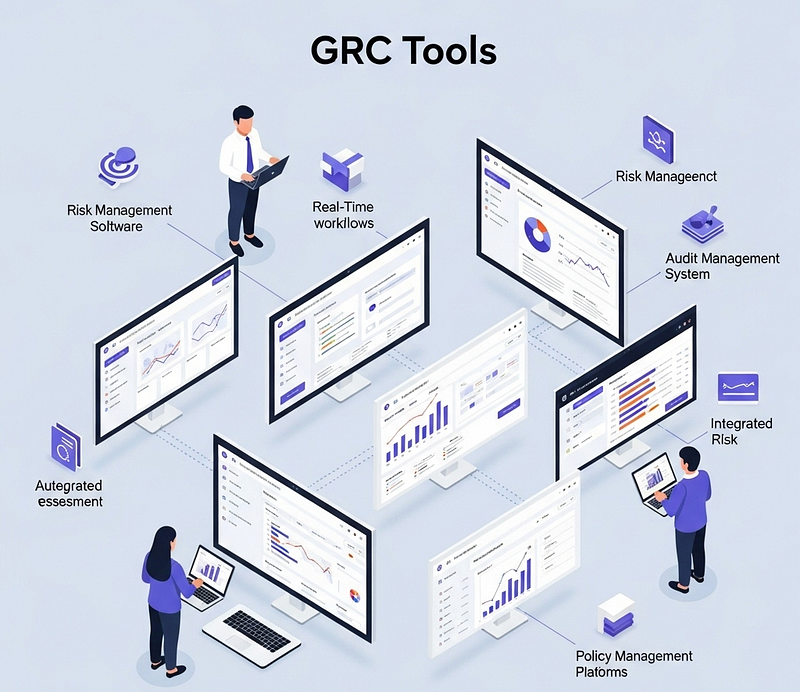
But the good thing is, smart digital helpers, known as GRC tools, are here to make things much simpler. These aren’t just fancy software programs; they’re like having a team of experts working tirelessly to keep your business safe and compliant. They turn what used to be a chore into a real advantage.
In 2026, having a solid GRC tool is more important than ever. With new rules appearing all the time and cyber threats getting smarter, businesses need partners that can help them not just survive, but truly succeed.
This guide will walk you through the top GRC tools making waves this year. We’re aiming to give you clear, easy-to-understand information so you can pick the best fit for your company.
Why You Need a GRC Tool
Ever felt a knot in your stomach when an audit is announced? Or worried that you might have missed a new regulation? Manual ways of doing things, while familiar, are often slow, prone to mistakes, and just don’t keep up as your business grows.
That’s where a strong GRC tool steps in, changing the game from reacting to problems to actively preventing them.
Here’s why a GRC tool is a smart move:
- Saves Time and Effort: Imagine cutting down the hours you spend on routine checks. GRC tools automate many tasks, like collecting proof or running reports. This frees up your team to focus on bigger, more important jobs.
- Keeps Things Consistent: When everyone uses the same system, mistakes become rare. A GRC tool makes sure all departments follow the same rules, which helps your company stay strong against problems.
- Gives You a Clear Picture: Ever wish you had a bird’s-eye view of your company’s risks? A good GRC tool provides clear dashboards and reports. You can quickly see where you stand with rules, spot weak areas, and catch new threats before they become big issues.
- Always Ready for Audits: The word “audit” used to cause stress. But with a GRC tool, all your documents and proof are neatly organized and easy to find. When an auditor comes knocking, you’re prepared and confident, showing them you run a tight ship.
These tools are also getting smarter. In 2026, many are using Artificial Intelligence (AI) to guess future risks. They also connect smoothly with your existing IT and security systems, meaning less data entry and a stronger overall security plan.
Why Agentic GRC is Replacing Traditional Compliance Software
In 2026, “checklist compliance” is no longer enough. The best GRC platforms are shifting toward agentic GRC—systems that don’t just track tasks, but actively help teams detect control drift, route remediation, and preserve audit-ready evidence automatically.
Agentic workflows typically matter most when you need to:
- Stay continuously compliant across multiple frameworks (SOC 2 + ISO 27001 + regional regulations)
- Reduce evidence collection from “screenshots and spreadsheets” into an automated, repeatable system
- Prove remediation (not just detection) with clear timestamps and ownership
The DORA/NIS2 Surge (Europe): Why 2026 GRC Buyers Are Upgrading
European regulations such as DORA (Digital Operational Resilience Act) and NIS2 are major 2026 search drivers because they expand expectations around operational resilience, third-party risk, incident readiness, and continuous oversight.
If you operate in (or sell into) Europe, prioritize GRC tools that can:
- Map controls across SOC 2 / ISO 27001 / NIS2 / DORA without duplicating work
- Track third-party/vendor risk in a way that supports regulatory scrutiny
- Produce structured evidence for resilience activities (testing, monitoring, incident response)
Risk Quantification (CRQ): Moving Beyond High/Medium/Low
Another 2026 trend is Cyber Risk Quantification (CRQ)—moving from subjective labels to measurable outcomes, often expressed as financial impact ranges. Even if you don’t adopt CRQ fully, tools that support quantification help security and compliance leaders communicate risk in business terms (budget, priorities, and board reporting).
Look for platforms that support:
- Quantitative scoring or financial impact modeling
- Risk dashboards that tie controls to measurable exposure
- Reporting that executives can act on (not just compliance teams)
Best 5 GRC Tools for 2026
Our list includes GRC tools that have proven themselves, offering strong features and real value to companies everywhere.
Comparison Table: Best GRC Tools (2026)
| Tool | Best For | AI Capabilities | Core Frameworks (SOC2/ISO/NIS2/DORA) |
|---|---|---|---|
| SecureSlate | SaaS/SMBs that want fast, audit-ready, multi-framework compliance | Agentic workflows for evidence + monitoring-driven remediation | SOC 2, ISO 27001 (and extensible mapping for NIS2/DORA programs) |
| Vanta | Startups and growing teams pursuing security certifications quickly | Automation-led evidence workflows and monitoring | SOC 2, ISO 27001 (typically paired with additional governance for NIS2/DORA) |
| LogicManager | Enterprises prioritizing ERM + risk quantification | Strong analytics; CRQ-style reporting depending on configuration | ISO + enterprise risk programs (NIS2/DORA alignment via customization) |
| AuditBoard | Enterprises running audit + risk programs at scale | Workflow automation; reporting; less “agentic” by default | SOC 2/ISO via programs and mappings (often used alongside regulatory programs) |
| OneTrust | Global enterprises spanning privacy, risk, and compliance | AI-assisted questionnaire automation + governance at scale | Broad coverage; commonly used for NIS2/DORA-adjacent governance plus ISO/SOC mappings |
1. SecureSlate
SecureSlate is a GRC tool that puts a strong emphasis on making vendor risk management and compliance easier. In today’s world, where many businesses work with outside partners, understanding their security is crucial. SecureSlate helps you check and keep an eye on the security and compliance of all your third-party vendors, making sure they meet your standards and reducing potential risks—an approach that also supports resilience-style expectations that show up in programs influenced by NIS2 and DORA.
Key Features:
- Centralized vendor inventory and profiles.
- Automated vendor risk assessments and questionnaires.
- Continuous monitoring of vendor security posture.
- Third-party audit management.
Ideal For:
Companies that work with many external vendors and need a dedicated, efficient way to manage the risks and compliance associated with their third parties.
Pros:
- Specialized and robust features for vendor risk.
- Simplifies the complex process of assessing third parties.
- Provides clear visibility into your entire vendor ecosystem.
Cons:
- More specialized, so it might require integration with other GRC tools for broader needs.
- May not cover all aspects of internal GRC as extensively as full-suite platforms.
2. Vanta
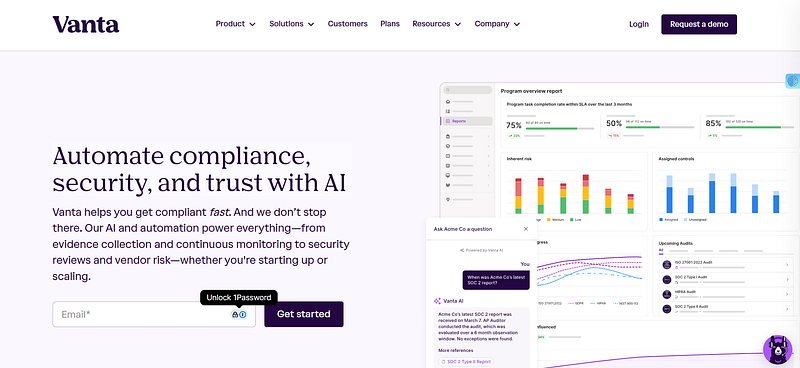
Vanta is a popular GRC tool, especially for companies looking to get their security certifications like SOC 2 or ISO 27001. It makes the whole process of getting compliant much simpler by automating how you collect proof and keep an eye on things. It’s like having a helpful guide that walks you through each step.
Key Features:
- Automated evidence collection for audits.
- Continuous monitoring of security controls.
- Pre-built templates for common compliance frameworks (e.g., SOC 2, HIPAA).
- Integrates with cloud providers and various business tools.
Ideal For:
Startups and growing businesses that need to achieve and maintain compliance quickly and efficiently, especially those new to formal security certifications.
Pros:
- Very easy to set up and use.
- Significantly reduces manual work for compliance.
- Helps you stay audit-ready all the time.
Cons:
- May be less customizable for highly complex, unique enterprise needs.
- Primarily focused on security compliance, less on broader enterprise risk.
3. LogicManager
LogicManager is a powerful GRC tool designed for larger companies. It’s known for being very flexible, allowing businesses to tailor it to their specific industry and needs. It helps connect all your GRC information across the company, giving you a complete view of risks and how they link to your business goals. For 2026 programs, it’s often shortlisted when teams want to evolve toward Cyber Risk Quantification (CRQ) and report risk in business terms.
Key Features:
- Highly customizable risk and control frameworks.
- Enterprise risk management (ERM) capabilities.
- Incident management and reporting.
- Connects GRC to strategic business objectives.
Ideal For:
Large enterprises and organizations with complex, evolving risk management needs that want to deeply integrate GRC with their overall business strategy.
Pros:
- Extremely adaptable to specific business processes.
- Provides a holistic view of risk across the organization.
- Strong analytical tools for risk assessment.
Cons:
- Can have a steeper learning curve due to its depth.
- Implementation might require more internal resources.
4. AuditBoard
AuditBoard focuses on making internal audits, risk management, and compliance much smoother. It’s built to improve teamwork, allowing different teams to work together on audits and risk assessments without the usual difficulties. This GRC tool is often praised for simplifying the process of tracking complex audit trails.
Key Features:
- Centralized internal audit management.
- Collaborative risk assessment workflows.
- Automated evidence collection and review.
- Integrated compliance management.
**Ideal For:
** Companies looking to optimize their internal audit and risk management functions, especially those focused on improving team collaboration and streamlining audit processes.
Pros:
- Excellent for internal audit teams.
- Enhances collaboration and communication.
- Simplifies audit evidence management.
Cons:
- May have a narrower focus compared to full-suite GRC tools.
- Some users might desire more extensive risk quantification features.
5. OneTrust
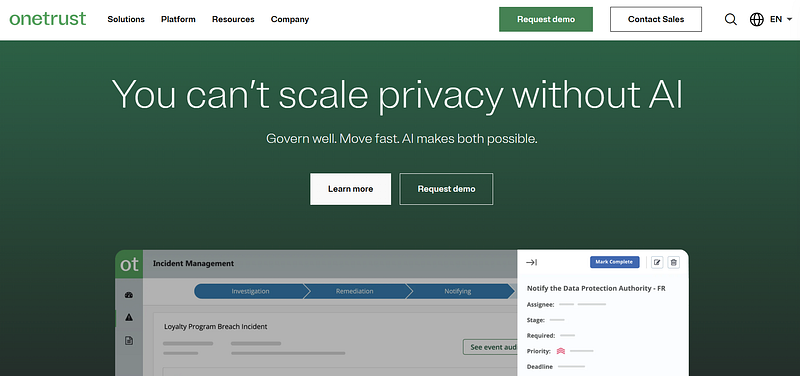
OneTrust is a “trust intelligence platform” that unifies privacy, security, risk, ethics, and ESG management. It helps over 14,000 organizations simplify global regulations and focuses on AI governance and responsible data use for 2026. For larger organizations, it can also support governance workstreams that align with NIS2 and DORA expectations (especially around third-party risk, policies, and documentation).
- Key Features:
- Handles 50+ pre-built and custom security/privacy frameworks.
- Over 165 integrations and open APIs.
- AI-powered questionnaire automation and robust vendor risk management.
- Solutions for managing AI risks and adhering to global AI regulations.
Ideal For:
- Global mid-to-large enterprises in regulated industries, teams seeking a unified GRC approach covering privacy, security, risk, and ethics, and companies with complex vendor ecosystems or those developing AI.
Pros:
- Consolidates multiple GRC domains, reducing tool sprawl.
- Built for large organizations with customizable workflows.
- Numerous integrations and APIs for strong connectivity.
- A leader in privacy, now extending into AI governance.
Cons:
- Setup can be challenging, with a steeper learning curve.
- Some areas may still require manual effort.
- Generally a higher-cost solution.
How to Choose the Right GRC Tool
Choosing the right GRC tool is a pivotal decision, not just a software purchase. It’s about finding a partner to boost your organization’s resilience against evolving regulations and threats.
The best fit depends on your industry, specific compliance needs, existing tech, and whether it can scale and adapt seamlessly as your company grows.
Key Considerations for Your GRC Tool Selection
When you’re evaluating potential GRC tool, it’s essential to look beyond the surface features. Consider these crucial dimensions to find a tool that truly fits your organization:
Organizational Alignment
- Does the GRC tool support your current strategic goals, align with your industry’s unique demands, and match your growth trajectory?
- The best solutions offer scalability , ensuring they remain valuable as your business expands and faces new challenges.
Scope & Framework Coverage
- Does the platform support your primary compliance frameworks (like SOC 2, ISO 27001, GDPR, HIPAA) and offer room to grow into new ones?
- Look for a tool that can extend its value to new use cases as your GRC program matures, covering everything from core compliance to enterprise risk and third-party oversight.
User Experience & Deployment
- How quickly can your team get up and running with the software?
- An intuitive, user-friendly interface that’s easy to onboard will drive faster adoption and long-term success. A confusing tool often leads to underutilization.
Integration Capabilities:
- Will it connect smoothly with your existing technology stack, such as HR, IT service management, or security systems?
- Native integrations minimize manual data entry, reduce silos, and ensure a unified view of your GRC posture across the organization.
Automation & Intelligent Features:
- Does the tool help you work smarter, not harder?
- Look for features that automate routine tasks (like evidence collection, policy approvals, or continuous monitoring) and leverage AI for predictive analytics, risk detection, and intelligent recommendations to boost efficiency and accuracy.
Reporting & Analytics:
- Can you easily generate clear insights and audit-ready reports?
- Robust, flexible reporting is vital for tracking progress, demonstrating compliance to stakeholders, and making informed decisions about your risk profile. Dynamic dashboards provide real-time visibility.
Vendor Support & Partnership:
- What level of assistance can you expect from the vendor?
- Evaluate their customer success programs, implementation guidance, and ongoing technical support. A strong partnership is crucial for navigating any challenges and maximizing the tool’s value.
Overall Value (Total Cost of Ownership):
- Beyond the initial price tag, consider the total cost of ownership (TCO).
- Factor in implementation time, ongoing maintenance, necessary team resources, and the potential for long-term savings through reduced manual effort, fewer compliance penalties, and improved decision-making.
By thoroughly assessing these dimensions, you can make a well-informed decision that empowers your organization to manage governance, risk, and compliance proactively, strengthening your resilience for the future.
Conclusion
Choosing the right GRC tool is a big decision, not just a software purchase. It’s about finding a partner that helps your organization stay resilient against evolving rules and threats.
This guide has laid out the ultimate path to simplify your choice, showing you why these tools are absolutely essential for 2026. The perfect fit will exactly match your company’s needs, empower your team like never before, and adapt flawlessly as you grow.
Take your time. Explore the options, ask questions, and envision how a GRC tool will strengthen your business for the future. You’re not just buying software; you’re building a more secure and resilient foundation.
Ready to Streamline Compliance?
Building a secure foundation for your startup is crucial, but navigating the complexities of achieving compliance can be a hassle, especially for a small team.
SecureSlate offers a simpler solution:
- Affordable: Expensive compliance software shouldn’t be the barrier. Our affordable plans start at just $284/month.
- Focus on Your Business, Not Paperwork: Automate tedious tasks and free up your team to focus on innovation and growth.
- Gain Confidence and Credibility: Our platform guides you through the process, ensuring you meet all essential requirements, and giving you peace of mind.
Disclaimer (legal note)
SecureSlate is not a law firm, and this article does not constitute or contain legal advice or create an attorney-client relationship. When determining your obligations and compliance with respect to relevant laws and regulations, you should consult a licensed attorney.
Need compliance without the complexity?
SecureSlate automates ISO 27001, SOC 2, GDPR, HIPAA, and more. Built for growing teams. See it in action.
No credit card required
Jun 1, 2026 · Vendor RiskGRC
10 important questions to add to your security questionnaire (with examples)
SecureSlate Team
Jun 1, 2026 · GRCRisk Management
The 9 compliance risks hiding in your organization (and how to fix them)
SecureSlate Team
Jun 1, 2026 · AIGRC
8 in 10 companies bet on AI agents—but fewer than half have a policy to govern them
SecureSlate Team
