
Photo: Unsplash

Related guides:
Key takeaways
- What Exactly is a CSPM Solution: Cloud Security Posture Management (CSPM) is a category of security tools designed to identify misconfigurations and compliance risks in the cloud.
- Why Agentless CSPM is the 2026 Standard: In 2026, the biggest CSPM differentiator is agentless vs.
- Toxic Combinations (Attack Paths): The 2026 CSPM: In 2026, mature CSPM programs don’t just look for single misconfigurations. They look for toxic combinations (also called attack paths): risky chains where multiple “small” issues combine into a real.
In 2025, the multi-cloud reality is no longer a trend; it is the standard operating model for enterprise infrastructure. However, the velocity at which DevOps teams deploy resources across AWS, Azure, and Google Cloud Platform (GCP) has vastly outpaced traditional security controls. The result is an exponentially expanding attack surface defined by complexity and asset sprawl.
The primary vector for cloud breaches remains consistent: misconfiguration. Gartner continues to predict that over 99% of cloud security failures will be the customer’s fault.
So, enterprise-grade Cloud Security Posture Management (CSPM) solutions become critical in this scenario. Modern CSPM is about gaining continuous, automated visibility across disparate cloud providers, contextualizing risk, and remediating drift before an attacker exploits it.
But the market is crowded with vendors claiming “single pane of glass” visibility. Which ones actually deliver on the technical requirements of a modern CISO and Cloud Architect?
Stop losing sleep over security: Learn the SecureSlate strategy top CTOs use to guarantee system integrity.
In this in-depth review, we rank and analyze the 10 best CSPM solutions for multi-cloud environments, evaluating their architecture, depth of visibility, remediation capabilities, and integration into the DevSecOps lifecycle.
What Exactly is a CSPM Solution?
Cloud Security Posture Management (CSPM) is a category of security tools designed to identify misconfigurations and compliance risks in the cloud.
If you think of your cloud provider (like AWS) as a landlord, they are responsible for the building’s structural integrity (the “Security of the Cloud”). However, you are responsible for locking your own doors and windows (the “Security in the Cloud”).
A CSPM solution acts as your automated security guard, constantly walking the perimeter to ensure:
- No “Front Doors” are Left Open: (e.g., Publicly accessible S3 buckets).
- Keys are Managed: (e.g., Identifying overly permissive IAM roles).
- Regulations are Met: (e.g., Continuous auditing for SOC 2, HIPAA, or GDPR).
- Drift is Detected: (e.g., Alerting you when a developer changes a security group setting).
Teams that need to turn CSPM findings and cloud controls into audit-ready evidence for SOC 2, ISO 27001, or HIPAA can use a compliance platform like SecureSlate to centralize evidence, map controls, and stay audit-ready without manual spreadsheets.
The 7 Best DAST Solutions for 2026: Ranked by Speed and Accuracy: Dynamic application security testing to pair with your cloud security.
Why Agentless CSPM is the 2026 Standard
In 2026, the biggest CSPM differentiator is agentless vs. agent-based visibility.
Agentless CSPM tools connect to AWS/Azure/GCP using cloud-native APIs and roles, then scan control-plane configuration and (often) workload snapshots, without deploying agents to every VM/container. For most teams, that has become the default because it:
- Accelerates time-to-value: Connect an account/subscription and get findings quickly.
- Reduces operational friction: No endpoint rollout, version drift, or performance overhead debates with DevOps.
- Improves coverage: Better at finding drift and misconfigurations across multi-account estates.
Agent-based approaches can still be valuable for runtime enforcement, but for posture visibility at scale, agentless CSPM is the 2026 standard.
Toxic Combinations (Attack Paths): The 2026 CSPM Priority
In 2026, mature CSPM programs don’t just look for single misconfigurations. They look for toxic combinations (also called attack paths): risky chains where multiple “small” issues combine into a real breach path.
Example of a toxic combination:
- A public bucket
- A vulnerable VM
- An over-privileged role that can access sensitive data
Tools like Wiz and Orca are popular because they model these relationships and prioritize the few combinations that are most likely to lead to compromise.
The Criteria: What Defines a Top-Tier Multi-Cloud CSPM in 2026?
Before exploring the rankings, it is crucial to establish the technical criteria that separate legacy compliance tools from modern, effective CSPM solutions. In 2026, a viable multi-cloud CSPM must offer:
- True Agentless Visibility: The ability to connect via cloud-native APIs and utilize snapshotting technology (like AWS EBS snapshots) to scan workloads without deploying agents, which is critical for immediate time-to-value and zero friction with DevOps.
- Graph-Based Risk Context: Moving beyond lists of isolated alerts. The best CSPM solutions use graph databases to model the relationships between assets, identities, and network exposures to identify toxic combinations (attack paths).
- Multi-Cloud Normalization: The ability to ingest data from AWS, Azure, GCP, OCI, and Kubernetes and normalize it into a single, queryable data model, regardless of the underlying provider’s nomenclature.
- Automated & Guided Remediation: Providing more than just a PDF report. The solution must offer one-click remediation within the console, send Terraform/CloudFormation snippets to engineers, or trigger automated serverless functions to fix critical drift instantly.
- Shift-Left Capabilities (IaC Scanning): The ability to scan Infrastructure as Code (IaC) templates (Terraform, Ansible, Helm) in the CI/CD pipeline to catch misconfigurations before deployment.
The 7 Best SAST Solutions for 2026: Balancing Speed, Accuracy, and Security Controls: Static application security testing to pair with your cloud posture program.
10 Best CSPM Solutions of 2026 (Ranked)
(Disclaimer: Rankings are based on technical capabilities for general multi-cloud enterprise use cases as of 2026. Your specific needs may prioritize different features.)
1. SecureSlate: The Compliance-Integrated CSPM Platform
Tagline: Posture management and compliance evidence for AWS, Azure, and Microsoft cloud.
Technical Overview: SecureSlate bridges cloud posture management and audit readiness, ideal for teams that need CSPM findings tied directly to SOC 2, ISO 27001, and HIPAA controls instead of living in a separate cloud security silo.
Key Multi-Cloud Features
- AWS, Azure, and Microsoft Coverage: Native integrations for AWS, Microsoft Azure Cloud, and the broader Microsoft ecosystem via read-only cloud connectors, no agents required. Connect accounts in minutes and get continuous posture checks across your estate. See AWS setup and Azure setup.
- Unified Vulnerability Scanning: CSPM, SAST, and DAST findings prioritized and mapped to compliance controls automatically in one workspace.
- Compliance-Ready Workflows: Cloud misconfiguration findings feed directly into CC6.1 and CC7.1-ready workflows. Identify, assign, remediate, and retain evidence without exporting to spreadsheets.
- Continuous Monitoring: Automated checks surface drift and misconfigurations before auditors or attackers do, with remediation status tracked for audit sampling.
Pros: Affordable for growing teams; posture findings and compliance evidence in one place; read-only AWS and Azure connectors with fast time-to-value.
Cons: Not a full CNAPP. Teams needing deep agentless graph-based attack-path modeling at enterprise scale may pair SecureSlate with a dedicated CSPM leader for discovery, then use SecureSlate for remediation tracking and audit evidence.
Best For: Multi-cloud teams on AWS and Microsoft Azure that need continuous misconfiguration checks and audit-ready compliance workflows without juggling separate AppSec and GRC tools.
2. Wiz
Tagline: The speed king of agentless visibility and graph-based context.
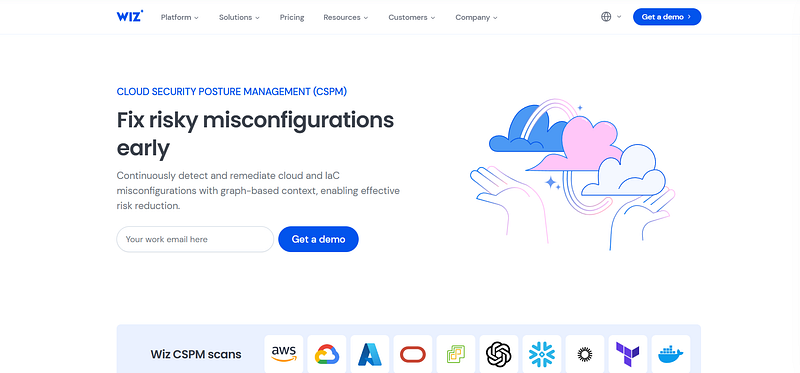
Technical Overview: Wiz has dominated the conversation in recent years by popularizing the “agentless” approach. It connects via API roles in minutes and immediately begins scanning cloud workloads by taking snapshots of volumes and analyzing them out-of-band. It then builds a massive “Security Graph” that correlates diverse risks across varied cloud providers.
Key Multi-Cloud Features
- Contextual Attack Path Analysis: Wiz doesn’t just tell you an S3 bucket is public. It tells you that an S3 bucket is public, contains sensitive PII, and is accessible by a VM with a critical, exploitable vulnerability. That is actionable context.
- Rapid Time-to-Value: It is not uncommon for enterprises to onboard hundreds of AWS accounts and Azure subscriptions and get full visibility within 24 hours.
- Unified Data Model: Excellent normalization across AWS, Azure, GCP, OCI, and Alibaba Cloud.
Pros: Zero friction deployment; incredibly intuitive UI for querying complex infrastructure; industry-leading risk prioritization (especially for toxic combinations / attack paths).
Cons: Purely agentless approach means no real-time runtime blocking capabilities (requires separate CWPP integration).
Best For: Rapidly scaling enterprises needing immediate, deep visibility across a messy multi-cloud estate without angering DevOps teams.
3. Orca Security
Tagline: Comprehensive “SideScanning” for 100% deep coverage without agents.
Technical Overview: Similar to Wiz, Orca Security is fundamentally agentless. Its proprietary “SideScanning” technology reads the runtime block storage of workloads via cloud provider APIs. It combines this workload-level data with control plane metadata to provide a unified view of risks.

Key Multi-Cloud Features
- Full-Stack Visibility: Because it reads the block storage, Orca can identify OS vulnerabilities, malware, misplaced secrets, and misconfigurations inside the VM, not just the cloud wrapper settings.
- No Packet Filtering: Unlike network-based scanners, Orca’s approach guarantees 100% asset coverage as long as the API connection exists, ensuring no “shadow IT” assets are missed across different clouds.
Pros: Extremely deep visibility into workloads without the performance hit of agents; excellent compliance reporting; strong focus on prioritizing the few alerts that actually matter.
Cons: Like Wiz, its reliance on snapshots means it is near real-time, not instant real-time.
Best For: Organizations that want the depth of host-based scanning without the operational nightmare of managing agents across multi-cloud VMs.
4. Prisma Cloud by Palo Alto Networks
Tagline: The enterprise heavyweight for comprehensive Code-to-Cloud security.
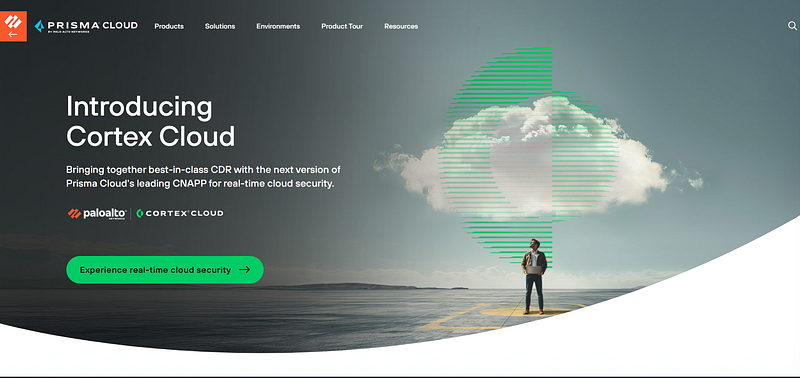
Technical Overview: Prisma Cloud is perhaps the most comprehensive Cloud-Native Application Protection Platform (CNAPP) on the market, largely built through the acquisition of top-tier tools (like RedLock for CSPM and Bridgecrew for IaC). It offers both agentless scanning and agent-based protection, covering the entire lifecycle.
Key Multi-Cloud Features
- Massive Policy Library: Prisma Cloud boasts one of the largest libraries of out-of-the-box policies for compliance standards (PCI, HIPAA, SOC2, NIST) across every major cloud provider.
- Superior “Shift Left”: Thanks to the Bridgecrew integration, its ability to scan IaC (Terraform, CloudFormation, Kubernetes manifests) and provide fix pull requests directly to developers is market-leading.
- True Runtime Protection: Unlike purely agentless tools, Prisma can deploy defenders for real-time blocking of threats.
Pros: An all-in-one platform (CSPM, CWPP, CIEM, Code Security); highly customizable policy engine; enterprise-grade RBAC and reporting.
Cons: Can be expensive and complex to deploy fully; the UI can feel overwhelming due to the sheer volume of features.
Best For: Large enterprises standardize on Palo Alto Networks, looking for a single, powerful platform to cover every aspect of cloud security from development to runtime.
5. Lacework (A Fortinet Company)
Tagline: Data-driven anomaly detection using patented Polygraph technology.
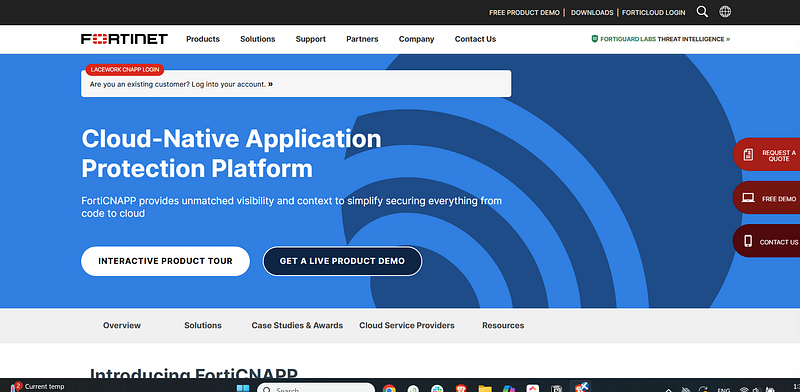
Technical Overview: Recently acquired by Fortinet, Lacework takes a data-centric approach. While it offers CSPM capabilities, its differentiator is its “Polygraph” technology aimed at runtime. It ingests massive amounts of cloud log data (CloudTrail, VPC Flow Logs, etc.) to build a behavioral baseline of your environment and detects deviations that indicate a breach.
Key Multi-Cloud Features
- Behavioral Analytics over Static Rules: While it checks for misconfigurations, Lacework shines at finding unknown threats by identifying anomalous behaviors across multi-cloud environments that static CSPM rules might miss.
- Composite Alerts: It excels at reducing alert fatigue by correlating multiple low-fidelity events into a single, high-confidence “composite alert.”
Pros: Excellent at detecting “unknown unknowns” and zero-days through behavioral change; strong data correlation capabilities.
Cons: Requires a learning period to establish baselines; CSPM interface is sometimes secondary to its threat detection capabilities.
Best For: Organizations prioritizing threat detection and response alongside posture management, who want AI-driven behavioral analysis.
6. Microsoft Defender for Cloud
Tagline: The path of least resistance for Azure-heavy multi-cloud shops.
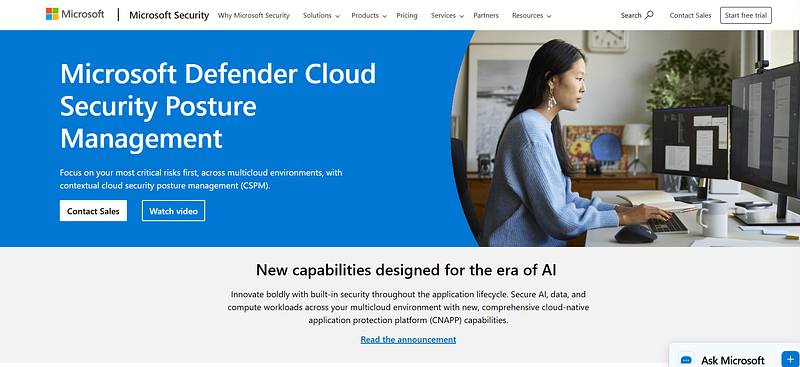
Technical Overview: Formerly Azure Security Center, Defender for Cloud has evolved into a capable multi-cloud CSPM. It is native to Azure but includes robust connectors for AWS and GCP. It utilizes Azure Arc to extend management and security to non-Azure resources.
Key Multi-Cloud Features
- Native Integration: If you are an Azure shop, it is already there. The integration with other Microsoft security products (like Sentinel SIEM) is seamless.
- Secure Score: Provides a gamified, unified “Secure Score” across AWS, Azure, and GCP, offering a clear metric for executive reporting on posture improvement.
- Regulatory Compliance Dashboard: Excellent built-in tracking against major regulatory standards across joined clouds.
Pros: Included with many Azure licenses (basic tier); seamless experience for Microsoft ecosystems; strong governance capabilities.
Cons: While multi-cloud, Azure is clearly the “first-class citizen”; GCP capabilities sometimes lag behind AWS/Azure features.
Best For: Organizations with a significant Azure footprint expanding into multi-cloud, who want a consolidated view without buying a third-party tool.
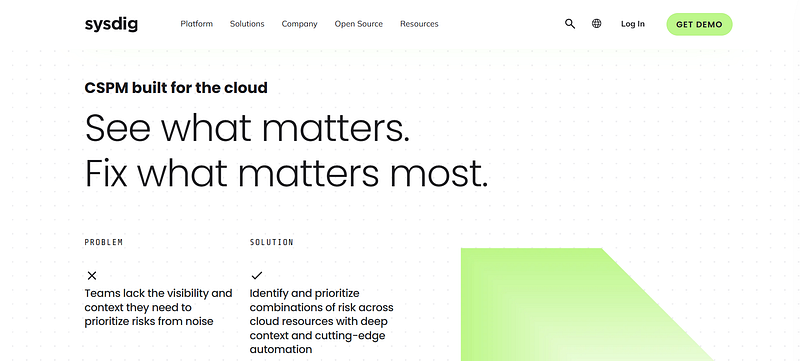
7. Sysdig Secure
Tagline: Cloud security built on a foundation of deep runtime visibility.
Technical Overview: Sysdig’s roots are in container and Kubernetes security, leveraging Falco (open source) for real-time system call analysis. They have successfully expanded into a full CNAPP with robust CSPM capabilities.
Key Multi-Cloud Features
- Real-Time focus: Sysdig’s architecture is built for speed. Its CSPM detects drift rapidly, and its runtime security detects threats instantly.
- Kubernetes & Container Depth: If your multi-cloud strategy relies heavily on K8s (EKS, AKS, GKE), Sysdig offers unparalleled depth of visibility into the container layer.
Pros: Best-in-class runtime security; deep integration with modern cloud-native stacks; strong open-source roots.
Cons: CSPM features, while strong, are sometimes overshadowed by their runtime capabilities.
Best For: Kubernetes-heavy environments and DevSecOps teams that prioritize real-time detection and response.
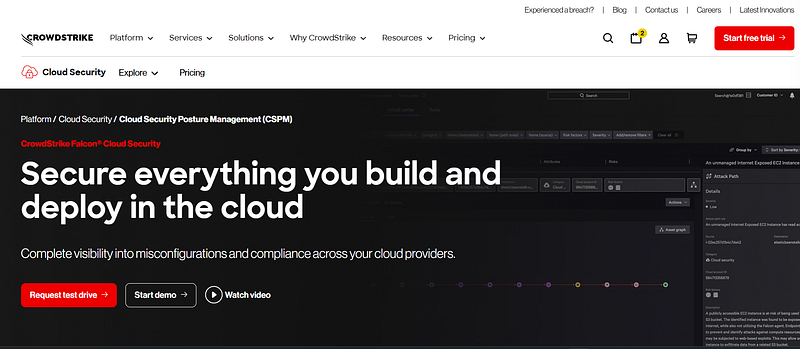
8. CrowdStrike Falcon Cloud Security
Tagline: Adversary-focused cloud security from the endpoint leader.
Technical Overview: CrowdStrike has aggressively expanded its dominant endpoint platform into the cloud. Their CSPM offering combines agentless control plane assessment with the option to use their famous lightweight agent on cloud workloads for unified visibility.
Key Multi-Cloud Features
- Unified Agent Strategy: If you already use CrowdStrike on laptops and servers, extending it to cloud workloads is seamless, providing a single console for EDR and Cloud Security.
- Threat Intelligence Integration: CrowdStrike’s world-class threat intelligence is baked into their CSPM, helping prioritize misconfigurations that known threat actors are actively exploiting.
Pros: Single agent for hybrid environments; incredible threat intelligence context; strong incident response capabilities.
Cons: The full power is realized best when using the agent, which some cloud teams resist.
Best For: Current CrowdStrike customers looking to unify their on-prem and cloud security posture under one roof.
9. Tenable Cloud Security (formerly Ermetic/Accurics)
Tagline: Mastering identity and infrastructure drift.
Technical Overview: Tenable has bolstered its cloud offering through acquisitions like Ermetic (CIEM) and Accurics (IaC). This has resulted in a highly capable CSPM with unique strengths in identity governance and “drift detection.”
Key Multi-Cloud Features
- Identity-First Security (CIEM): Thanks to Ermetic, Tenable has exceptional capabilities in mapping complex multi-cloud permissions, identifying excessive entitlements, and recommending least-privilege policies across AWS IAM, Azure AD, and GCP roles.
- Infrastructure as Code Drift Detection: It excels at comparing running cloud infrastructure against the IaC templates that created it, alerting immediately on configuration drift.
Pros: Best-in-class Identity and Entitlement Management (CIEM) integrated with CSPM; strong focus on IaC governance.
Cons: The integration of various acquired technologies is still maturing into a fully unified experience.
Best For: Organizations where identity complexity and excessive permissions are the primary concern in their multi-cloud environment.
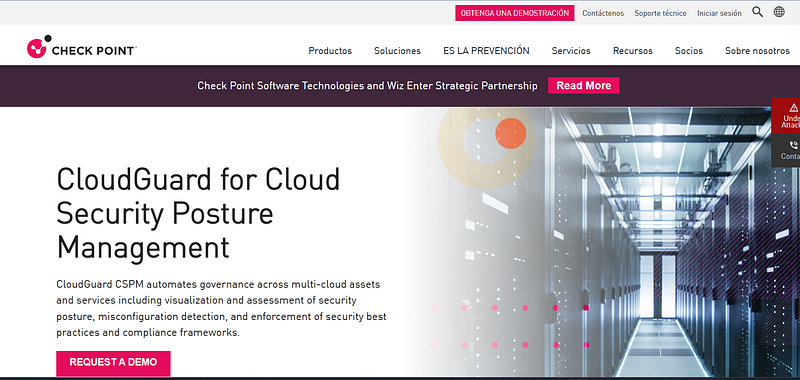
10. Check Point CloudGuard
Tagline: Veteran security and compliance for complex hybrid networks.
Technical Overview: Check Point is a stalwart in network security. CloudGuard translates that expertise to the cloud, offering a CSPM with very strong network visualization and compliance enforcement capabilities across public and private clouds.
Key Multi-Cloud Features
- Traffic Visualization: Excellent tools for visualizing network traffic flows across multi-cloud VNets/VPCs, helping identify overly permissive security groups.
- Compliance Engine: A very mature and robust engine for managing continuous compliance against hundreds of regulatory frameworks.
Pros: Strong heritage in network security; trusted brand for large enterprise compliance; good hybrid support.
Cons: UI can feel dated compared to newer entrants like Wiz or Orca; setup can be complex.
Best For: Highly regulated enterprises with hybrid environments (on-prem + multi-cloud) that need rigorous compliance reporting and network control.
11. Sonrai Security
Tagline: Unraveling the complexity of identity and data access in the cloud.
Technical Overview: Sonrai Security is often classified as a CIEM (Cloud Infrastructure Entitlement Management) first, but its platform provides deep CSPM capabilities centered around identity and data. It uses a graph to map exactly who (person or non-human identity) can access what data.
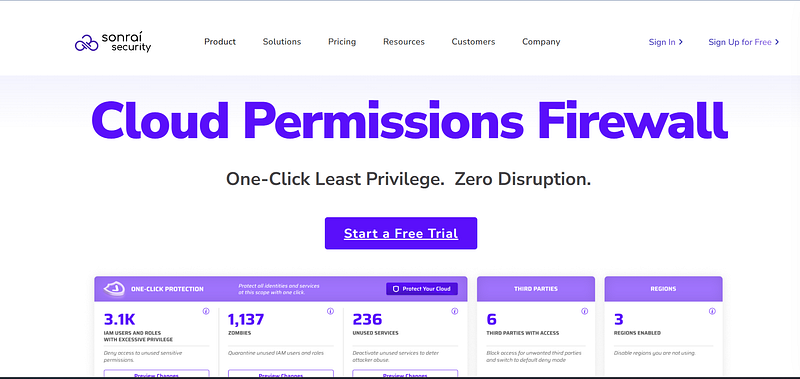
Key Multi-Cloud Features
- Data Access Analytics: Sonrai focuses intensely on the path to data. It doesn’t just check bucket permissions; it maps complex role assumption chains across clouds to show potential data exfiltration paths.
- Permission Rightsizing: It provides actionable recommendations to strip away unused permissions across multi-cloud environments to achieve least privilege.
Pros: Unparalleled view into identity and data access risks; strong graphing capabilities for complex permission structures.
Cons: Niche focus on identity/data means it might need to be paired with other tools for broader workload security.
Best For: Enterprises struggling to manage complex IAM roles and data sovereignty across multiple cloud providers.
Conclusion
Selecting the “best” CSPM solution for 2026 depends heavily on your organization’s maturity, technical debt, and primary cloud providers.
If you need CSPM plus compliance evidence across AWS, Microsoft Azure, and Microsoft cloud services without separate GRC tooling, SecureSlate is the logical starting point for growing teams. If speed and friction-free visibility at enterprise scale are paramount, the agentless leaders like Wiz and Orca are hard to beat. If you require a comprehensive, all-in-one platform that spans from code to runtime blocking, Prisma Cloud remains a top contender. For those deep in the Microsoft ecosystem, Defender for Cloud is another strong option.
Don’t rely solely on vendor marketing. The best approach is to select your top three candidates and run a two-week Proof of Concept (POC). Connect them to your messiest, most complex multi-cloud accounts and see which solution provides the most actionable context and the least noise. For compliance and audit readiness, pair your CSPM with SecureSlate to automate SOC 2, ISO 27001, and HIPAA evidence collection and keep your security and compliance posture in one place.
Compliance Mapping: How CSPM Supports SOC 2 and ISO 27001
CSPM is one of the clearest “security-to-compliance” bridges because posture findings map cleanly to control expectations, and they generate artifacts auditors can actually sample.
| Compliance Requirement | What CSPM Helps Demonstrate | Example Evidence |
|---|---|---|
| SOC 2 CC6.1 (Logical Access Controls) | Identity monitoring, excessive permissions detection, risky role paths to data | IAM findings + role change logs + least-privilege remediation ticket |
| SOC 2 CC7.1 (System Operations / Vulnerability Management) | Detection and remediation of cloud misconfigurations and exposures | CSPM issue → PR/Terraform change → “fixed” verification snapshot |
| SOC 2 CC7.2 (Change/Anomaly Detection) | Drift alerts and monitoring of configuration changes | Alert history (Slack/Jira) + incident/change runbook reference |
| ISO 27001 Annex A (Access control) | Who can access what; least privilege gaps and sensitive access paths | Access review exports + path-to-data graph screenshot |
| ISO 27001 Annex A (Secure configuration / change control) | Baselines and continuous checks against secure settings | Policy compliance report + exception approvals + closure evidence |
Callout: Wiz and Orca help you find the problem (including toxic combinations). SecureSlate helps you prove the fix (with built-in CSPM for AWS, Azure, and Microsoft cloud environments) by documenting remediation and mapping it to the exact SOC 2 / ISO 27001 controls your auditor will test, without the end-of-quarter screenshot scramble.
Ready to Streamline Compliance?
Building a secure foundation for your startup is crucial, but navigating the complexities of achieving compliance can be a hassle, especially for a small team.
SecureSlate offers a simpler solution:
- Affordable: Expensive compliance software shouldn’t be the barrier. Our affordable plans start at just $284/month.
- Focus on Your Business, Not Paperwork: Automate tedious tasks and free up your team to focus on innovation and growth.
- Gain Confidence and Credibility: Our platform guides you through the process, ensuring you meet all essential requirements and giving you peace of mind.
Disclaimer (legal note)
SecureSlate is not a law firm, and this article does not constitute or contain legal advice or create an attorney-client relationship. When determining your obligations and compliance with respect to relevant laws and regulations, you should consult a licensed attorney.
Need compliance without the complexity?
SecureSlate automates ISO 27001, SOC 2, GDPR, HIPAA, and more. Built for growing teams. See it in action.
Find compliance gaps in 30 seconds
