10 Best SOC 2 + ISO 27001 Compliance Platforms in 2026
Image from drata.com
Related guides:
Key takeaways
- Understand the core concepts and terminology behind 10 Best SOC 2 + ISO 27001 Compliance Platforms in 2026.
- Learn practical steps to apply the guidance and stay audit-ready.
- See where SecureSlate can help centralize evidence, ownership, and ongoing compliance workflows.
Drata is a top-rated platform that helps businesses automate security and compliance. It supports frameworks like SOC 2, ISO 27001, GDPR, and more; saving time, cutting costs, and making audits easier.
While Drata is a solid choice, it’s smart to explore Drata alternatives before deciding. The right tool depends on your team’s size, budget, and tech stack. Some Drata alternatives offer better pricing, support, or integrations without compromising on features.
Security software today acts like your digital bodyguard. It protects data, monitors risk, and proves compliance to customers and auditors. That’s why picking the right platform matters.
To help, we’ve rounded up the best Drata alternatives that deliver strong compliance support, smooth workflows, and real value for your business.
1. Secureslate
For organizations seeking robust Drata alternatives, SecureSlate emerges as a compelling option. This platform offers a streamlined Information Security Management System (ISMS) designed to simplify compliance and bolster data security.
Pros:
- Simplifies achieving compliance with standards like ISO 27001, SOC 2, etc.
- Enhances data protection and reduces breach risks.
- Streamlined compliance saves time and effort.
- Allows real-time collaboration and team empowerment.
- Reduces audit preparation time with comprehensive tools.
- Automates compliance, speeding up the process.
- Easily integrates with existing tech stacks for continuous monitoring.
Cons:
- Integration restrictions may limit connectivity with essential tools.
- A limited framework hampers customization and scalability.
- The absence of AI capabilities affects competitiveness compared to feature-rich alternatives.
2. Sprinto
Sprinto, an alternative to Drata, is a security compliance automation platform designed for rapidly growing tech companies. It includes pre-configured security programs, continuous control monitoring, and automated evidence gathering, enabling quick and successful security audits.
The platform is scalable, which allows businesses to grow alongside compliance. Sprinto supports over 20 compliance standards including SOC 2, ISO 27001, GDPR, HIPAA, and PCI-DSS.
Across the globe, Sprinto has helped hundreds of companies streamline compliance and ace audits.
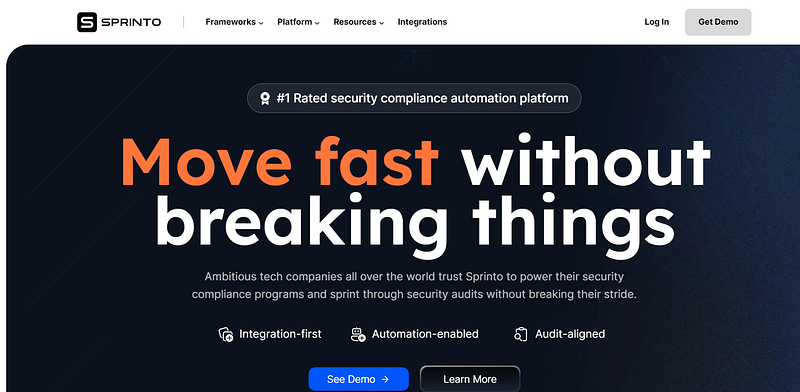
Image from sprinto.com
Pros:
- Customizable dashboard for auditors.
- Instant alerts for non-compliance activities.
- Role-based permissions for data protection.
- Risk profiling and actionable ticketing system.
- Seamless integration with 100+ cloud applications.
Cons:
- Regular updates may lead to unfamiliarity with dashboard features.
- Geared towards cloud-hosted companies, less effective on-premise.
- Simplified policies raise reliability concerns for some users.
3. AuditBoard
If you’re exploring Drata alternatives and need a scalable, enterprise-grade platform with strong audit and risk capabilities, AuditBoard is a strategic choice. AuditBoard is a modern risk platform designed to boost your teams, engage your business frontlines, and allow you to use risk as a strategic tool.
It has a unified data core that centralizes your organization’s risks, controls, policies, frameworks, issues, and more. Additionally, it features collaboration, automation, a robust workflow engine, business intelligence, and a highly extensible integration layer.
This well-designed platform sets a dynamic foundation for AuditBoard’s award-winning applications — RiskOversight, CrossComply, SOXHUB, OpsAudit, ESG, and TPRM, all aimed to address different risk management needs within your organization.

Image from auditboard.com
Pros:
- Excellent customer support services
- User-friendly and efficient implementation process
- Provides comprehensive guidance on compliance requirements
Cons:
- Limited reporting capabilities
- Comparatively expensive than other market alternatives
4. Scrut Automation
Scrut is a cloud-native compliance automation platform and a strong Drata alternative for organizations managing multiple infosec frameworks. Whether you’re pursuing SOC 2, ISO 27001, HIPAA, PCI, or GDPR, Scrut simplifies the entire process by consolidating compliance workflows into a single, intuitive dashboard.
Scrut stands out by automatically mapping collected evidence to the relevant clauses across different standards, eliminating redundant work and significantly reducing the time and cost of achieving compliance.
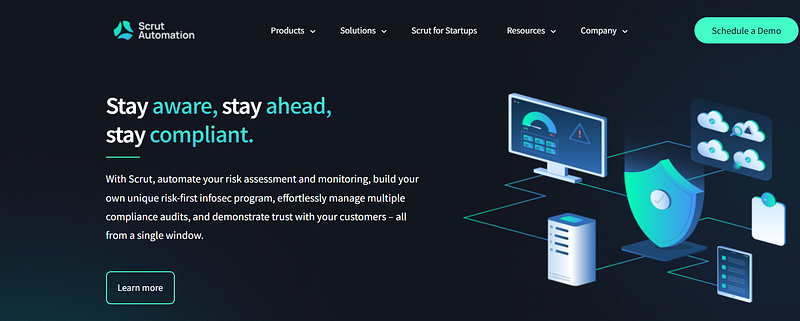
Image from scrut.io
Pros:
- Incorporates solid security measures for data protection.
- Regular updates include new features and improvements.
Cons:
- Might be expensive based on pricing structures, a negative for budget-limited organizations.
- Limited customization options may restrict tailor-made adjustments to suit specific needs.
5. Vanta
Vanta is committed to ensuring security and privacy in the increasingly cloud-reliant digital world. It aims to establish trust in software companies, protect the internet, and safeguard consumer data. Today, its expanding San Francisco team is dedicated to enhancing internet security and setting higher standards for tech companies.
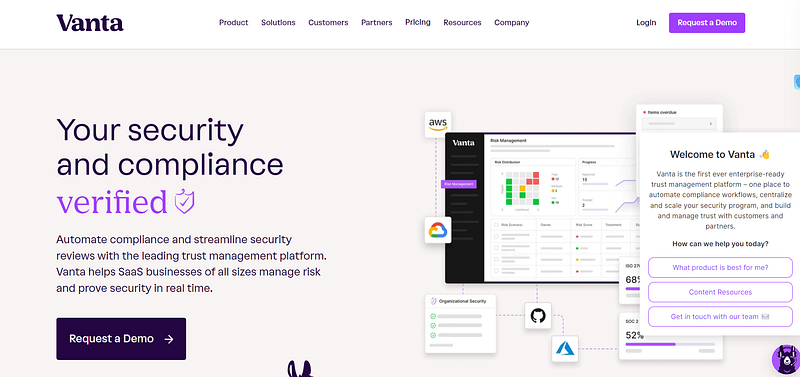
Image from vanta.com
Pros:
- Simplifies the development of a comprehensive InfoSec program and SOC2 audit preparation.
- Offers straightforward onboarding and continuous monitoring for ongoing compliance.
- Integrates with frequently-used software, saving time.
Cons:
- Some UI areas are rough and non-intuitive due to the product’s newness.
- More automation is desired to help small companies without a dedicated IT team.
6. HyperProof
Hyperproof is a robust security assurance and compliance operations platform and a compelling Drata alternative for teams seeking flexibility and efficiency in meeting regulatory requirements. It helps reduce the manual burden of control mapping, testing, evidence collection, and overall compliance management.
Hyperproof supports a wide array of frameworks including SOC 2, ISO 27001, NIST 800–53, and even custom compliance programs, making it ideal for organizations juggling multiple standards.
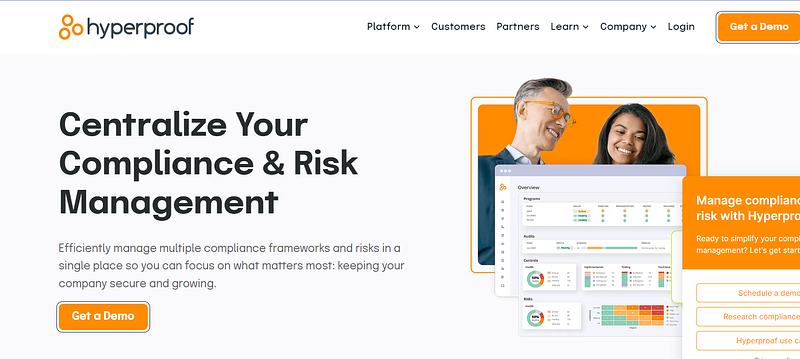
Image from hyperproof.io
Pros:
- Streamlines audit activities and enhances overall compliance posture.
- Bolsters security management, enabling proactive addressing of security vulnerabilities.
Cons:
- Limited customization option, making it hard to adapt to businesses with specific goals.
- Inefficiently integrates with third-party and custom applications, which may disrupt data flow and complicate the audit process.
7. Thoropass
Thoropass, formerly known as Laika, is an advanced Drata alternative offering a unified compliance platform that integrates directly with your existing systems. It supports infosec and privacy frameworks, enables continuous monitoring, streamlines audit prep, and simplifies SOC 2 management through automation.
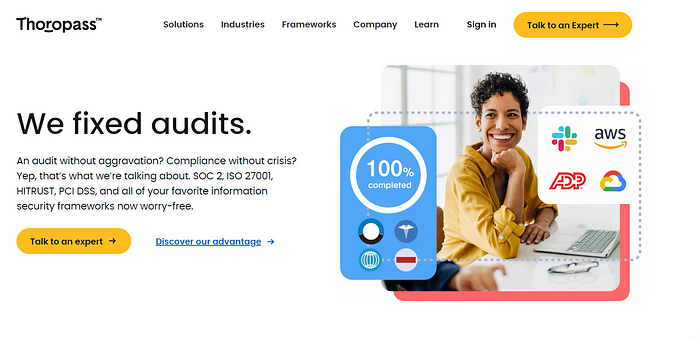
Image from thoropass.com
Pros:
- Supports policy creation for data governance and access control
- Enables role-based permissions and access management
- Continuously monitors cloud environments for threats and violations
- Simplifies SOC 2 compliance with automated workflows
Cons:
- Limited and occasionally buggy integration options
- Pre-built templates may overwhelm small teams or early-stage startups
- The user interface lacks clarity and detailed customization
8. OneTrust
OneTrust stands out as a privacy and data governance platform tailored for enterprise-grade compliance. Among Drata alternatives, it offers a robust AI-powered approach to managing organizational data, scaling risk programs, and automating privacy functions across teams.
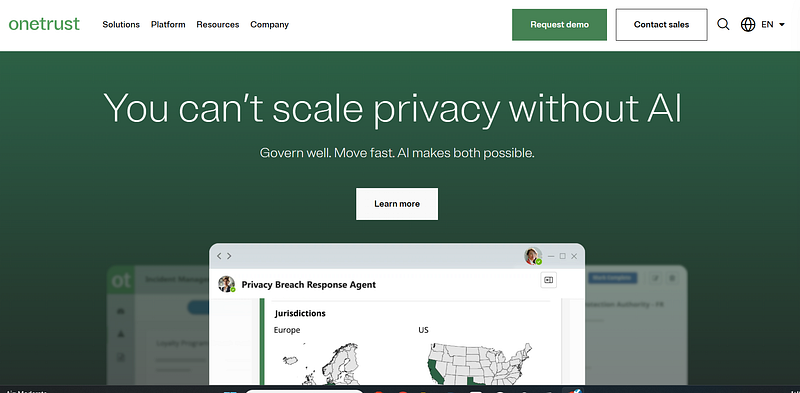
Image from onetrust.com
Pros:
- Advanced vendor risk management system with automation
- Built-in DSAR (Data Subject Access Request) support for user compliance
- Data mapping tools that give granular insight into internal data movement
Cons:
- Complex interface can slow onboarding and scalability
- Requires manual configuration for user and assessment mapping
- Limited flexibility in customizing workflows for unique business processes
9. Secureframe
Secureframe is a compliance automation platform powered by AI, tailored for organizations seeking a fast, guided path to certifications like SOC 2, ISO 27001, PCI DSS, HIPAA, and more. It automates evidence collection, cloud monitoring, and risk management, making compliance accessible to non-technical teams.
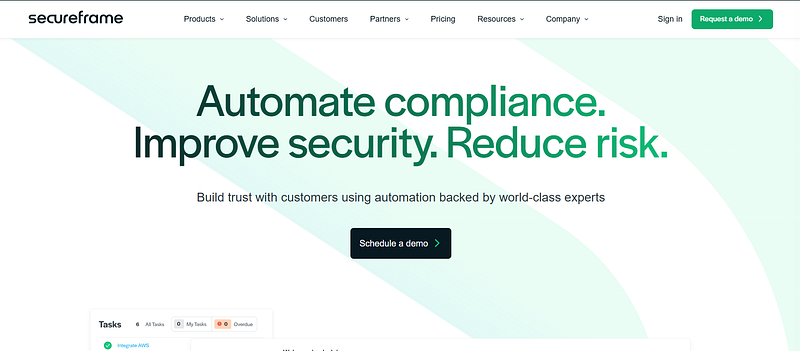
Image from secureframe.com
Pros:
- Ideal for non-technical users needing expert-guided compliance
- Uses Infrastructure-as-Code (IaC) to suggest tailored remediation paths
- Intuitive UI and seamless integrations with major cloud environments
- Strong customer support
Cons:
- Prioritizes ease of use over scalability
- Limited monitoring depth and inaccurate alerts due to integration gaps
- Provides surface-level reports on risks without detailed progression data
10. Scytale
Scytale is a lightweight, budget-friendly compliance automation platform geared toward startups and SMBs. It focuses on simplicity, guided workflows, and strong customer support for first-time compliance teams.
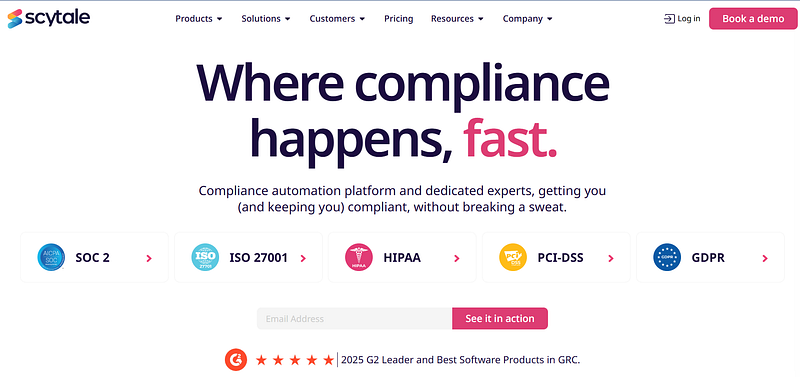
Image from scytale.ai
Pros:
- Simple setup and workflows
- Affordable pricing for small teams
- Strong onboarding support
- Good for SOC 2 and ISO 27001
Cons:
- Limited advanced capabilities
- Fewer integrations
- May not scale with growth
Conclusion
Drata is a solid choice for risk and compliance automation. But if you’re exploring alternatives, several platforms bring unique strengths to the table, each enhancing cybersecurity and compliance strategy in its own way.
Take SecureSlate — it simplifies compliance with intuitive workflows and automation. Or consider Sprinto, ideal for fast-scaling tech companies. Then there’s AuditBoard, known for its comprehensive risk platform and exceptional customer support.
Ultimately, the best compliance platform aligns with your organization’s needs, size, and future goals. Exploring these Drata alternatives gives you a chance to find the right fit — one that supports scaling, adaptation, and security in today’s fast-paced digital environment.
Need compliance without the complexity?
SecureSlate automates ISO 27001, SOC 2, GDPR, HIPAA, and more. Built for growing teams. See it in action.
No credit card required
May 4, 2026 · Tools & SoftwareComparisons and reviews
5 best GRC software solutions for enterprise teams in 2026
SecureSlate Team
May 4, 2026 · Tools & SoftwareComparisons and reviews
The best compliance audit software for 2026
SecureSlate Team
May 4, 2026 · Tools & SoftwareComparisons and reviews
The best compliance management software for 2026
SecureSlate Team