SOC 2 compliance

Get your SOC 2 report without building a security team first.

Enterprise buyers ask for a SOC 2 report before they sign. A dedicated SecureSlate compliance lead scopes your Trust Services Criteria, writes the system description, and runs readiness, while our compliance automation platform collects evidence from your stack across the audit window. One fixed price covers the work.

Trust Services Criteria (AICPA)61 criteria

Trust Services Criteria (AICPA): 61 criteria, 33 Security (Common Criteria), 3 Availability, 2 Confidentiality, 5 Processing integrity, 18 Privacy. 5 highlighted: Evidenced by included security scanning.

Evidenced by included security scanningScoped with your compliance lead
Report types
Type I and Type II
Issued by
An independent CPA firm
Type II observation period
Usually 3 to 12 months
The standard

A SOC 2 report is an auditor's opinion on your controls, not a certificate you frame.

SOC 2 is an attestation under AICPA standards. An independent CPA firm tests your controls against the Trust Services Criteria and reports what it found.

Security is required, the rest is your choice

The Security category, also called the Common Criteria, is in every SOC 2 report and covers 33 criteria from control environment to change management. Availability, Confidentiality, Processing Integrity, and Privacy are added when your customer commitments call for them.

Type I or Type II

A Type I report tests whether controls are designed properly at a single date. A Type II report tests whether they operated effectively over an observation period, usually 3 to 12 months, and it is the version most enterprise buyers ask for.

A report your buyers actually read

The report includes your system description, management's assertion, the auditor's opinion, and for Type II every test performed and any exceptions found. Buyers read the exceptions, so evidence quality during the window matters as much as the controls.
How it works

We run your SOC 2 program so the audit window stays quiet.

Four stages from the scoping call to a report your buyers accept, with a named compliance lead accountable at every one.

Scope the report

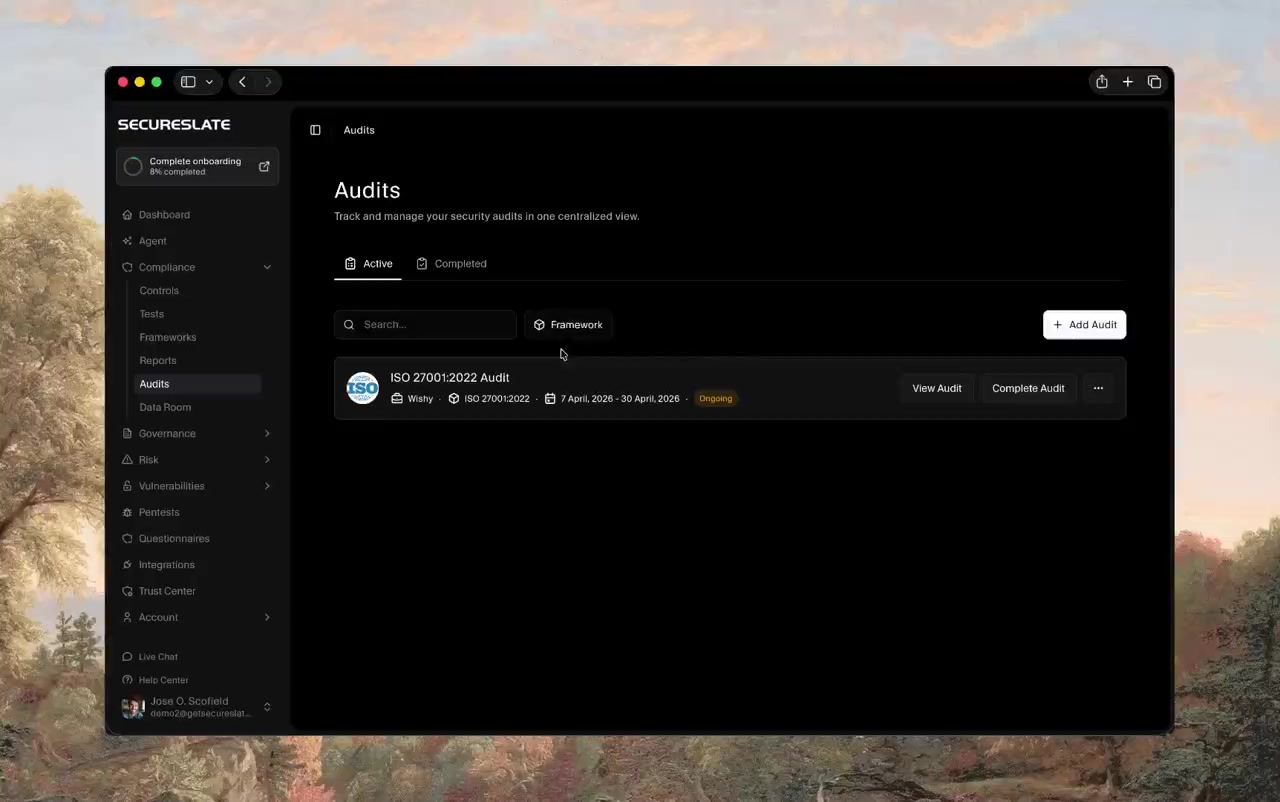
We decide which Trust Services Criteria belong in the report, which products and systems it covers, and whether Type I or Type II fits your deal timeline. Your compliance lead then runs a readiness assessment against every criterion you include.

Build the controls and the system description

Policies drafted for how your company actually operates, controls implemented, and the system description written in the form auditors expect. Integrations connect to your cloud, identity provider, code host, HR system, and devices so evidence collects itself.

Operate through the observation window

For Type II, controls have to run for the whole period. Access reviews, change approvals, onboarding and offboarding, vendor reviews, and incident exercises happen on schedule, and continuous monitoring flags drift before it becomes an exception.

Audit, then renew every year

We coordinate with the independent CPA firm you choose, prepare evidence for their requests, and stay with you through fieldwork. After the report lands, the program rolls into the next window, with a bridge letter covering any gap between reports.
What is included

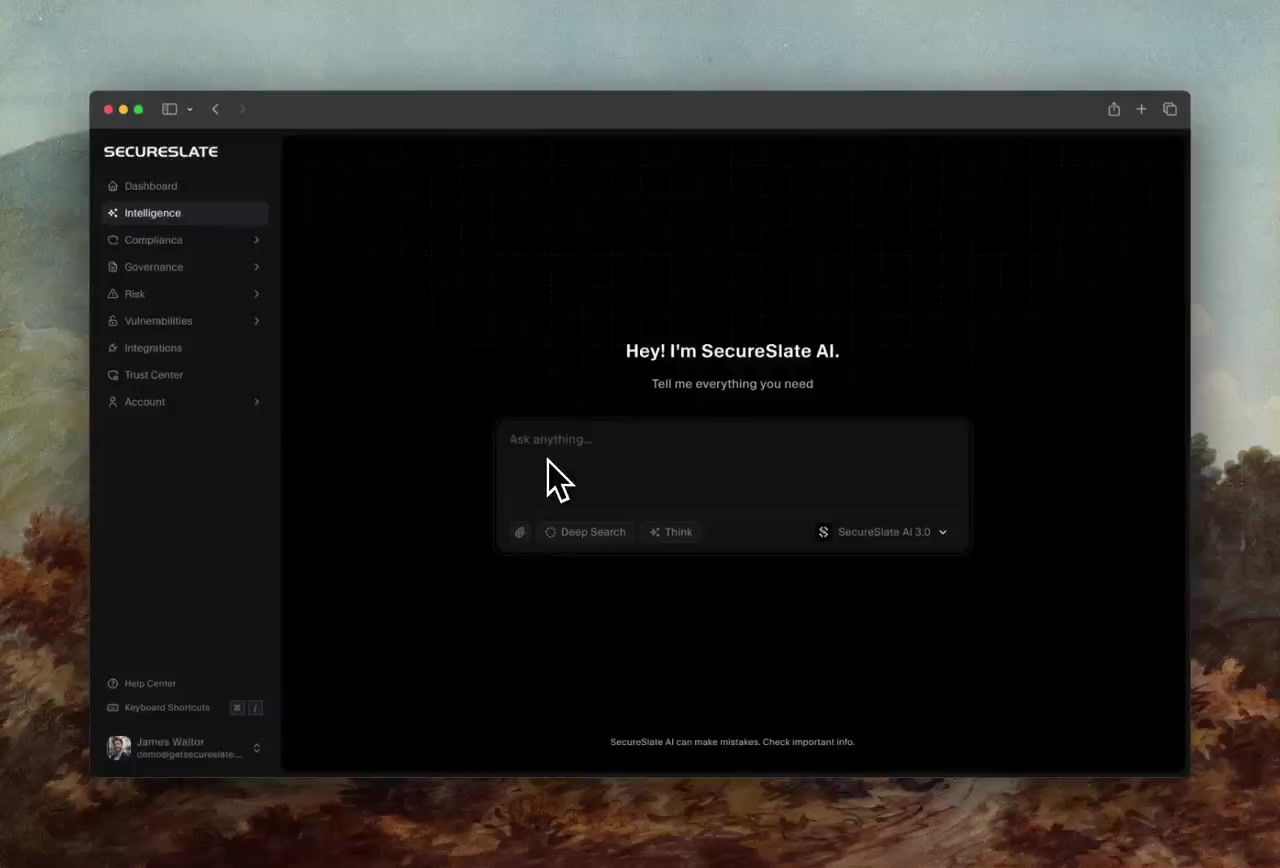
Everything your SOC 2 auditor samples, prepared before they ask.
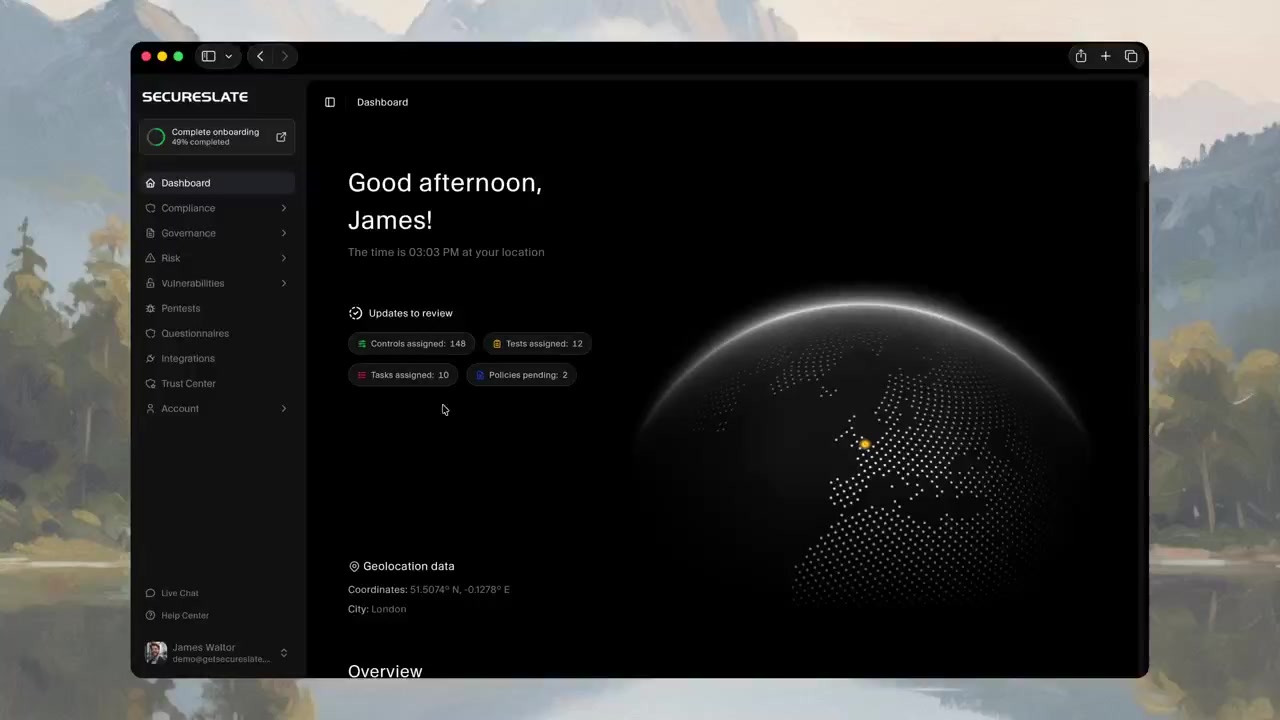
SOC 2 compliance software and the expert who runs it arrive together under one fixed price, so the program does not land on your engineers.

A dedicated compliance lead

One experienced practitioner owns your SOC 2 program end to end. They scope the criteria, write the system description, prepare evidence requests, and answer the auditor directly, so your team reviews and approves instead of learning the framework.

A system description auditors accept

The system description covers your services, infrastructure, software, people, data, and procedures. We write it against the AICPA description criteria and keep it in step with what you actually run.

Evidence from the stack you already run
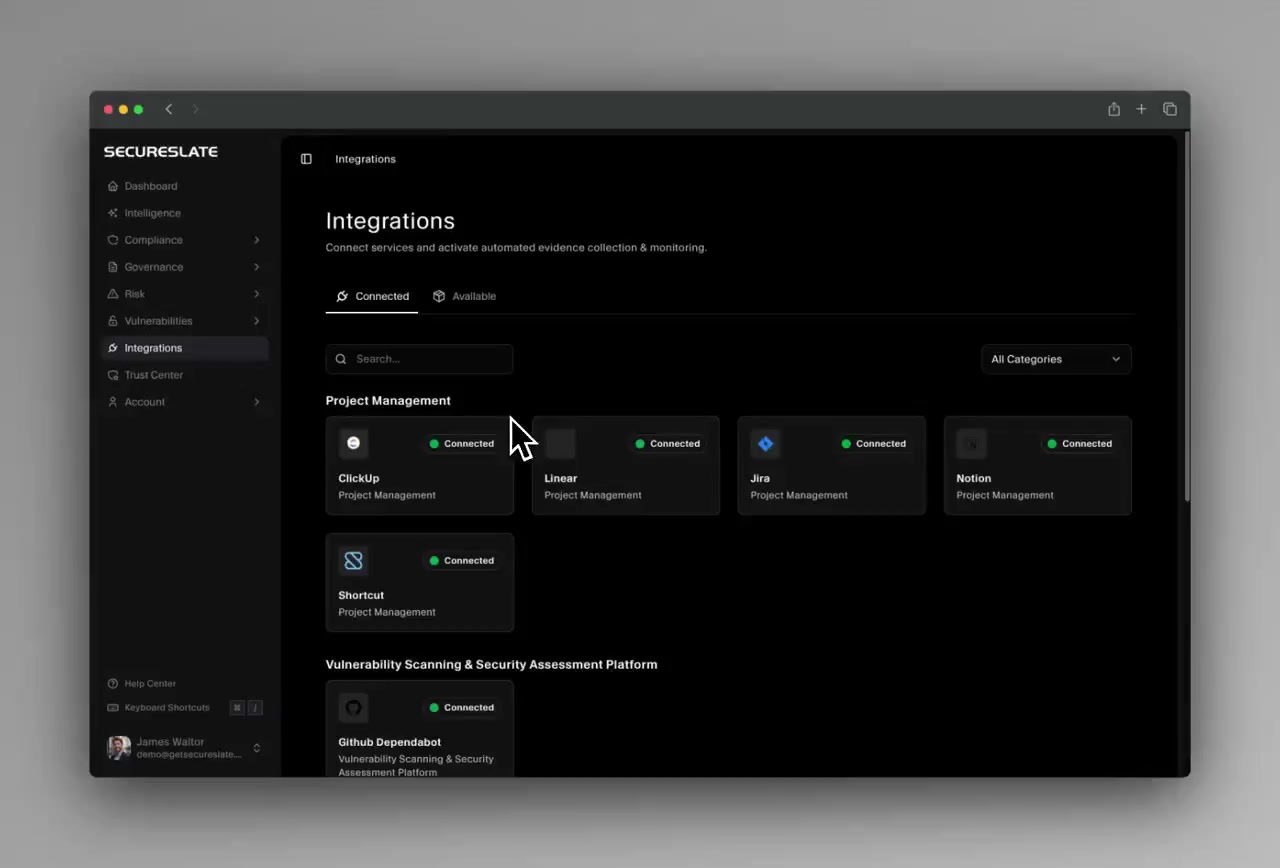
Connect your cloud provider, identity provider, code host, HR system, and devices once. Controls are tested continuously against live configuration, and when one fails, SecureSlate AI finds the gap and prepares a fix for your team to approve.

Access reviews, onboarding, and offboarding
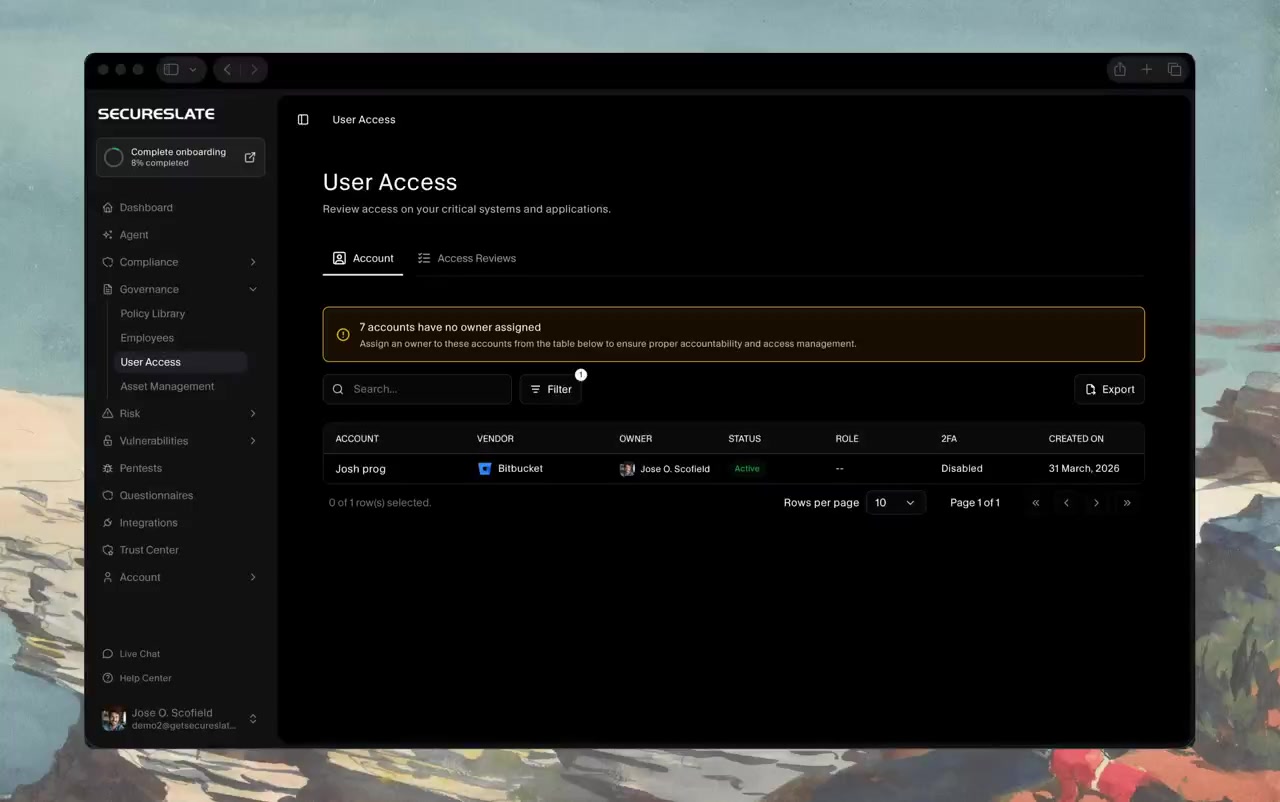
Access controls under CC6.2 and CC6.3 are a common source of Type II exceptions. Access reviews, joiner and leaver tasks, device checks, and security training run on a schedule with evidence an auditor can sample.

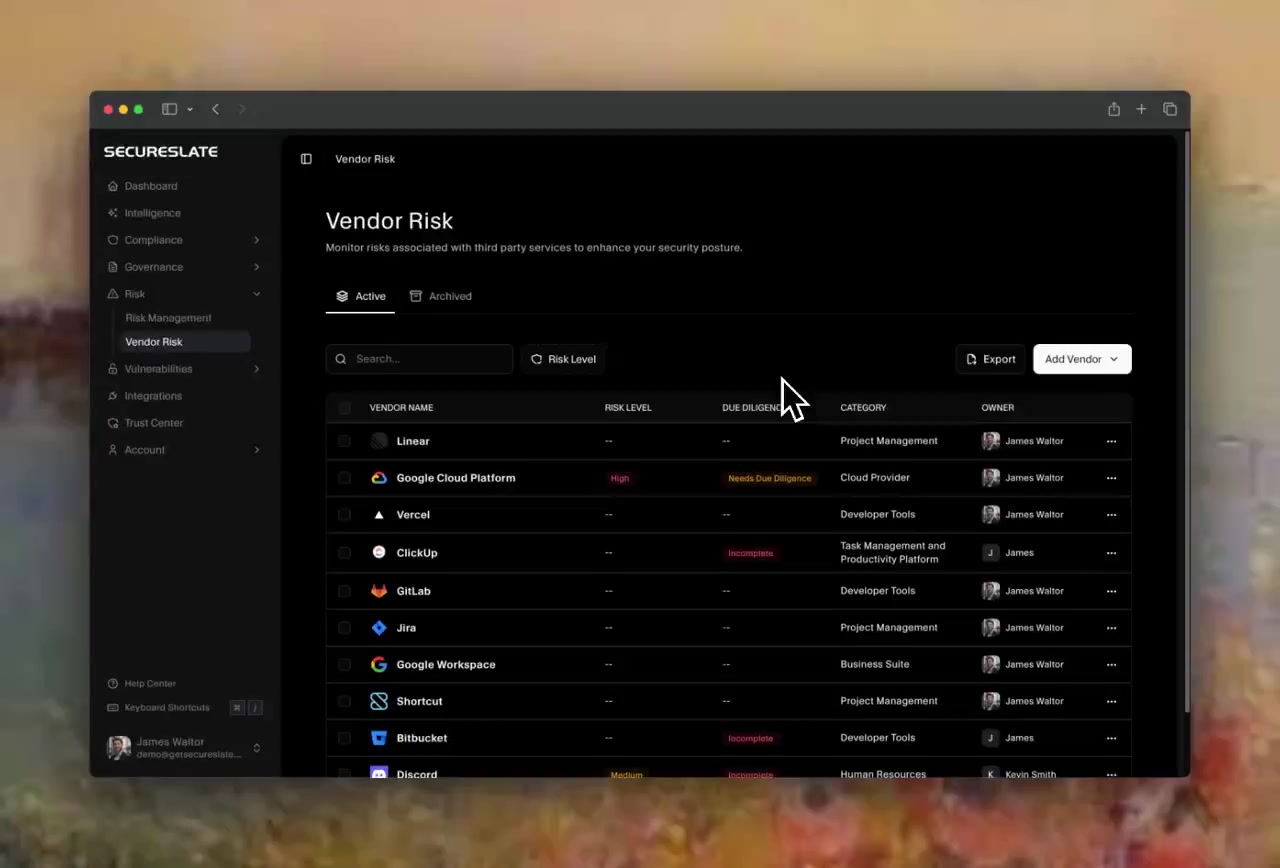
Vendor risk for CC9.2

Every subprocessor and critical vendor needs due diligence and a review cadence. We keep the vendor inventory, SOC report reviews, and follow-ups current across the observation period.

A Trust Center and questionnaire automation
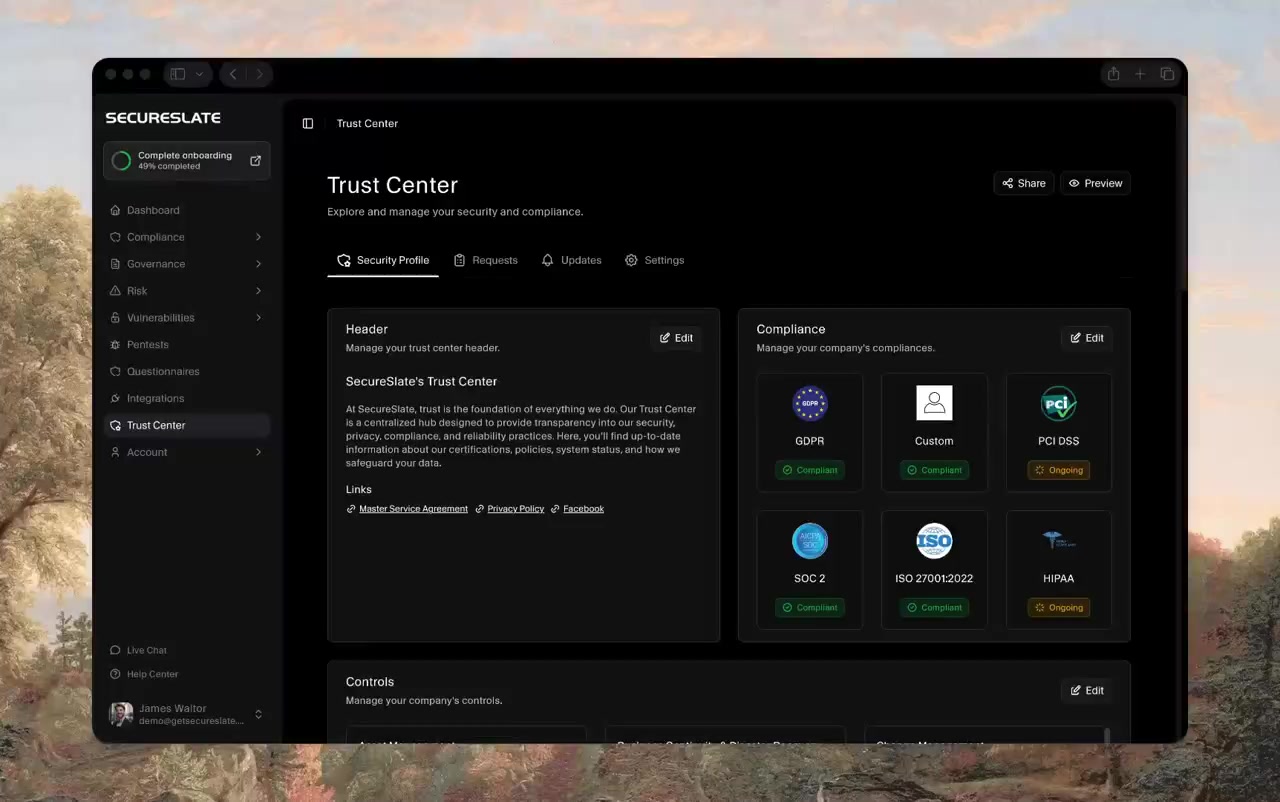
Share your SOC 2 report under NDA from a live Trust Center, and answer security questionnaires from your own policies and evidence, so the report starts closing deals the week it lands.
Common Criteria evidence

Several SOC 2 criteria need evidence from your code and cloud, not a policy.

System operations and change management are tested against what actually runs. Security scanning is part of the engagement, so the evidence comes from your real repositories, domains, and cloud accounts.
CC7.1, CC8.1

Code security scanning

Repositories scanned for vulnerable code, with findings classified by CWE and ranked by severity. That shows changes are tested and vulnerabilities detected, not only that a change policy exists.
CC6.1

Secrets detection

API keys, tokens, and credentials committed to source code, found and pinpointed to the file and line, so logical access is protected where it most often leaks.
CC7.1, CC8.1

Dependency and license risk

An SBOM for every repository, with vulnerable and risky open source components flagged. It shows third-party code is evaluated before and after it ships.
CC6.6, CC7.1

Public surface monitoring

Your domains and forgotten subdomains scanned on a schedule and when you ship, showing that threats and vulnerabilities at the system boundary are identified and fixed.
CC6.1, CC7.2

Dark web monitoring

Company email addresses checked against known breach data, so exposed credentials are found and rotated as part of monitoring for anomalies.
CC6.1, CC7.1

Cloud misconfiguration checks

AWS, Azure, and GCP configurations checked through read-only access for risky settings in encryption, access, logging, and networking.
Beyond SOC 2

One program, several frameworks.

Controls built for SOC 2 carry into the standards your buyers ask for next, so the second framework extends the program instead of starting a new one.

ISO 27001

The certificate European and enterprise buyers expect. Most SOC 2 controls carry over, and ISO 27001 adds a formal management system around them.

HIPAA

If you handle protected health information, the Security Rule safeguards overlap heavily with SOC 2 access, logging, and risk controls.

ISO 42001

Buyers asking about your AI features want to see AI governance, and ISO 42001 reuses the risk and vendor work SOC 2 already requires.

GDPR

The SOC 2 Privacy and Confidentiality criteria cover part of what GDPR expects. GDPR adds lawful basis, data subject rights, and records of processing.

SOC 1

If your service affects customers' financial reporting, their auditors may ask for a SOC 1 report on the controls relevant to it.

SOC 3

A general-use summary of your SOC 2 you can publish openly, useful when the full report is shared with customers only under NDA.
Customer results

SOC 2 results from SecureSlate customers

SaaS and healthcare teams that needed a SOC 2 report for their buyers without pulling engineers off the roadmap.

SOC 2
Meetrics unblocked enterprise deals with SOC 2 readiness a lean team could run
70%
Lower platform cost for Elfie after consolidating SOC 2, ISO 27001, GDPR, and HIPAA on SecureSlate

What used to take weeks now takes days. Automated workflows and real-time tracking eliminated the manual overhead. We always know our compliance status.

Sarah
Sarah Director of Security at Shortwave

We needed compliance that scaled with us. SecureSlate cut compliance costs while improving audit readiness. The ROI showed up immediately.

Michael
Michael CTO at Echonet
Resources

Read up before your scoping call.

Practical guides to SOC 2, from the criteria themselves to what the audit costs.

FAQs

What teams ask before starting SOC 2.

Find out what your SOC 2 report will take

Bring your scope and the buyer asking for it. You will leave the call with a gap summary, a timeline, and a fixed price, whether or not you work with us.

Jamie
Virtual Agent

Hi! I'm Jamie. Curious about your current compliance challenges and how automation might help your team?