

Image from Pexels
Key takeaways
- What Are Compliance Monitoring Tools: Compliance monitoring tools are software solutions designed to continuously oversee business operations, policies, and procedures to ensure adherence to applicable laws and internal standards.
- Key Features of Modern Compliance Monitoring Tools: Modern compliance monitoring solutions are more intelligent and user-friendly than ever before.
- Real-Time Alerts: These tools continuously scan systems and workflows for signs of non-compliance or irregular behavior.
Businesses continually face demands from legal frameworks, internal policies, and global regulations. The ever-changing regulatory environment necessitates constant attention to avoid penalties and disruptions.
Many repetitive compliance tasks are either low-impact or labor-intensive. Recognizing this, organizations are adopting automation and purpose-built solutions to streamline complex compliance demands and reduce human error.
Compliance monitoring platforms are key among these solutions. They scan resources to pinpoint vulnerabilities and non-compliance, ensuring data protection and adherence to standards. This article will define compliance monitoring, detail its benefits, and highlight leading systems available for achieving regulatory readiness.
What Are Compliance Monitoring Tools
Compliance monitoring tools are software solutions designed to continuously oversee business operations, policies, and procedures to ensure adherence to applicable laws and internal standards. They serve as digital watchdogs, tracking compliance performance and signaling when policies are breached.
Related guides:
Why Organizations Need Compliance Monitoring Tools
With laws such as GDPR, HIPAA, SOC 2 , and others becoming stricter each year, organizations face mounting pressure to maintain up-to-date and demonstrable compliance. Relying on spreadsheets, manual audits, or fragmented systems simply isn’t enough anymore.
Compliance monitoring tools provide a centralized and automated approach that not only reduces human error but also ensures transparency and accountability across all departments. These platforms are essential for:
- Automated Documentation of Compliance Activities
Instead of tracking policies and controls manually, the software records every compliance-related action automatically ensuring accuracy, consistency, and traceability for internal reviews or external audits. - Continuous Monitoring of Risk Areas
These tools scan for compliance gaps, policy violations, or security threats in real time, helping teams stay ahead of potential issues before they escalate. - Quick Response to Regulatory Audits
When auditors request documentation, reports, or logs, organizations can generate and present the required data instantly, saving time and reducing the stress of last-minute preparations.
Ultimately, these tools are not just about avoiding fines, but they empower organizations to build a proactive, risk-aware culture that fosters long-term operational resilience and stakeholder trust.
Key Features of Modern Compliance Monitoring Tools
Modern compliance monitoring solutions are more intelligent and user-friendly than ever before. Let’s explore their core functionalities:
Real-Time Alerts
These tools continuously scan systems and workflows for signs of non-compliance or irregular behavior. When a policy breach, unauthorized access, or unusual activity is detected, an immediate alert is triggered.
This real-time response enables compliance teams to act swiftly, minimizing potential damage and ensuring corrective measures are taken before issues escalate.
Risk Assessment Engines
Built-in risk engines assign scores to various activities based on their potential impact and likelihood. These scores help prioritize which risks need attention first, allowing compliance teams to allocate resources efficiently.
Advanced platforms often use machine learning models to refine these assessments over time, improving accuracy and reducing false positives.
Audit Trails and Reporting
A key compliance requirement is the ability to prove that policies are being followed. The compliance monitoring tools automatically log all relevant actions, such as user access, data changes, policy updates, and incident responses.
When it’s time for an internal or external audit, users can quickly generate comprehensive reports that demonstrate compliance history and accountability.
Data Encryption and Security
Modern compliance tools include features like end-to-end encryption to secure data both in transit and at rest. They also implement role-based access controls, multi-factor authentication, and frequent penetration testing to ensure only authorized users can interact with sensitive information.
These features not only protect data but also help meet requirements for regulations like HIPAA, PCI-DSS, and ISO 27001.
Types of Compliance Monitoring Tools
Compliance tools are not one-size-fits-all; each industry has its own regulations, risks, and operational demands.
Financial Compliance Tools
These tools are designed to help financial institutions detect fraud, combat money laundering (AML), and meet regulatory reporting requirements. They monitor transactions, assess risk levels, and ensure transparency in financial operations.
Healthcare Compliance Platforms
Tailored for hospitals, clinics, and healthcare providers, these platforms focus on HIPAA compliance and patient data security. They manage access controls, track medical audits, and safeguard electronic health records (EHRs).
7 Best HIPAA Compliance Software for 2025
Avoid Penalties with Top-Rated HIPAA Compliance Tools
IT & Cybersecurity Compliance Tools
These tools protect digital infrastructure by ensuring network security, managing user access, and preventing data breaches. They’re essential for meeting standards like ISO 27001, SOC 2, and PCI-DSS.
HR and Labor Law Compliance Tools
Aimed at HR departments, these tools manage employee compliance with labor laws. They track training, maintain proper documentation, and ensure adherence to wage, safety, and anti-discrimination regulations.
Top 10 Compliance Monitoring Tools in 2025
1. SecureSlate
SecureSlate is a fast-growing compliance automation platform tailored for startups and SMBs. It offers all-in-one functionality to help teams get audit-ready for SOC 2, ISO 27001, HIPAA, and GDPR certifications.
Unique Features:
- Centralized ISMS dashboard with AI-powered workflows
- Real-time control monitoring
- Built-in Trust Center and Data Room
- Prewritten policies and onboarding automation
Pros:
- Affordable and efficient for small teams
- Streamlined evidence management and automated tracking
- Ideal for early-stage compliance programs
Cons:
- Currently focused on small to medium organizations
- Some enterprise-grade features still evolving
2. LogicGate
LogicGate is a highly adaptable Governance, Risk, and Compliance (GRC) platform that empowers organizations to build and customize risk and compliance workflows using a no-code interface. It’s well-suited for businesses seeking flexibility across multiple regulatory frameworks.
Unique Features:
- Drag-and-drop workflow builder
- 20+ pre-built apps for specific compliance areas (e.g., GDPR, ISO 27001)
- Risk quantification linked to business impact
Pros:
- Highly customizable and scalable
- Visual dashboards for risk analysis
- Supports complex GRC structures
Cons:
- Can be overwhelming for new users
- Slower interface performance in large deployments
3. Vanta
Vanta is a popular compliance automation tool for fast-growing tech companies. It provides real-time monitoring, automated evidence collection, and streamlined audit preparation for standards like SOC 2, HIPAA, and ISO 27001.
Unique Features:
- 300+ integrations with cloud tools
- Real-time security checks
- Continuous compliance dashboard
Pros:
- Fast and intuitive setup
- Excellent for achieving SOC 2 and ISO certifications
- Automates time-consuming audit prep
Cons:
- Notification fatigue from constant alerts
- Pricing can be steep for smaller teams
- Agent-based system can feel invasive
4. ComplyAdvantage
ComplyAdvantage is built specifically for the financial industry, offering advanced AML and KYC compliance tools powered by artificial intelligence and real-time risk data.
Unique Features:
- AI-powered transaction monitoring
- Sanction and watchlist updates
- Real-time customer risk assessments
Pros:
- Comprehensive coverage for financial compliance
- Reduces fraud and money laundering risk
- Customizable workflows for different jurisdictions
Cons:
- Narrow focus, less useful outside finance
- Requires fine-tuning to minimize false positives
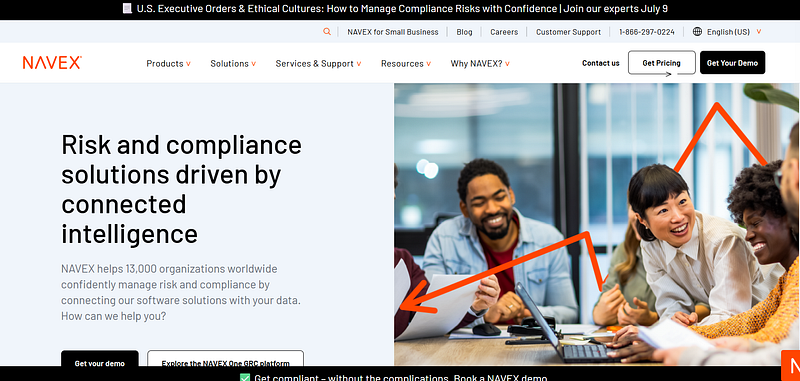
5. NAVEX Global
NAVEX Global is an enterprise-focused suite that provides solutions for ethics, risk, whistleblower management, policy enforcement, and training. It’s ideal for companies managing large, distributed teams with diverse compliance requirements.
Unique Features:
- Centralized policy and training modules
- Whistleblower hotline integration
- Vendor risk assessments
Pros:
- Broad functionality across enterprise compliance areas
- Supports employee awareness and reporting
- Trusted by Fortune 500 companies
Cons:
- Implementation can be time-consuming
- Expensive for smaller organizations
- Steeper learning curve
6. MetricStream
MetricStream is a robust enterprise GRC solution designed for large, global organizations with complex regulatory environments. It offers integrated modules for audit, risk, policy, and regulatory compliance.
Unique Features:
- Real-time regulatory intelligence updates
- Integrated internal audit platform
- Risk heatmaps and analytics
Pros:
- Scalable for multinational organizations
- Supports multiple compliance frameworks
- Deep reporting and analytics capabilities
Cons:
- Requires dedicated internal resources
- High total cost of ownership
- Slower onboarding process
7. Drata
Drata is an automation-first compliance platform built for startups and SaaS companies. It helps businesses prepare for and maintain certifications such as SOC 2 and ISO 27001 with minimal manual effort.
Unique Features:
- Automated evidence collection
- Continuous control monitoring
- Compliance scorecards and progress tracking
Pros:
- Rapid implementation
- Ideal for lean teams and technical startups
- Reduces audit preparation time significantly
Cons:
- Still maturing in enterprise-grade features
- Requires manual oversight in some control areas
8. Secureframe
Secureframe simplifies the process of getting audit-ready for certifications like SOC 2, ISO 27001, and GDPR. It offers guided workflows, prewritten policies, and vendor risk assessments.
Unique Features:
- Compliance checklist templates
- Security training for employees
- Audit collaboration tools
Pros:
- Great onboarding support for compliance novices
- Streamlined UI with logical workflows
- Solid for small to medium-sized businesses
Cons:
- Limited capabilities for large enterprises
- Some features still under development
9. Hyperproof
Hyperproof is a compliance operations platform that helps teams manage and scale compliance programs across multiple frameworks through automation and integrations.
Unique Features:
- Integrations with productivity tools (Slack, Jira, Teams)
- Automated evidence collection and task assignments
- Centralized dashboard for multiple frameworks
Pros:
- Flexible and intuitive interface
- Designed for continuous compliance
- Great for cross-team collaboration
Cons:
- Custom reports require some setup
- May lack depth for very large enterprises
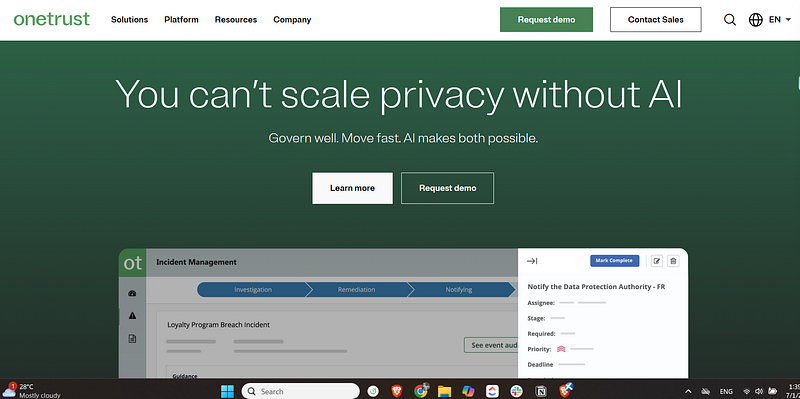
10. OneTrust
OneTrust is a comprehensive privacy, ESG, ethics, and compliance platform used by global enterprises. It offers scalable modules that support evolving regulatory landscapes.
Unique Features:
- Modular architecture with privacy and ESG support
- Data mapping and consent management
- Real-time policy enforcement
Pros:
- Best-in-class for global privacy compliance
- Highly customizable
- Trusted by leading multinational corporations
Cons:
- Resource-heavy implementation
- Complex interface may require specialist training
How to Choose the Right Compliance Tool for Your Business
With a wide array of options on the market, choosing the right compliance monitoring tool for your business can feel overwhelming. Here are the key factors to consider to ensure you make the best choice:
- Industry-Specific Needs: Select a tool designed for your specific industry, whether it’s healthcare, finance, SaaS, or legal. Industry-specific solutions often come with features, templates, and pre-configured settings that align directly with your regulatory requirements.
- Scalability: Make sure the platform can scale with your organization. As your business grows and regulations evolve, the tool should be able to handle increased data volume, new compliance requirements, and a growing user base without disruption.
- Integration with Existing Systems: Look for a solution that seamlessly integrates with your current software, such as your CRM, ERP, cloud storage, and HR platforms. This ensures smooth data flow and prevents operational silos.
- Budget Considerations: When evaluating costs, go beyond just the initial licensing fees. Consider the total cost of ownership, which includes implementation, employee training, and ongoing support. This holistic view helps you avoid hidden expenses and plan your budget effectively.
Common Challenges with Compliance Monitoring Tools
Despite their benefits, businesses may face a few hurdles:
- Over-Complex Interfaces: Some platforms are difficult to navigate without proper training.
- False Positives: Automated alerts may occasionally flag non-issues, leading to alert fatigue.
- Data Integration Issues: Legacy systems may not sync well with modern platforms.
Best Practices for Implementing Compliance Tools
Maximize your investment with these best practices:
- Conduct a Compliance Audit: Before implementing any new tool, perform a thorough audit of your current compliance status. This helps you identify existing gaps and understand your specific needs, ensuring you choose a solution that directly addresses your weaknesses.
- Employee Training: A tool is only as effective as the people using it. Provide comprehensive training to your staff so they understand how to use the platform, interpret alerts, and take appropriate action. This prevents user error and ensures a smooth workflow.
- Continuous Monitoring: Don’t just set it and forget it. Configure automated alerts and schedule regular, recurring assessments. This proactive approach ensures you catch potential issues in real time and maintain continuous compliance.
Conclusion
In 2025, compliance is no longer just a legal requirement; it’s a competitive advantage. With the right compliance monitoring tools , businesses can stay ahead of regulatory changes, minimize risks, and build trust with stakeholders.
By investing in automation, AI, and proactive risk management, companies not only ensure compliance but also streamline their operations and protect their brand. As regulations grow more complex, so must our tools evolve, making the adoption of these platforms not just smart, but essential.
Ready to Streamline Compliance?
Building a secure foundation for your startup is crucial, but navigating the complexities of achieving compliance can be a hassle, especially for small teams.
SecureSlate offers a simpler solution:
- Affordable: Expensive compliance software shouldn’t be a barrier. Our affordable plans start at just $284/month.
- Focus on Your Business, Not Paperwork: Automate tedious tasks and free up your team to focus on innovation and growth.
- Gain Confidence and Credibility: Our platform guides you through the process, ensuring you meet all essential requirements and giving you peace of mind.
Disclaimer (legal note)
SecureSlate is not a law firm, and this article does not constitute or contain legal advice or create an attorney-client relationship. When determining your obligations and compliance with respect to relevant laws and regulations, you should consult a licensed attorney.
Need compliance without the complexity?
SecureSlate automates ISO 27001, SOC 2, GDPR, HIPAA, and more. Built for growing teams. See it in action.
Find compliance gaps in 30 seconds
