
 Image from getsecureslate.com
Related guides:
- your guide to soc 2 audits
- the ultimate iso 27001 guide
- us data privacy compliance checklist
- multi-framework compliance platforms
- automated compliance tools
- affordable compliance platforms
- compliance software for SaaS companies
Key takeaways
- Best overall for growing teams: SecureSlate covers ISO 27001, SOC 2, GDPR, and HIPAA in one ISMS, with plans from $284/month.
- What to look for: automated evidence collection, continuous control monitoring, and one control set reused across frameworks.
- How to choose: match the platform to the frameworks you need, the integrations in your stack, and your budget.
Compliance automation platforms replace spreadsheets and screenshot folders with software that collects audit evidence, monitors controls, and manages policies for frameworks like SOC 2 and ISO 27001. The right platform can cut audit preparation from months to weeks and keep you audit-ready between reports.
The market has grown quickly, and the tools differ a lot in framework coverage, integrations, support, and price. Some focus on fast-moving startups, others on enterprise GRC programs.
To help you compare, we've reviewed the leading compliance automation platforms for 2026, with the strengths and trade-offs of each:
1. Secureslate
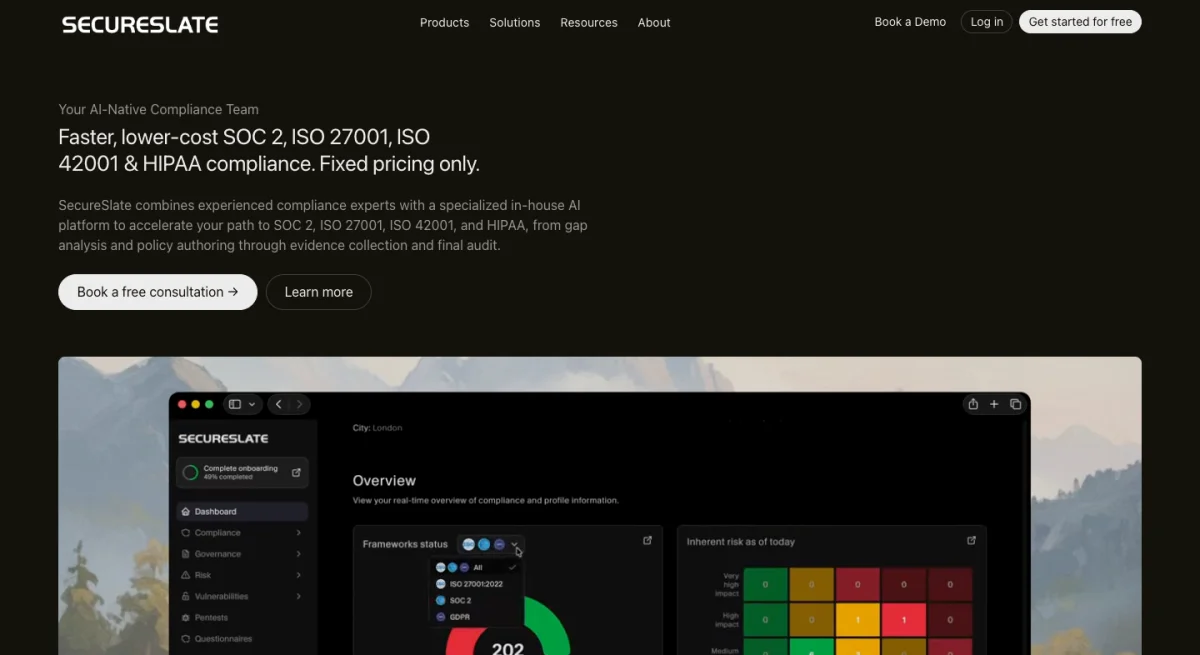
Secureslate empowers businesses to achieve compliance and grow with confidence through its hassle-free Information Security Management System (ISMS) solution. The platform streamlines compliance processes, protects data, and facilitates the attainment of key certifications such as ISO 27001, SOC 2, GDPR, HIPAA, and more.
With Secureslate, organizations can navigate the complexities of compliance seamlessly, ensuring robust data protection and fostering a secure foundation for sustainable growth.
Pros:
- Simplifies achieving compliance with standards like ISO 27001, SOC 2, etc.
- Enhances data protection and reduces breach risks.
- Streamlined compliance saves time and effort.
- Allows real-time collaboration and team empowerment.
- Reduces audit preparation time with comprehensive tools.
- Automates compliance, speeding up the process.
- Easily integrates with existing tech stacks for continuous monitoring.
Cons:
- Focused on security and privacy frameworks like SOC 2, ISO 27001, ISO 42001, HIPAA, and GDPR rather than broad enterprise GRC programs such as SOX or ESG.
- Teams that want a purely self-serve tool may not need the included expert support.
2. AuditBoard
AuditBoard is a modern risk platform designed to boost your teams, engage your business frontlines, and allow you to use risk as a strategic tool. It has a unified data core that centralizes your organization’s risks, controls, policies, frameworks, issues, and more. Additionally, it features collaboration, automation, a robust workflow engine, business intelligence, and a highly extensible integration layer.
This well-designed platform sets a dynamic foundation for AuditBoard’s award-winning applications, RiskOversight, CrossComply, SOXHUB, OpsAudit, ESG, and TPRM, all aimed to address different risk management needs within your organization.
 Image from auditboard.com
Pros:
- Excellent customer support services
- User-friendly and efficient implementation process
- Provides comprehensive guidance on compliance requirements
Cons:
- Limited reporting capabilities
- Comparatively expensive than other market alternatives
3. Scrut Automation
Scrut is an automation platform that simplifies compliance with various infosec standards, such as SOC 2, ISO 27001, HIPAA, PCI, and GDPR. It efficiently combines all these compliances into a single dashboard and maps evidence to relevant clauses across the standards, eliminating repetitive tasks and saving both time and money.
 Image from www.scrut.io
Pros:
- Incorporates solid security measures for data protection.
- Regular updates include new features and improvements.
Cons:
- Might be expensive based on pricing structures, a negative for budget-limited organizations.
- Limited customization options may restrict tailor-made adjustments to suit specific needs.
4. Drata
Drata is an automation platform that continuously monitors a company’s security controls, streamlines compliance workflows, and ensures audit readiness. It helps businesses reduce costs and preparation time for annual audits by automating control monitoring and evidence collection. Drata supports several frameworks including SOC 2, ISO 27001, HIPAA, and GDPR among others.
 Image from drata.com
Pros:
- Excellent customer support enhances user experience.
- Provides variety of policy templates for ease of implementation.
Cons:
- Limited custom integration options may disrupt data flow between different systems.
5. RFPIO (Responsive)
Responsive, previously RFPIO, leads the market in strategic response management software, revolutionizing the way critical information is shared and exchanged.
Their focus on product innovation and customer satisfaction helps businesses grow, reduce risks, and enhance the employee experience. This is achieved through their integrated technologies for managing various complex information requests such as RFPs, RFIs, VSQs, DDQs, and risk assessments.
 Image from responsive.io
Pros:
- Easy-to-understand interface and simple navigation for all users.
- Integrated workflow promotes efficient time management and productivity.
- Customizable and centralized dashboards improve project visibility and personalization.
Cons:
- New users may struggle with the organization of the content library.
- Newer features have a learning curve, potentially creating inconvenience for quick adoption.
6. Vanta
Vanta is committed to ensuring security and privacy in the increasingly cloud-reliant digital world. It aims to establish trust in software companies, protect the internet, and safeguard consumer data. Today, its expanding San Francisco team is dedicated to enhancing internet security and setting higher standards for tech companies.
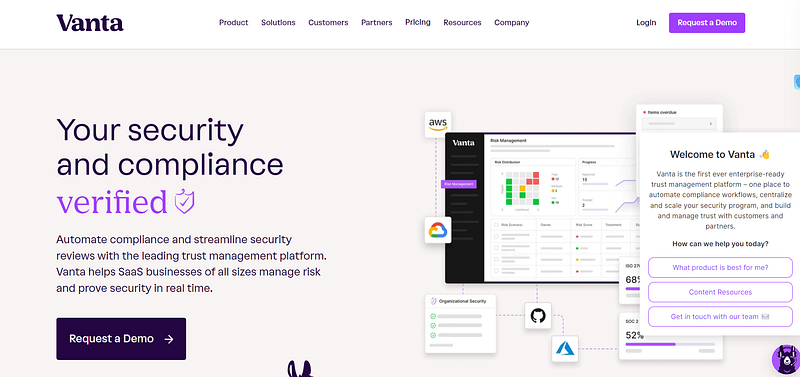 Image from www.vanta.com
Pros:
- Simplifies the development of a comprehensive InfoSec program and SOC2 audit preparation.
- Offers straightforward onboarding and continuous monitoring for ongoing compliance.
- Integrates with frequently-used software, saving time.
Cons:
- Some UI areas are rough and non-intuitive due to the product’s newness.
- Improvements have been made and team responsiveness to feedback is commendable, such as in employees’ onboarding/off-boarding flows.
- More automation is desired to help small companies without a dedicated IT team to automatically take steps to remediate issues.
7. Laika (Thoropass)
Laika is a complete compliance platform ideal for all business sizes. It supports the acquisition of information security certifications and audits such as SOC2 and ISO 27001 and ensures continuous compliance with rules like HIPAA and GDPR.
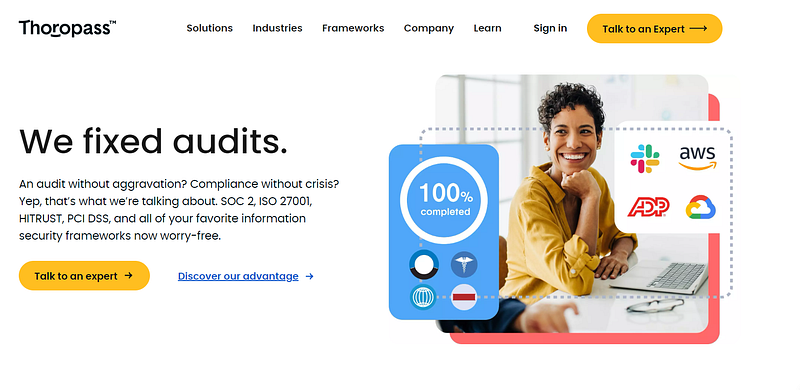 Image from thoropass.com
Pros:
- Simplifies and centralizes audit-based activities.
- User-friendly platform for efficient audit planning and management.
- Reduces administrative burden with its streamlined approach.
- Provides advanced security features through its Risk Cloud platform.
Cons:
- Could be complex and require additional training.
- Pricing structure may not be cost-effective for organizations with budget constraints.
8. HyperProof
Hyperproof is a security assurance and compliance platform that aids organizations in meeting regulatory requirements. It reduces manual labor associated with control mapping, testing, evidence collection, and management. It supports various compliance frameworks like SOC2, ISO 27001, NIST 800–53, and more and allows management of custom frameworks.
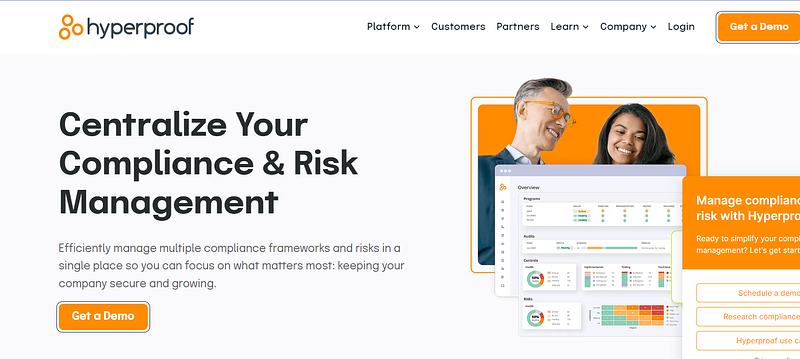 Image from hyperproof.io
Pros:
- Streamlines audit activities and enhances overall compliance posture.
- Bolster's security management, enabling proactive addressing of security vulnerabilities.
Cons:
- Limited customization options, making it hard to adapt to businesses with specific goals.
- Inefficiently integrates with third-party and custom applications, which may disrupt data flow and complicate the audit process.
9. Sprinto
Sprinto is a security compliance automation platform designed for rapidly growing tech companies. It includes pre-configured security programs, continuous control monitoring, and automated evidence gathering, enabling quick and successful security audits.
The platform is scalable, which allows businesses to grow alongside compliance. Sprinto supports over 20 compliance standards including SOC 2, ISO 27001, GDPR, HIPAA, and PCI-DSS.
Across the globe, Sprinto has helped hundreds of companies streamline compliance and ace audits.
 Image from sprinto.com
Pros:
- Customizable dashboard for auditors.
- Instant alerts for non-compliance activities.
- Role-based permissions for data protection.
- Risk profiling and actionable ticketing system.
- Seamless integration with 100+ cloud applications.
Cons:
- Regular updates may lead to unfamiliarity with dashboard features.
- Geared towards cloud-hosted companies, less effective on-premise.
- Simplified policies raise reliability concerns for some users.
10. Onspring
Onspring provides a policy management solution that transitions you from tiresome manual processes to connecting and monitoring your GRC functions. Its capabilities include a flexible platform, a streamlined and automated system, and functions as a compliance tracker, audit software, GRC tool, vendor, and contract management tool. It also updates legislative changes and controls automatically.
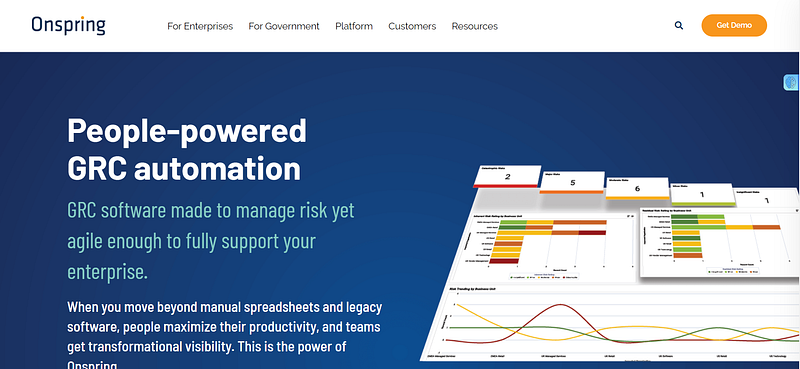 Image from onspring.com
Pros:
- User-friendly, boosting productivity with its straightforward interface and functions.
- Manages complicated processes, simplifying intricate workflows.
Cons:
- Limited access for non-users, potentially impacting collaboration and information exchange.
- Difficulties encountered in issue transmission to auditees, possibly causing delays in issue resolution and effectiveness.
11. Skan AI
Skan AI is a process intelligence platform that creates a "Context Graph of Work" by observing how work actually gets done across the enterprise. By distilling billions of operational signals into a living execution logic, Skan provides the operational ground truth necessary for scaling AI agents and ensuring continuous regulatory compliance. It captures workflows across mainframe, legacy desktop, and modern web tools without the need for complex integration projects.
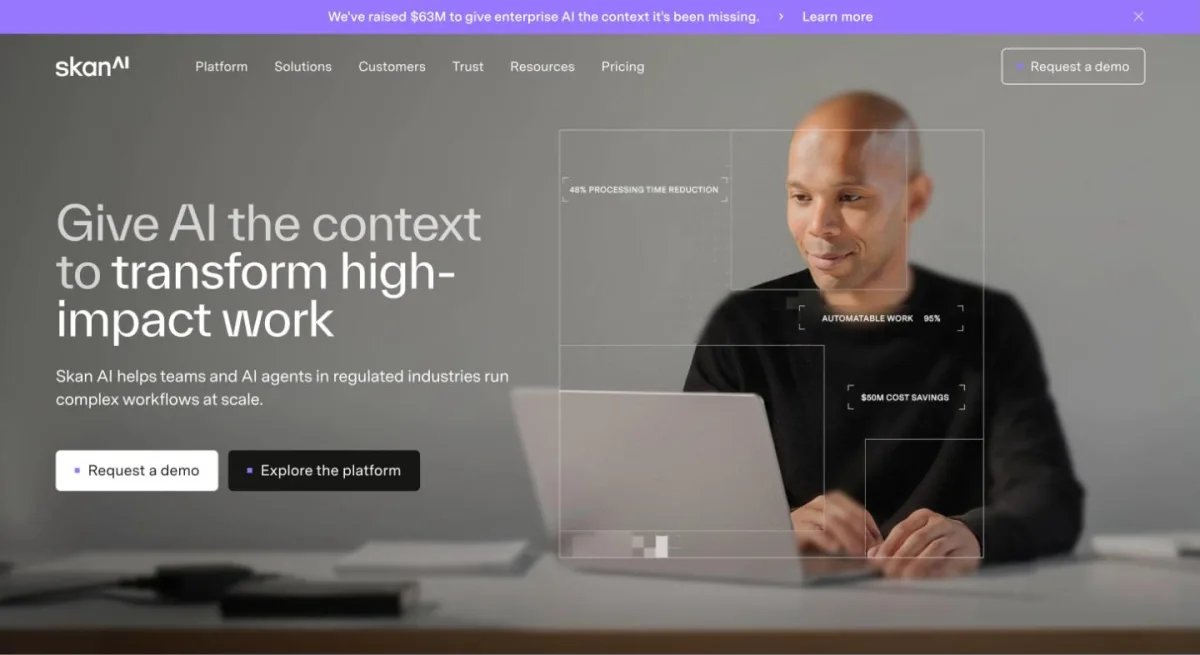 Image from skan.ai
Pros:
- Zero-integration capture across legacy and modern tech stacks.
- Creates detailed audit trails of every action and agent decision.
- Grounds AI agents in real-world operational context to handle exceptions.
- Ensures data privacy by processing raw records within the enterprise perimeter.
Cons:
- Optimized for enterprise scale, which may be complex for smaller teams.
- Requires a strategic commitment to process-driven transformation.
12. Engine
Engine is a modern travel platform for booking and managing work trips. It helps businesses stay on top of their spend through an intuitive network that connects to nearly every hotel, airline, and car rental company in the U.S. By centralizing travel management, it provides finance and HR teams with the control and visibility they need to maintain compliance without the usual headaches.
The platform lets admins set rate caps, star-rating limits, and class-of-service rules that apply automatically at search and checkout. This means you are controlling spend before it happens, rather than just tracking it after the fact. With single invoice billing and a unified view of all company travel, Engine makes it easy to keep your records audit-ready while providing your team with the flexibility they need.
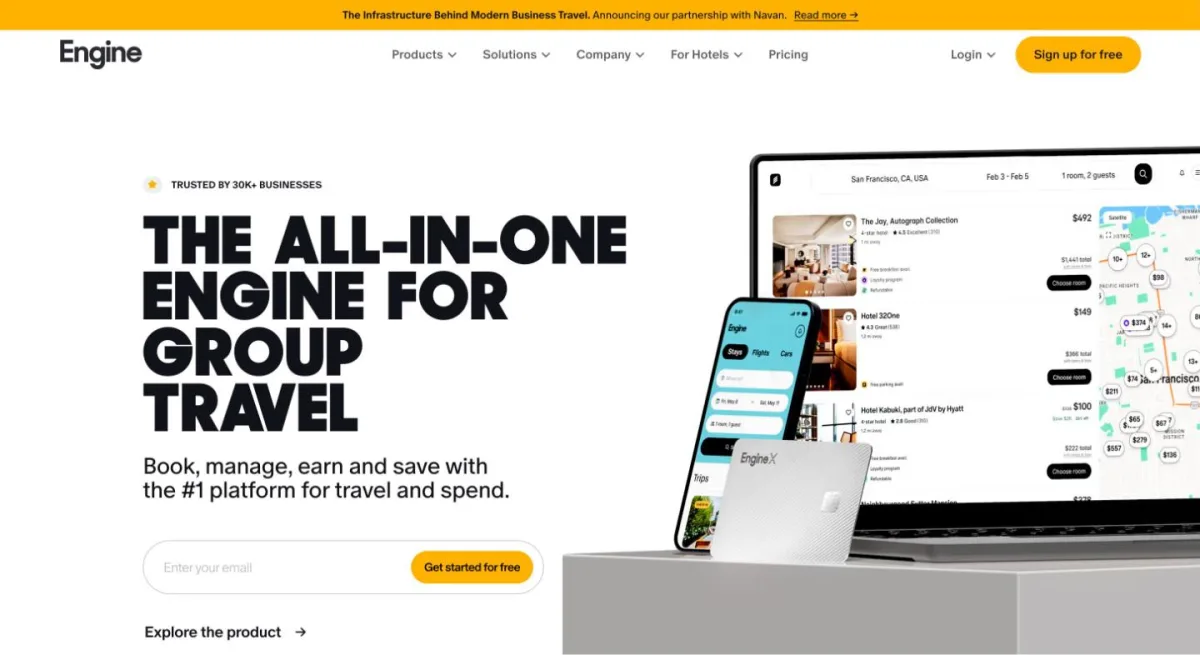 Image from engine.com
Pros:
- Enforces travel policies automatically at the point of booking.
- Consolidates all travel spend into one simple, itemized invoice.
- Offers flexible booking options to modify trips without sunk costs.
Cons:
- Focuses specifically on travel spend management rather than broad IT security frameworks.
- Maximized benefits require organizations to centralize their travel booking processes.
Each of these platforms brings something different. SecureSlate makes ISO 27001 and SOC 2 compliance simple and affordable, Sprinto suits fast-growing tech companies, AuditBoard is known for its customer support, and Drata is strong on continuous monitoring.
Your business is unique, so let your frameworks, integrations, team size, and budget steer the decision. Shortlist two or three platforms, ask for demos, and check how much of your evidence each one can collect automatically.
Ready to Streamline Compliance?
Building a secure foundation for your startup is crucial, but navigating the complexities of achieving compliance can be a hassle, especially for a small teams.
SecureSlate offers a simpler solution:
- Affordable: Expensive compliance software shouldn’t be the barrier. Our affordable plans start at just $284/month.
- Focus on Your Business, Not Paperwork: Automate tedious tasks and free up your team to focus on innovation and growth.
- Gain Confidence and Credibility: Our platform guides you through the process, ensuring you meet all essential requirements, giving you peace of mind.
FAQ
What is compliance automation?
Compliance automation uses software to continuously collect evidence, monitor controls, and manage policies, replacing manual audit preparation. It keeps organizations audit-ready across frameworks year-round.
- Integrations pull evidence automatically from cloud, identity, and code systems.
- Controls are monitored continuously so gaps are caught as they happen.
- The same evidence is reused across SOC 2, ISO 27001, GDPR, and HIPAA.
What are the best compliance automation platforms?
The best compliance automation platforms combine broad integrations, multi-framework support, and continuous monitoring at a price that fits your team. The right choice depends on how many frameworks you manage and your budget.
- Enterprise teams often weigh Vanta (fastest to audit-ready), Drata (deepest continuous monitoring), and Secureframe (35+ frameworks with hands-on support).
- Cost-conscious SaaS teams choose platforms like SecureSlate, from $284/month.
- Prioritize platforms that reuse one control set across multiple frameworks.
Can ISO 27001 compliance be automated?
Yes, ISO 27001 compliance can be largely automated for evidence collection, control monitoring, and risk tracking, though scoping your ISMS and the certification audit still require human input. Automation shortens preparation significantly.
- Software tracks implementation of the 93 Annex A controls and builds your Statement of Applicability.
- Evidence for access, change management, and monitoring is gathered automatically.
- An accredited certification body must still perform the Stage 1 and Stage 2 audits, see our ISO 27001 certification companies guide.
What are the best SOC 2 automation platforms?
The best SOC 2 automation platforms automatically collect evidence, run continuous control tests, and keep you audit-ready between Type II windows. Deep cloud integrations are the key differentiator.
- Look for native integrations with AWS, Azure, GCP, GitHub, and identity providers.
- Continuous monitoring beats point-in-time checklists for Type II reports.
- Platforms that also cover GDPR and user access reviews reduce tool sprawl.
Need compliance without the complexity?
SecureSlate automates ISO 27001, SOC 2, GDPR, HIPAA, and more. Built for growing teams. See it in action.
Find compliance gaps in 30 seconds
