SecureSlate for SaaS

Your buyers audit you before they buy you.

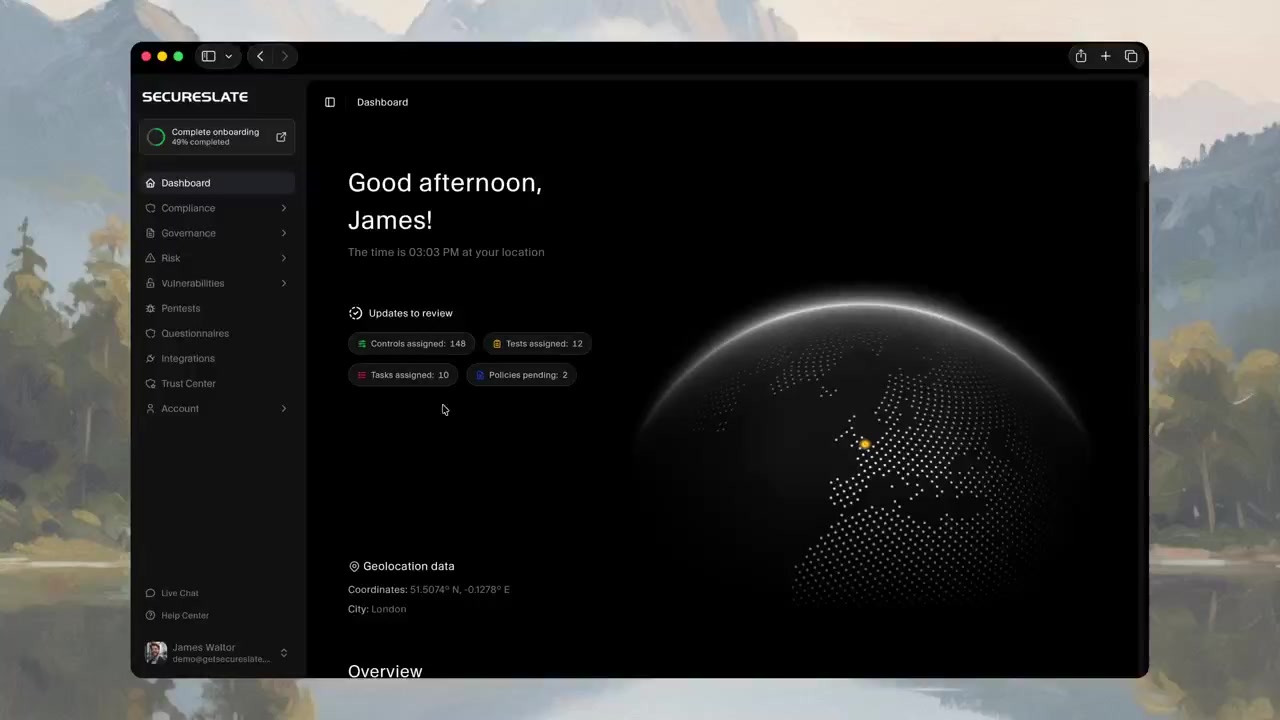
Every enterprise deal now runs through someone else’s vendor risk process. SecureSlate runs the program behind it: SOC 2, ISO 27001, GDPR, HIPAA, and ISO 42001, delivered by a dedicated compliance lead on an AI platform, with the product security scanning your buyers ask about included. One fixed price.
Why now

Selling software means being the vendor in someone else's risk register.

Three things change the moment your buyers get large enough to have a procurement team.

Security review became a stage in your sales cycle

The demo goes well, then the deal routes to a vendor risk team that wants a SOC 2 report, a completed questionnaire, a penetration test summary, your subprocessor list, and a signed DPA. Deals now stall in procurement rather than in the pitch.

You ship faster than your evidence stays true

SaaS teams deploy continuously. Access changes, repositories appear, subprocessors get added, and infrastructure moves. A control that passed on audit day drifts within a quarter, and it usually surfaces during a customer's annual review or your surveillance audit.

Buyers ask about your product, not only your policies

Vendor risk teams want to know how you scan your own code, what is in your dependency tree, how exposed your public surface is, and what happens to their data inside your AI features. A policy library alone stops being a convincing answer.
How it works

We run the program. Your engineers stay on the roadmap.

Four stages from the first call to a report your buyers accept, with a named person accountable at every one.

Scoping against your actual pipeline

We look at the deals that are stalled, the questionnaires you have already received, and the regions you sell into. That decides the framework you start with, rather than a default recommendation that sells you the largest scope.

Gap analysis mapped to your architecture

Your dedicated compliance lead maps the framework onto how your product is actually built: tenant isolation, cloud accounts, CI/CD, code hosts, identity provider, and the subprocessors already in your stack. You get a dated plan with named owners before work starts.

We build the program, you approve it

Policies drafted for your product rather than a template pack, controls implemented, integrations connected, evidence collected on a schedule, and scanning switched on across your repositories and public domains. Your engineers review and approve instead of researching and writing.

Audit, then turn the program into a sales asset

We run the readiness review, coordinate the auditor, and stay through fieldwork. Once the report lands, your Trust Center and questionnaire automation put that evidence directly in front of the buyers who were asking for it.
What is included

A compliance function that works at the speed you ship.

The expert work, the platform, and the security scanning arrive together under one fixed price.

A dedicated compliance lead

An experienced practitioner who owns the program end to end, works in your Slack, joins the buyer calls that turn technical, and answers your auditor directly. You get a security function without opening a security req.

Evidence pulled from the stack you already run
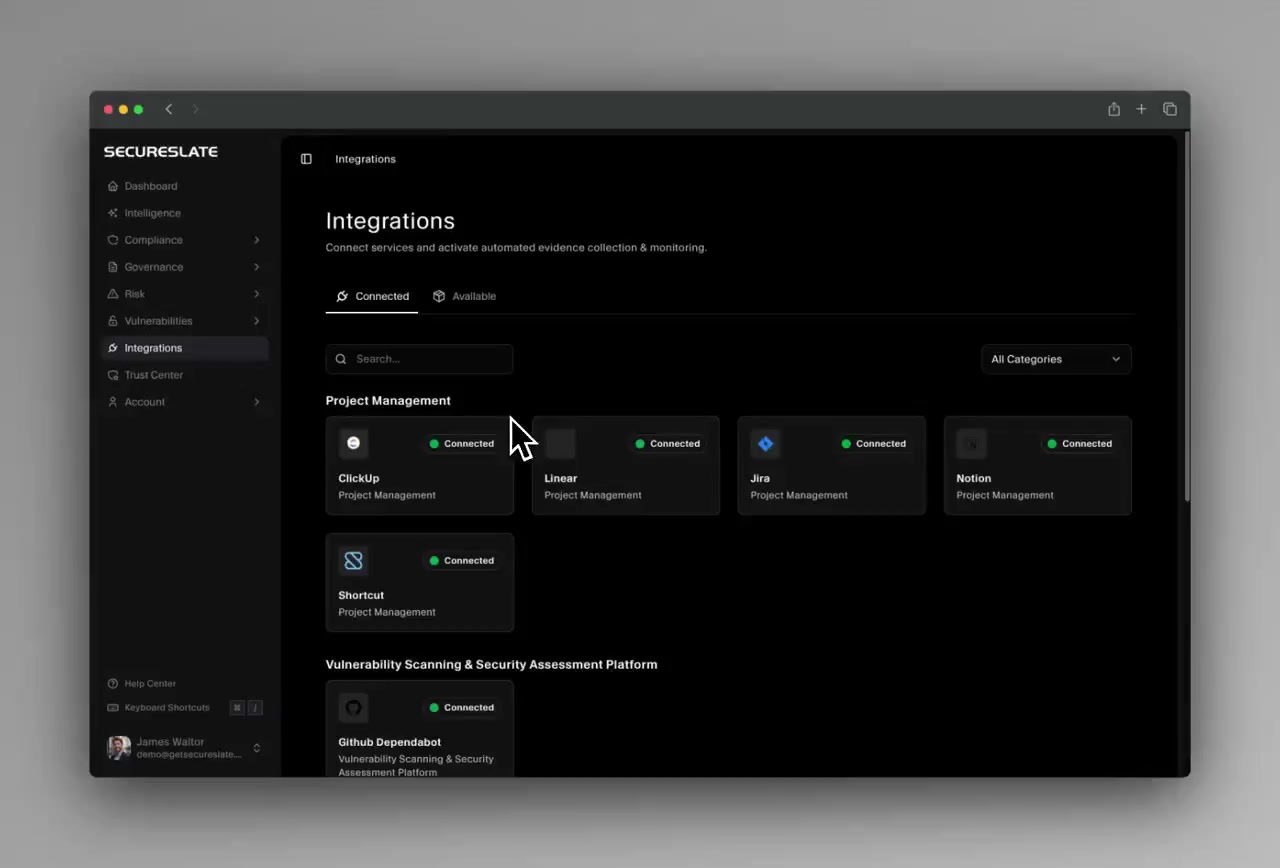
Connect AWS, GCP or Azure, your identity provider, your code host, and your device management once. Controls are tested continuously against live configuration, so evidence keeps pace with a team that deploys every day.

A Trust Center your buyers can self-serve
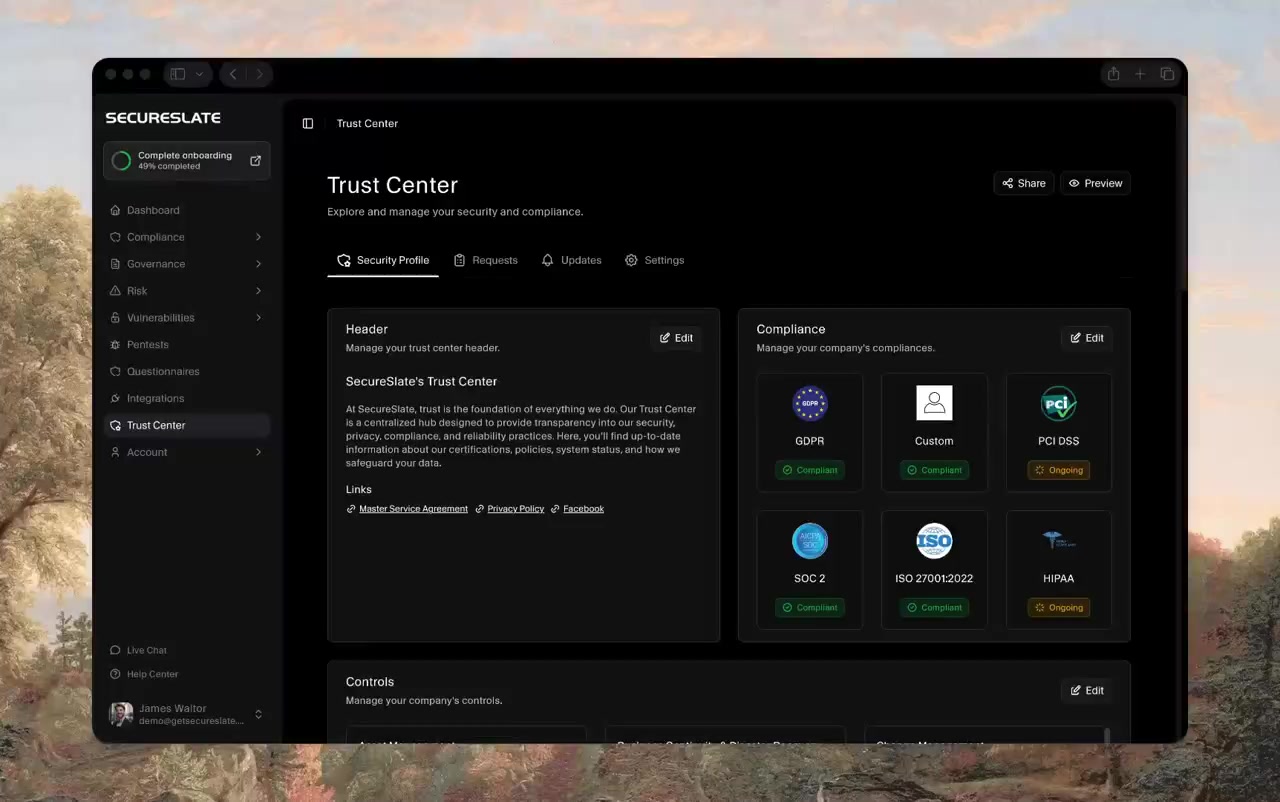
Publish your posture, certifications, subprocessors, and documents on a live page you link from your website and your sales emails. Prospects get their answers before anyone opens a spreadsheet.

Questionnaire automation

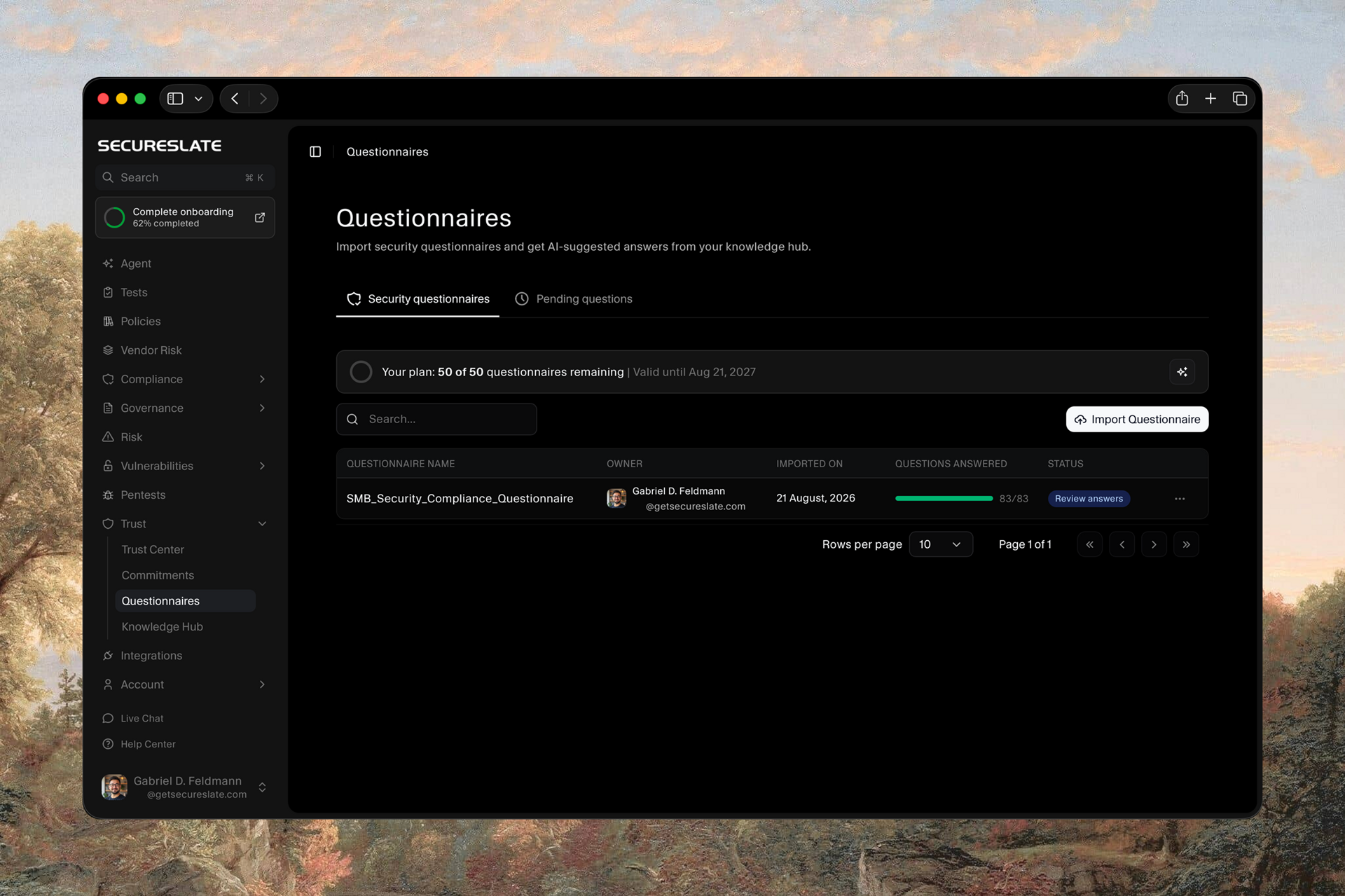
Import the questionnaire a buyer sent, get answers drafted from your own policies and evidence, then review, approve, and export. The long spreadsheet stops being the reason a quarter slips.
Questionnaire automation

Vendor risk on the tools inside your product
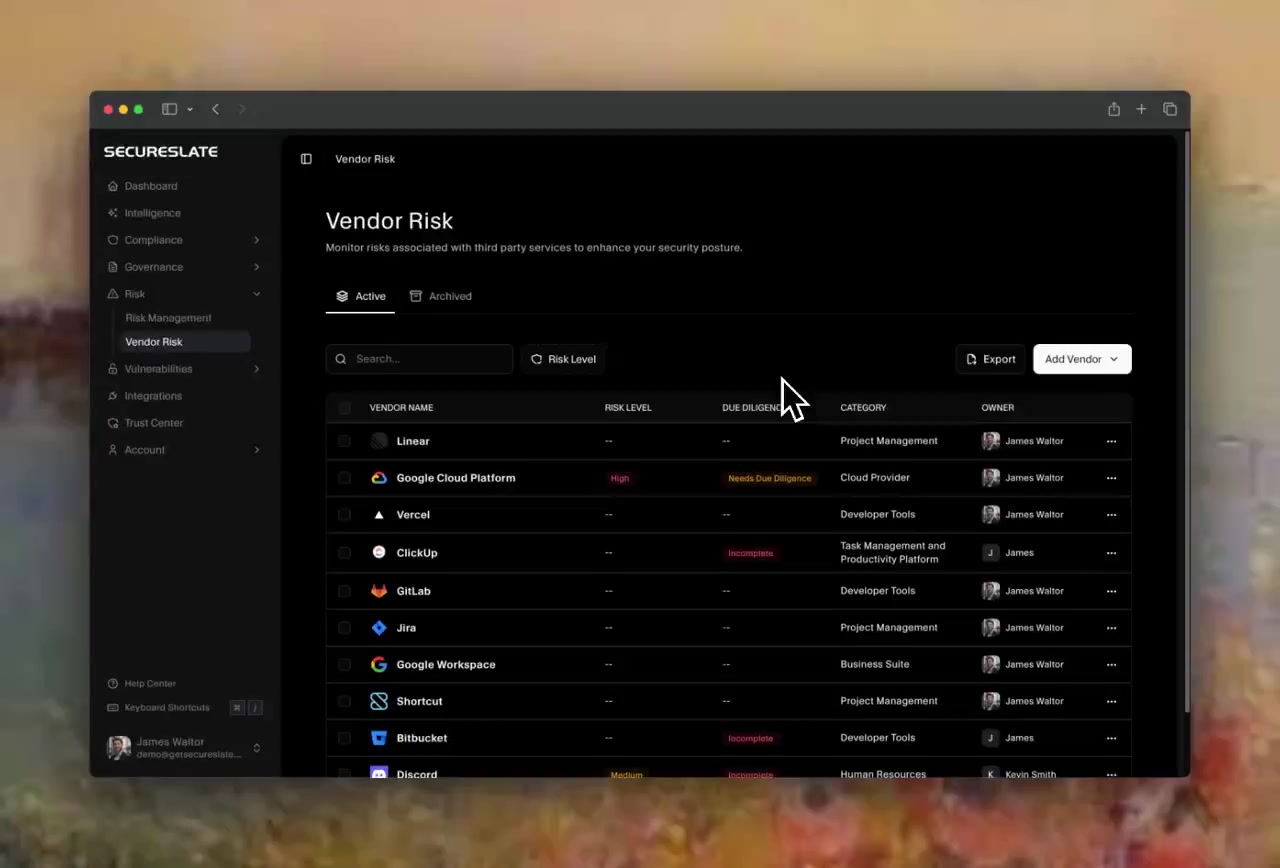
Every subprocessor you add becomes a question your customers ask. We keep the vendor inventory, the due diligence, and the subprocessor disclosures current so your answer is ready before the question arrives.

Fixed pricing, no hourly billing

One price agreed before we start, covering the platform, the expert work, and the security scanning together. No per-seat penalty for hiring and no open-ended retainer that grows with your headcount.
Product security

The questions enterprise buyers ask are about your code.

Scanning is part of the engagement rather than a separate subscription, because a policy library does not answer what is in your dependency tree.

Code security scanning

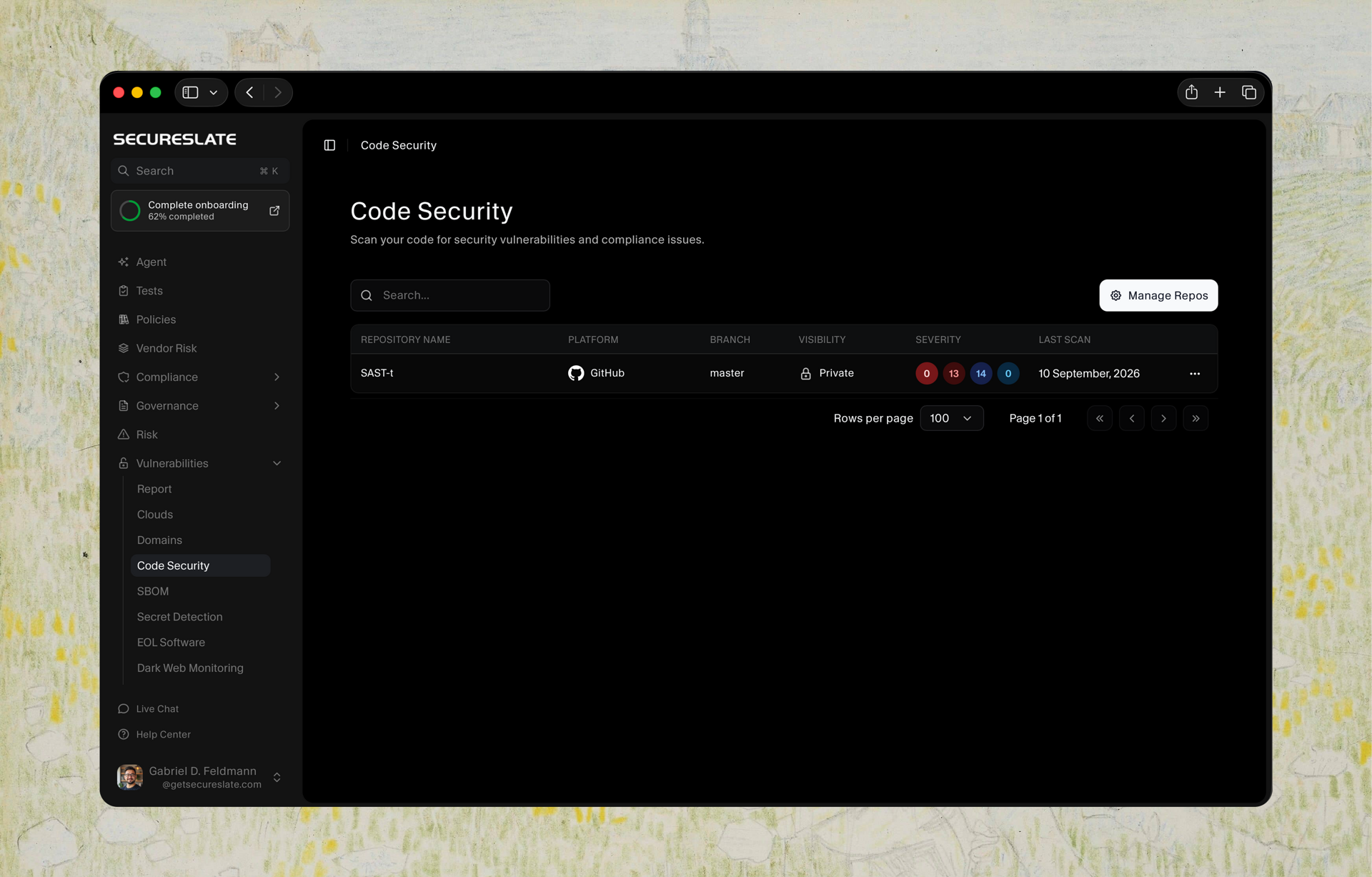
Your repositories are scanned for vulnerable code, findings are classified by CWE and ranked by severity, and each one points at the vulnerable line with a fix your developers can act on.
Code security scanning

Secrets detection
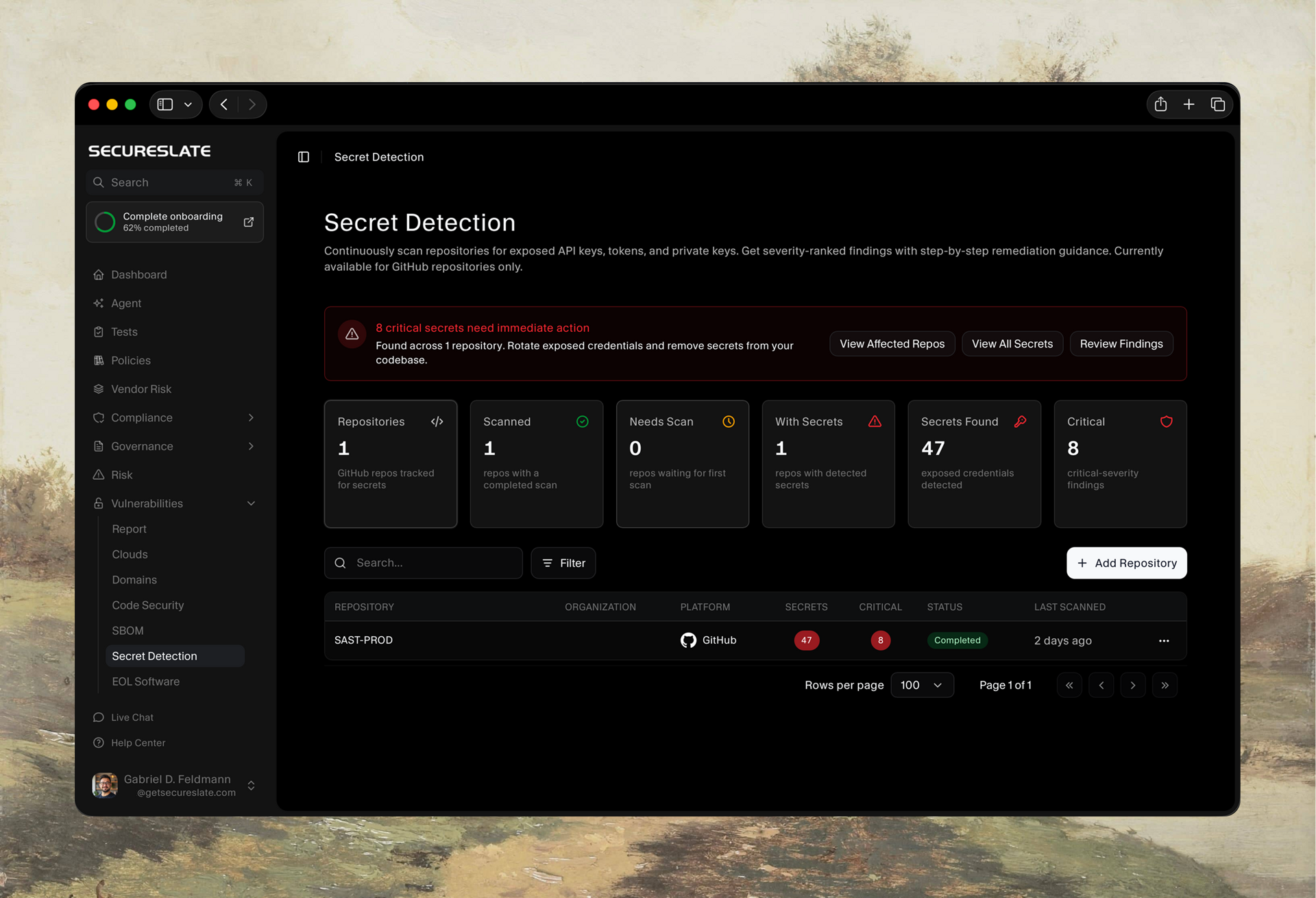
Leaked API keys, tokens, and credentials found in your code and pinpointed to the file and line, so an exposed key is revoked in hours rather than discovered by someone else.
Secrets detection

Dependency and license risk
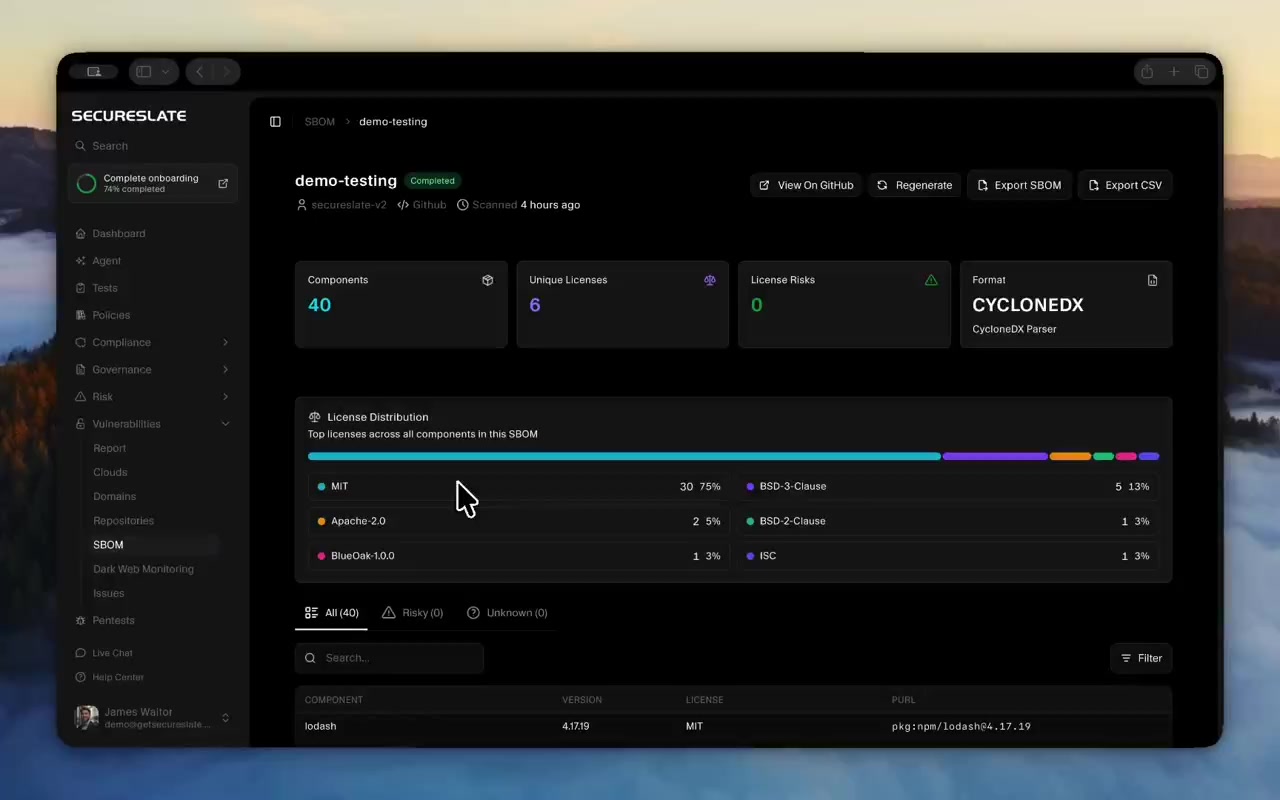
An SBOM for every repository, with the open source licenses that actually create obligations flagged in plain language. The answer to the license question in an enterprise questionnaire stops being a guess.

Outdated and end-of-life software

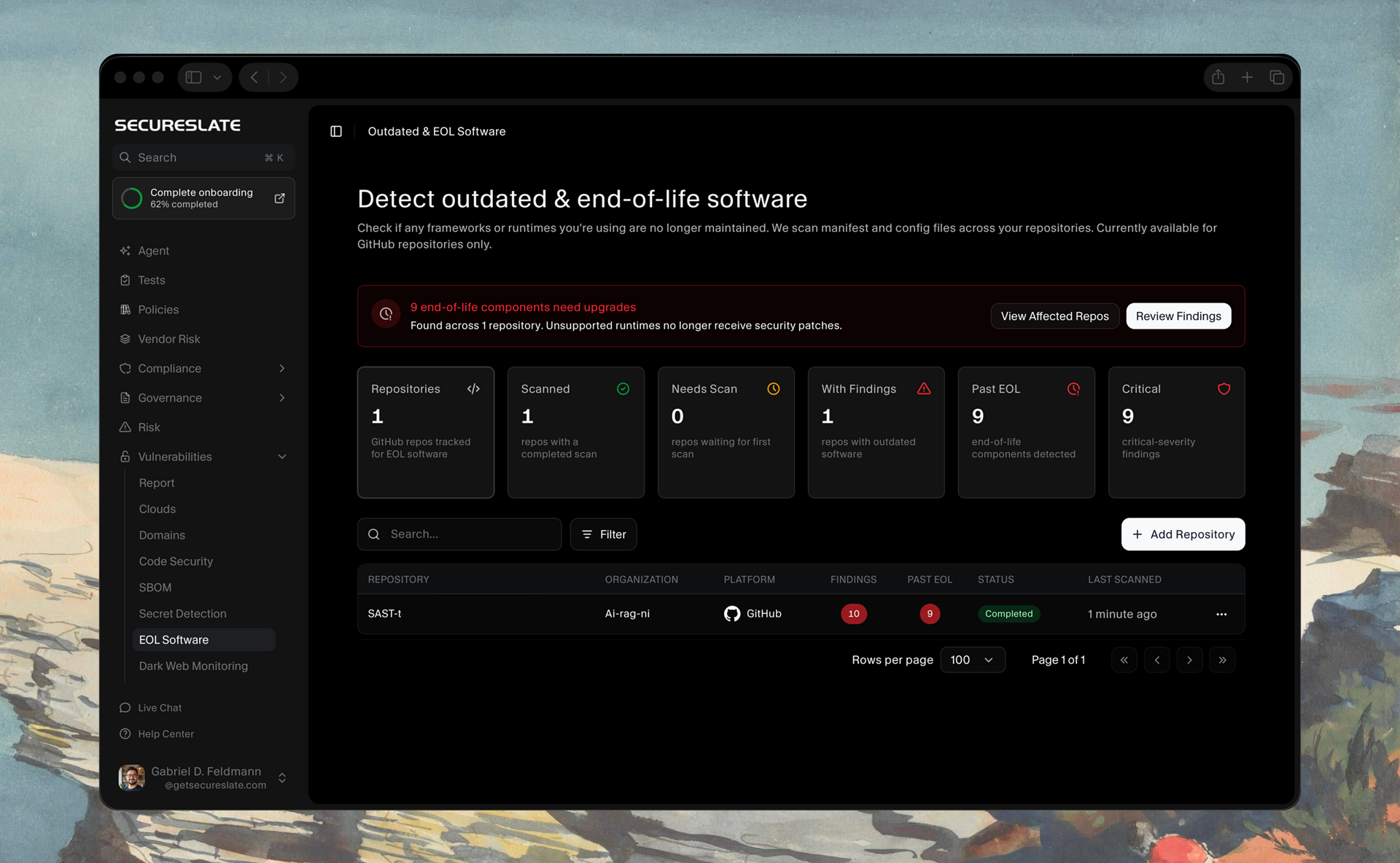
Every unmaintained framework and runtime in your stack, dated from the day support ended and traced to the file that pins the version, with the upgrade target named.
Outdated and end-of-life software

Public surface monitoring
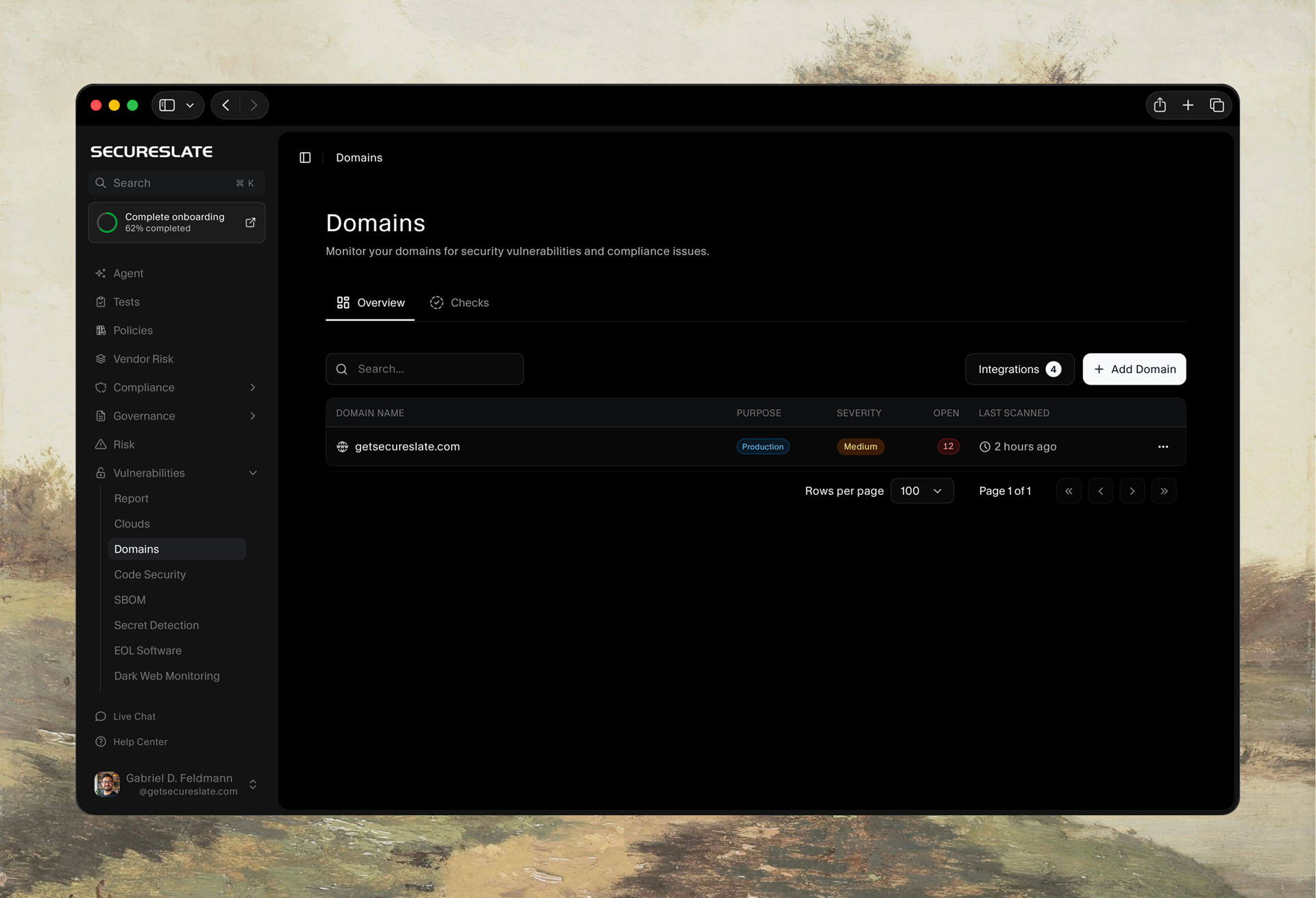
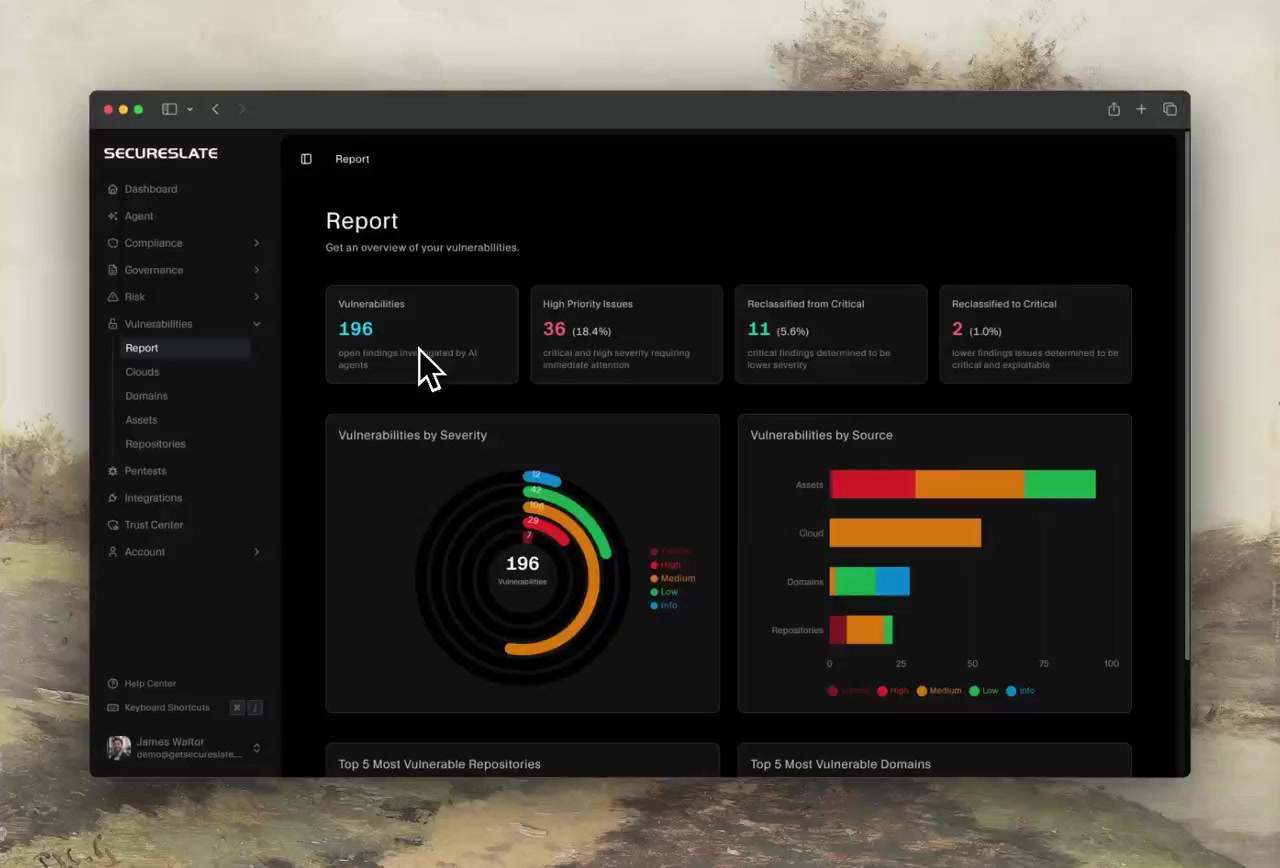
Your primary domain and the subdomains you forgot about, scanned on a schedule and whenever you ship. Findings arrive explained in plain language with a recommended fix.
Public surface monitoring

Dark web monitoring
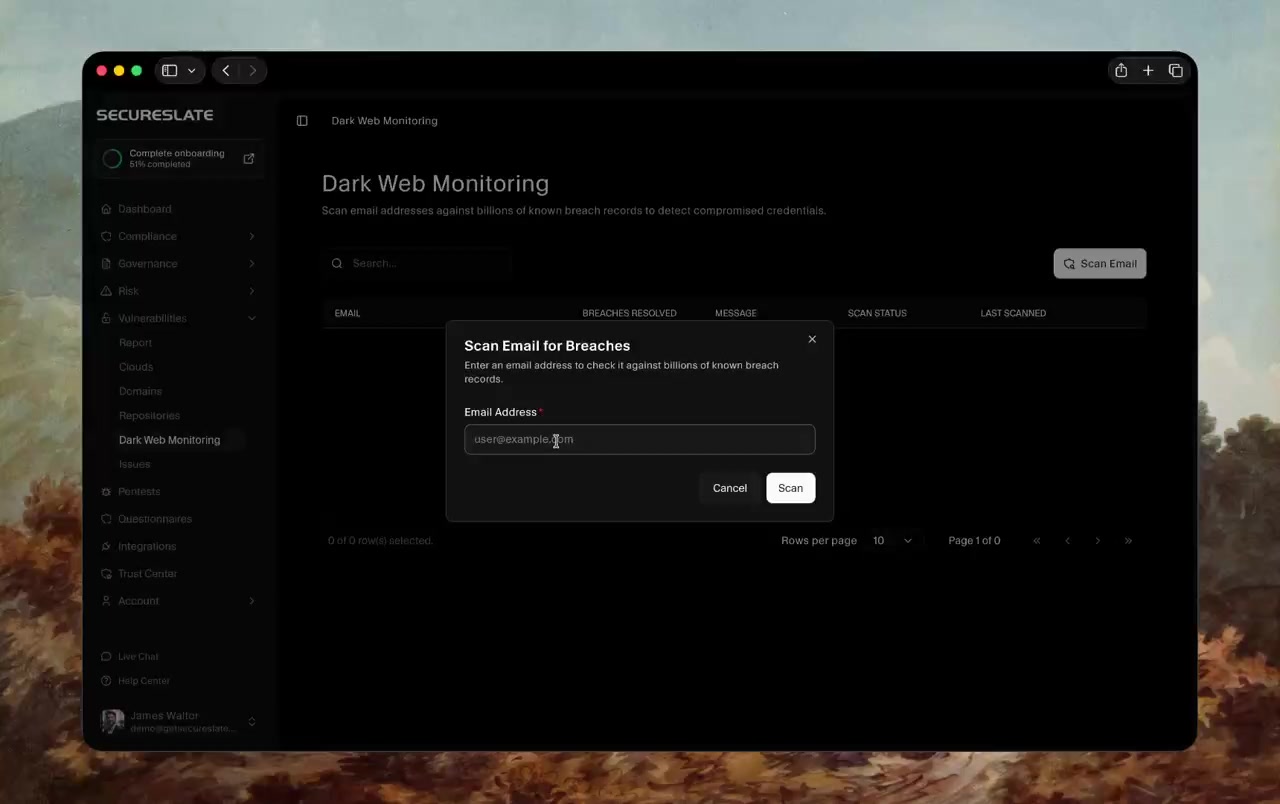
Company addresses checked against known breach corpora, with what was exposed, when, and whether it is verified, so credential reuse by your own team does not become your incident.
Frameworks

Start with the one blocking revenue. Add the rest as you move upmarket.

Controls carry across frameworks, so a second certification is an extension of the first rather than a second program. These collections walk through what each one involves for a software company.

Testimonials

Software teams who had the same review to pass

What operators say once compliance stopped sitting in the middle of their pipeline.

We needed GDPR to scale across Europe without burning the product team. SecureSlate cut compliance turnaround from days to hours, and privacy stopped blocking deals.

Johnathon
Johnathon Founder at Muse

What used to take weeks now takes days. Automated workflows and real-time tracking eliminated the manual overhead. We always know our compliance status.

Sarah
Sarah Director of Security at Shortwave

We needed compliance that scaled with us. SecureSlate cut compliance costs while improving audit readiness. The ROI showed up immediately.

Michael
Michael CTO at Echonet
Reasons teams wait

The security review is coming whether or not the program is ready.

We already have SOC 2. We just need to keep it.

Keeping it is the part most teams underestimate. The report covers a window, and everything you ship inside that window can move a control out of place. Continuous monitoring catches the drift when it happens, which is what makes year two a renewal instead of a rebuild.

We already pay for a compliance tool.

Most tools give you a dashboard and leave the program to you, which is why the work still lands on your engineers. Our fixed price covers the platform and the practitioner who runs it, so the difference shows up in whose calendar the evidence work occupies.

Our engineers can pull the evidence themselves.

They can, and that is exactly the cost. Screenshots, access reviews, and policy drafts come out of the same hours as your roadmap, and they come out during the weeks a large deal is waiting. The work is not hard, it is just expensive when your engineers do it.

Our buyers only send a questionnaire today.

That holds until you move upmarket. The first buyer who asks for an attestation instead of a questionnaire usually gives you weeks, not the months an audit window takes. Starting before that call is what keeps the deal on the table.
FAQs

What SaaS teams ask before they start.

Stop losing the quarter to a security review

Bring us the framework your buyers keep asking for. You will leave the call with a scope, a timeline, and a fixed price, whether or not you work with us.

Jamie
Virtual Agent

Hi! I'm Jamie. Curious about your current compliance challenges and how automation might help your team?