SecureSlate for Financial Services

Your customer’s regulator is effectively your regulator.

Banks, insurers, and payment firms are accountable for the services they depend on, so their obligations arrive in your contract. SecureSlate maps DORA, PCI DSS, SOC 2, and ISO 27001 onto one control set, with a dedicated compliance lead who handles the audits your customers run on you. One fixed price.
Why now

Selling into finance means inheriting oversight you never signed up for.

Three things are true whether you are a regulated firm or a vendor to one.

Your customer's regulator reaches you through their contract

Supervisors do not write to you. They hold the bank, the insurer, or the payment firm accountable for the services they outsource, and those firms discharge that duty by pushing the obligations into your agreement. The requirement arrives as a redline from procurement rather than a letter from an authority.

You are not preparing for one audit a year

Right-to-audit clauses are standard in financial services contracts, and each customer exercises them on their own schedule with their own template. Add your own certifications and the calendar fills with overlapping reviews that all want the same evidence in different shapes.

Due diligence now asks for things a certificate does not contain

Exit plans, subcontractor chains, concentration risk, recovery objectives, and resilience testing results. These sit outside a standard SOC 2 report, so they land on whoever answers the questionnaire, usually at the end of a quarter.
The regulatory stack

Four demands that arrive together, and what each one actually wants.

Financial services compliance is rarely one framework. Knowing which obligation a customer is invoking is what keeps the response proportionate.
Already in your contracts

DORA

The EU's digital operational resilience regulation has applied since January 2025. Financial entities must keep a register of information covering every ICT service arrangement, include specific terms on audit rights, subcontracting, and exit strategies, and test their resilience. If you serve an EU financial entity, you meet DORA as contract language and as requests for data you have to be able to produce.
If cardholder data touches you

PCI DSS

Your validation path depends on how you handle card data and how much of it moves through your systems, which decides whether you complete a self-assessment questionnaire or engage a QSA for a full report on compliance. The version 4 requirements that were future-dated are now in force, so a program built against the older expectations has gaps in it.
The foundation everything layers on

SOC 2 and ISO 27001

Most financial sector requirements assume a working information security program underneath them and then add their own specifics. Building that layer once means DORA, NIS 2, and a bank's own questionnaire become extensions of an existing control set rather than three separate projects.
When models make the decision

ISO 42001 and the EU AI Act

The AI Act treats creditworthiness assessment of individuals, and risk pricing in life and health insurance, as high risk. If a model influences who gets approved or what they pay, expect questions about training data, human oversight, and documentation. ISO 42001 answers them in a form your customer's risk committee recognizes.
How it works

We run the program. Your team stops answering the same question four ways.

Four stages from the first call to proof a third-party risk team accepts, with a named person accountable at every one.

Scoping from the contracts you have signed

We read what your customers already require of you, which is where financial services obligations actually live. That plus your regulatory exposure and your pipeline decides the scope, rather than a default recommendation to certify against everything.

One control set, mapped across the stack

Your compliance lead maps DORA, PCI DSS, SOC 2, ISO 27001, and whatever a specific customer names onto a single set of controls with named owners. Overlap gets implemented once, and the genuine differences get called out with a dated plan against each.

We implement, you approve

Controls built, policies written for how your firm operates, the third-party chain reconciled, resilience and recovery documented, and evidence collecting continuously from the systems you already run. Your team reviews and approves rather than drafting from scratch.

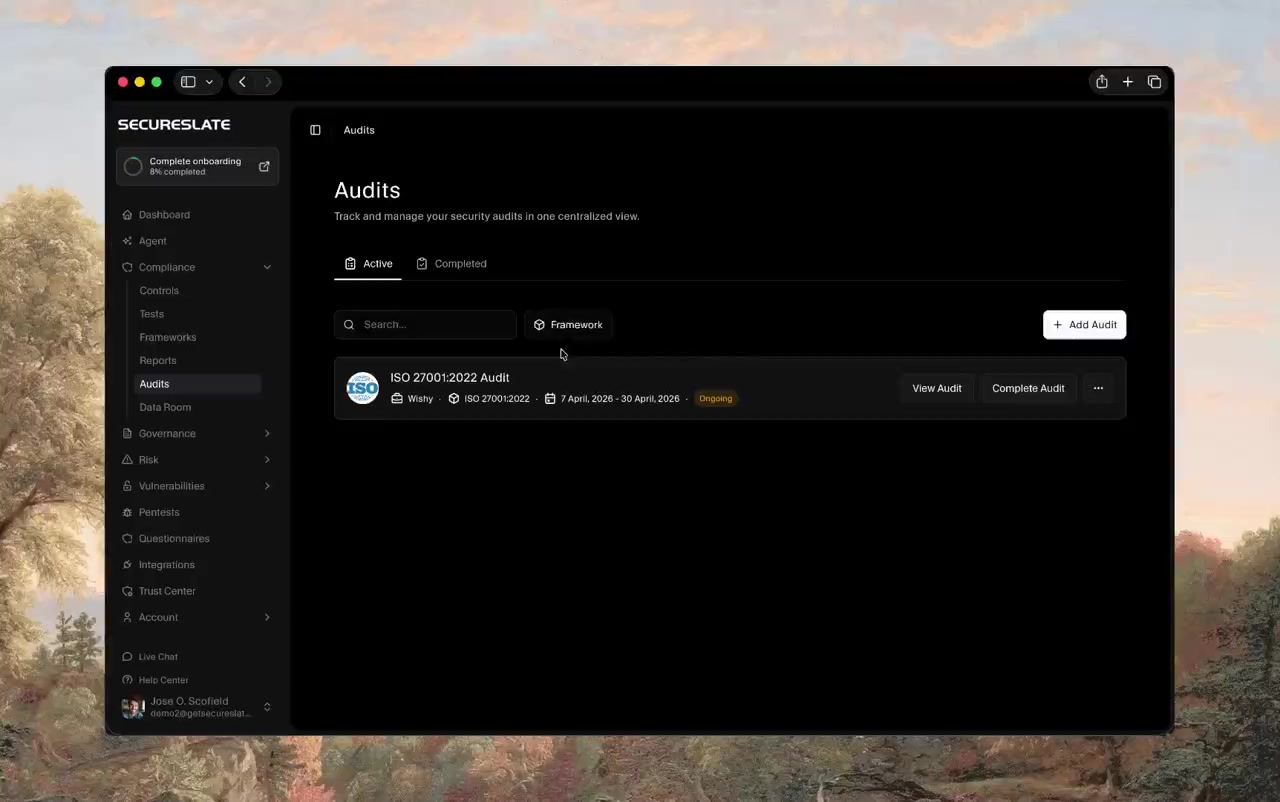
Audits, plural, then keep it running

We run the readiness review, coordinate your auditor, and prepare the packages your customers request under their audit rights. Afterwards the program keeps operating, so the next review is a retrieval rather than a project.
What is included

A compliance function that survives concurrent audits.

The expert work, the platform, and the security scanning arrive together under one fixed price.

A compliance lead who has sat through bank due diligence
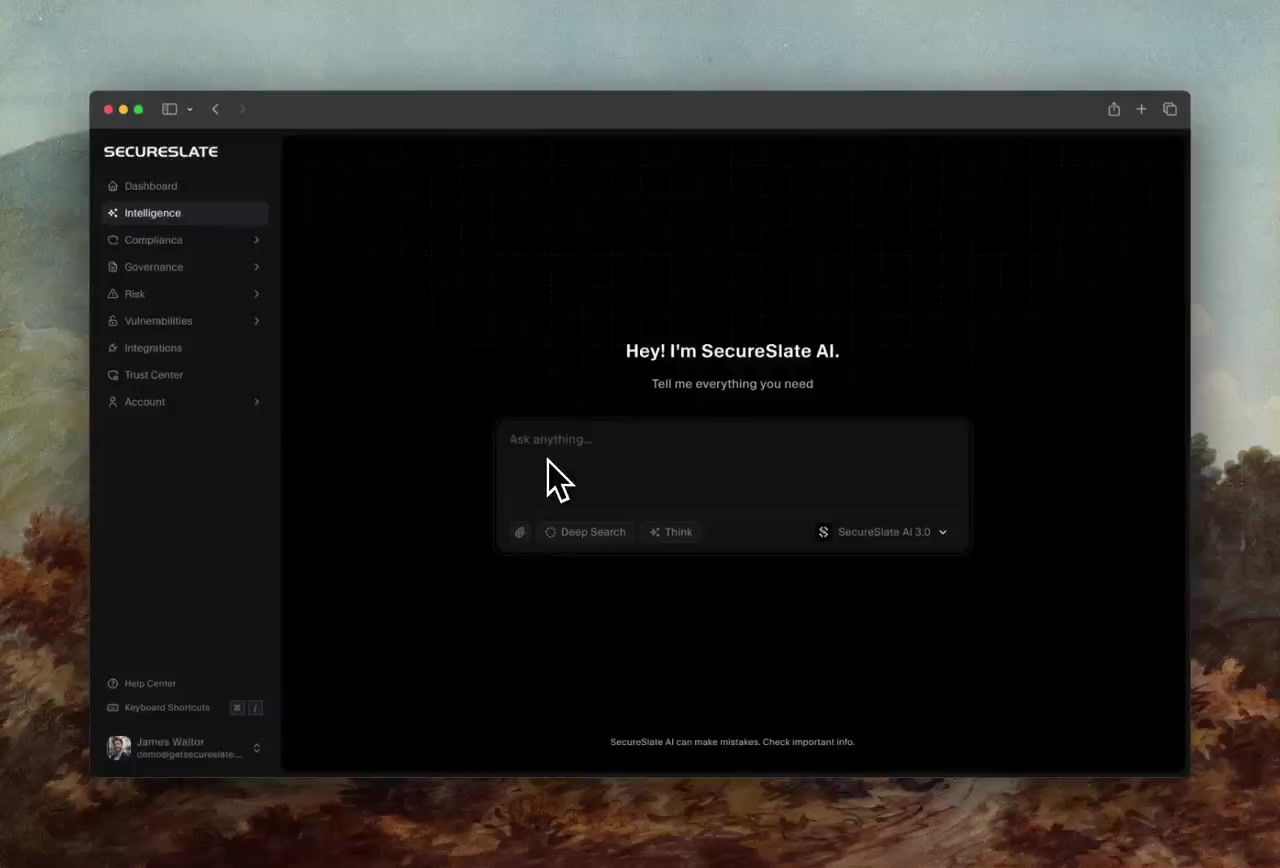
An experienced practitioner who owns the program end to end, works in your Slack, joins the calls where a customer's third-party risk team asks hard questions, and answers your auditor directly. You get the function without opening a req for it.

One control set, many audits

Evidence is collected once and mapped to every framework and customer request that needs it. When three reviews land in the same month, they draw from the same current set of controls instead of sending your team back to gather the same screenshots three times.

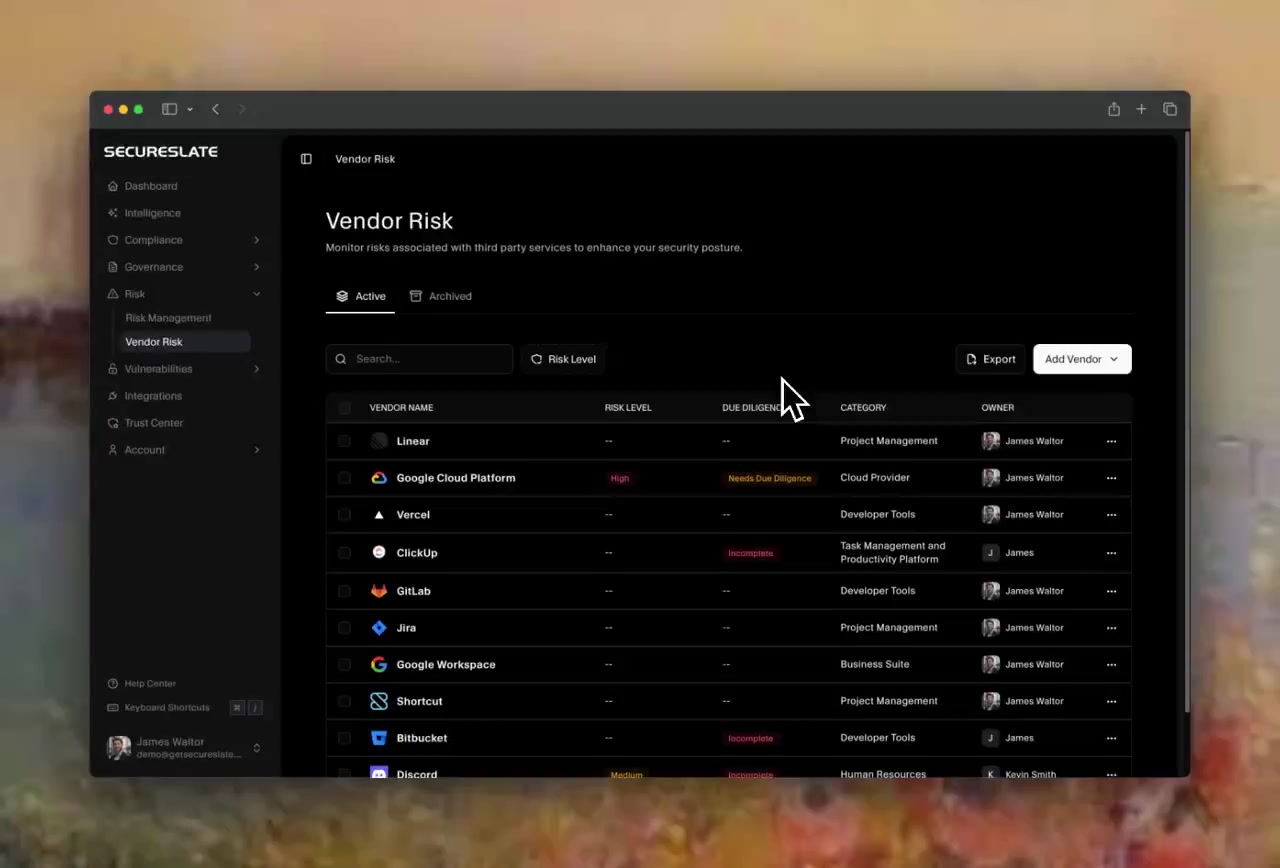
Your third-party chain, documented

Financial customers want to know who sits behind you, what happens if one of them fails, and how you would exit. We keep the vendor inventory, the due diligence, and the subcontractor disclosures current so the data your customer needs for their own register is ready when they ask.

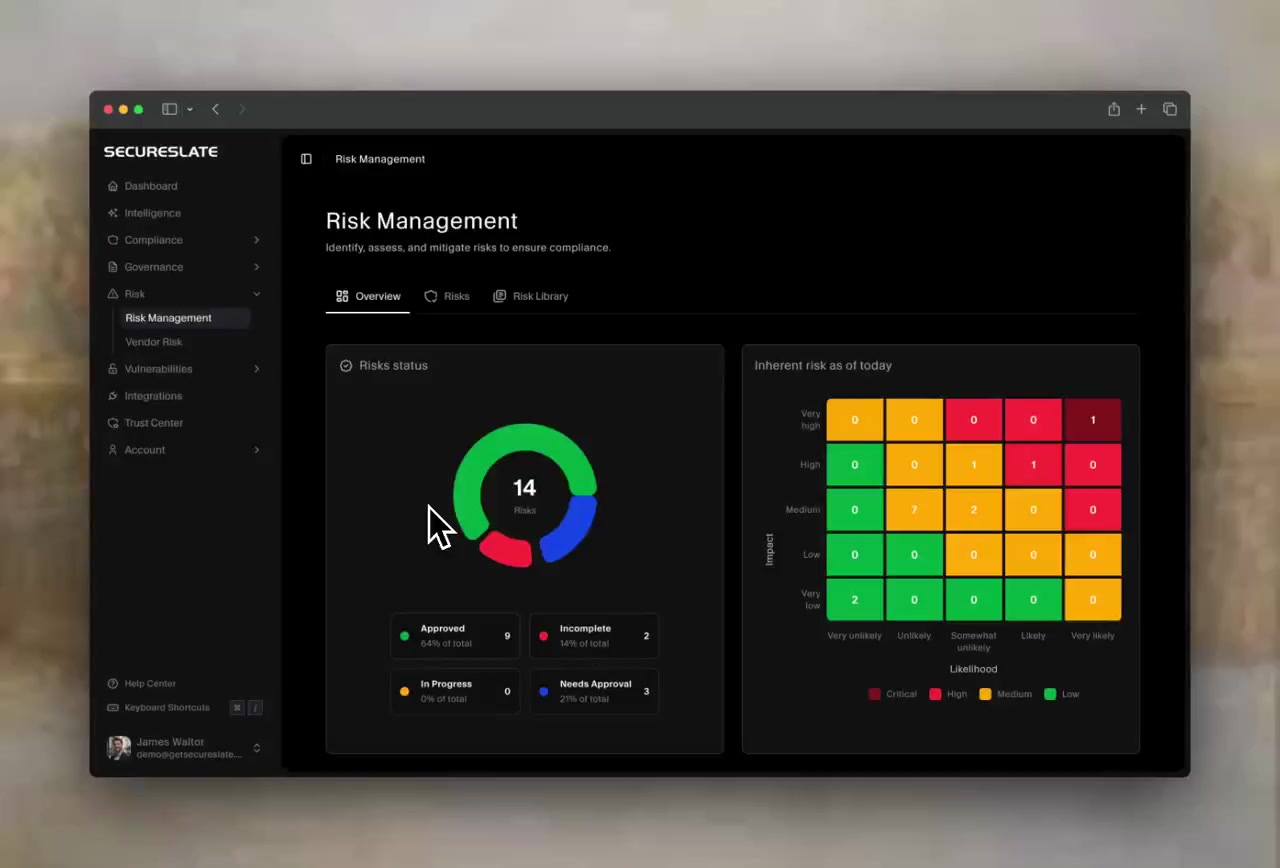
A risk register your board can read

Risks identified, scored, tracked to treatment, and reported in a form that works for a board pack and a supervisory conversation as well as an auditor. The same register drives remediation rather than sitting beside it in a spreadsheet.

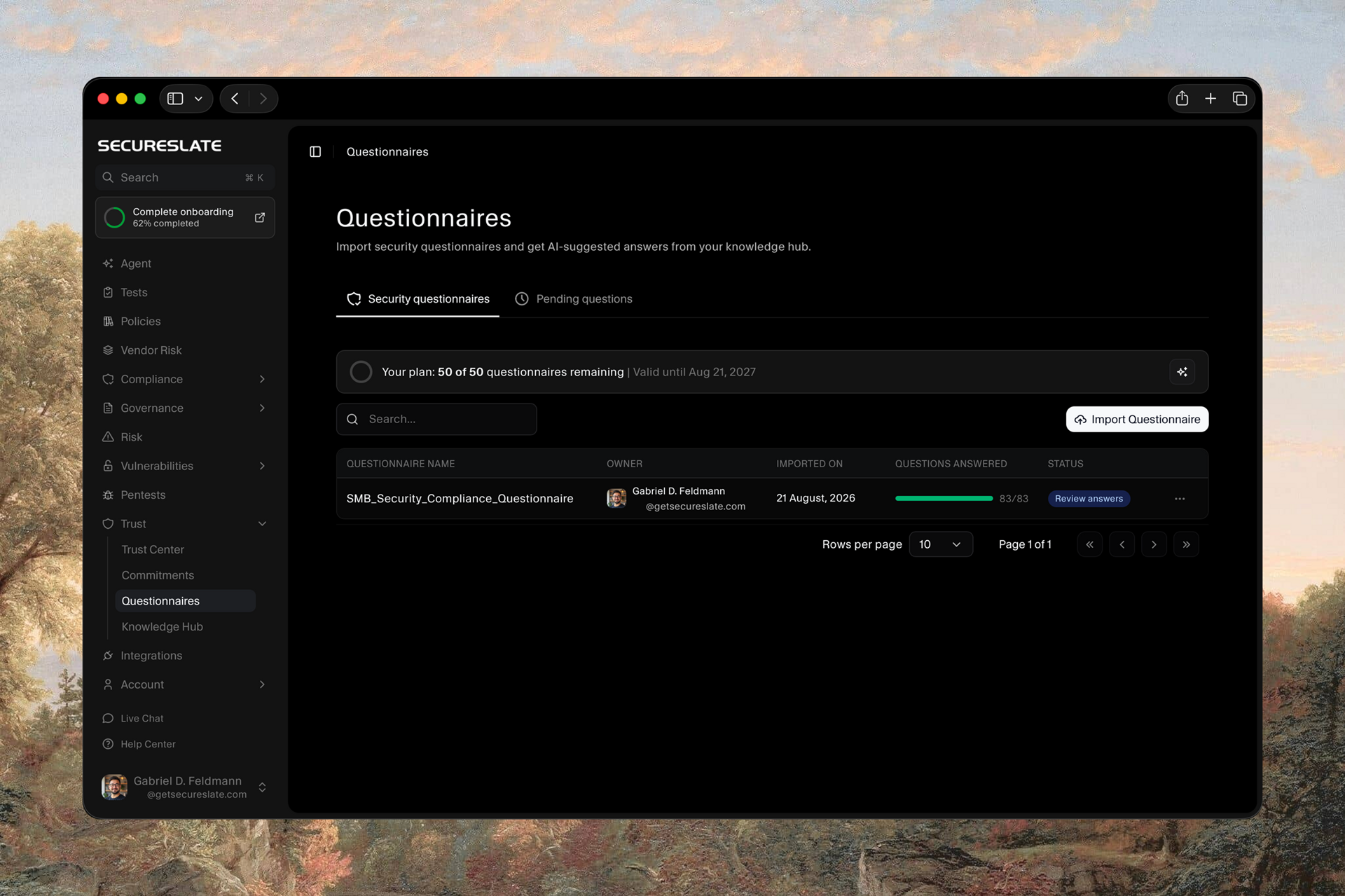
Questionnaire automation

Bank and insurer due diligence packs run long and every one is formatted differently. Import what your customer sent, get answers drafted from your own policies and evidence, then review, approve, and export instead of retyping the same answers each quarter.
Questionnaire automation

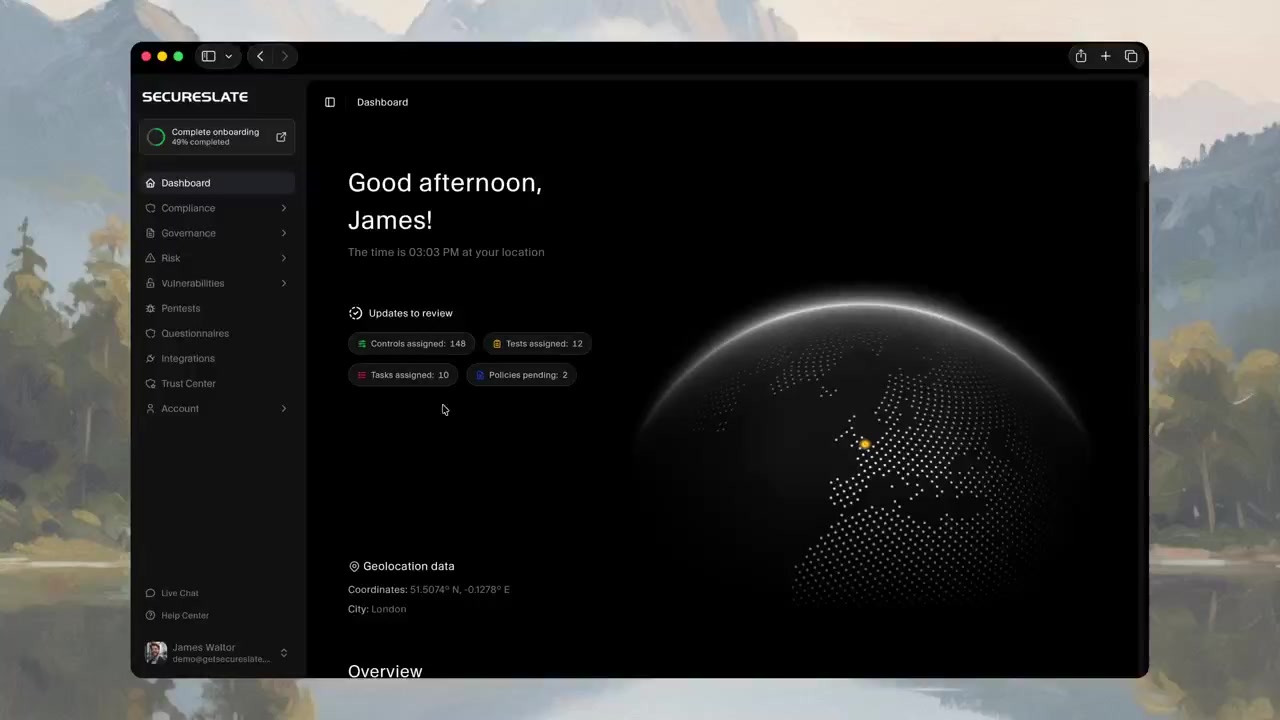
A Trust Center your buyers can self-serve
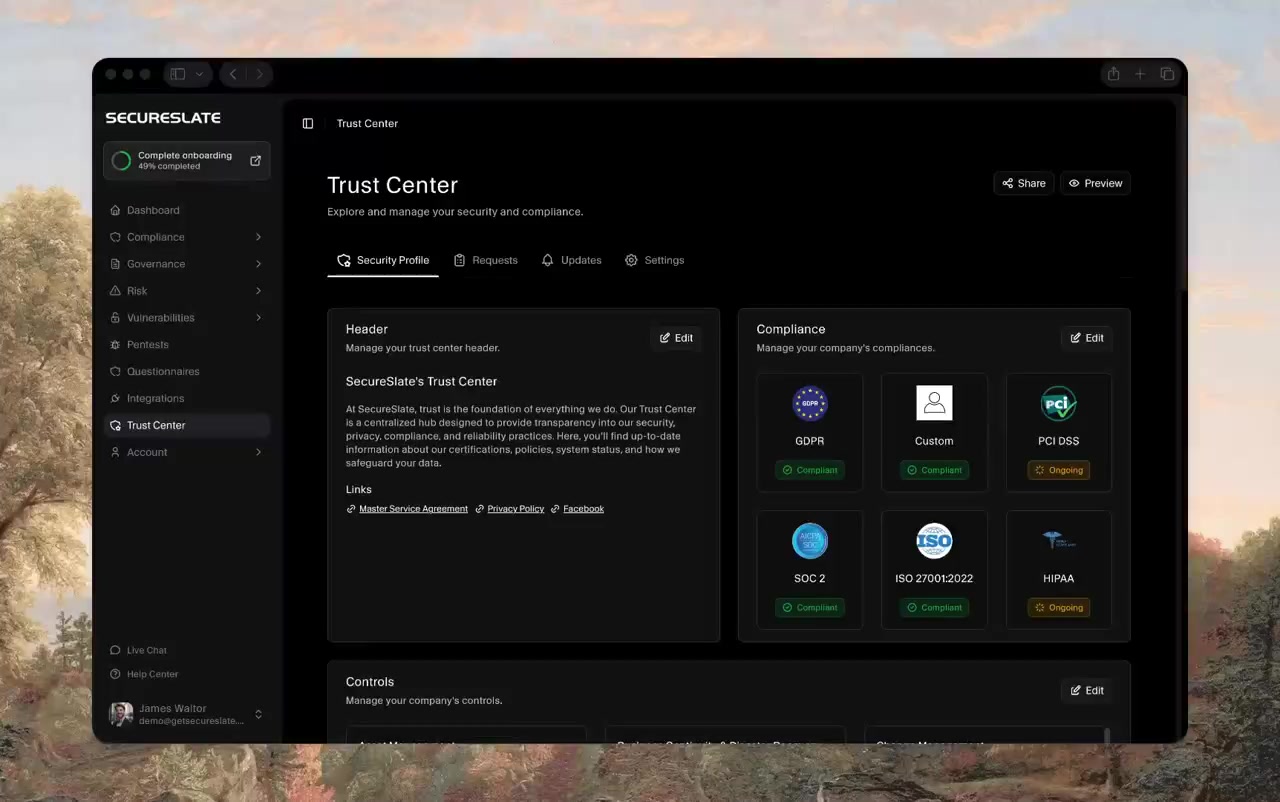
Publish your posture, certifications, subprocessors, and documents on a live page you link from your website and your sales emails. A third-party risk analyst who can answer their own questions moves your file forward faster than one waiting on email.
Security testing

Due diligence asks what you found and what you did about it.

Scanning is part of the engagement rather than a separate subscription, because the systems handling money and account data are the ones a third-party review examines first.

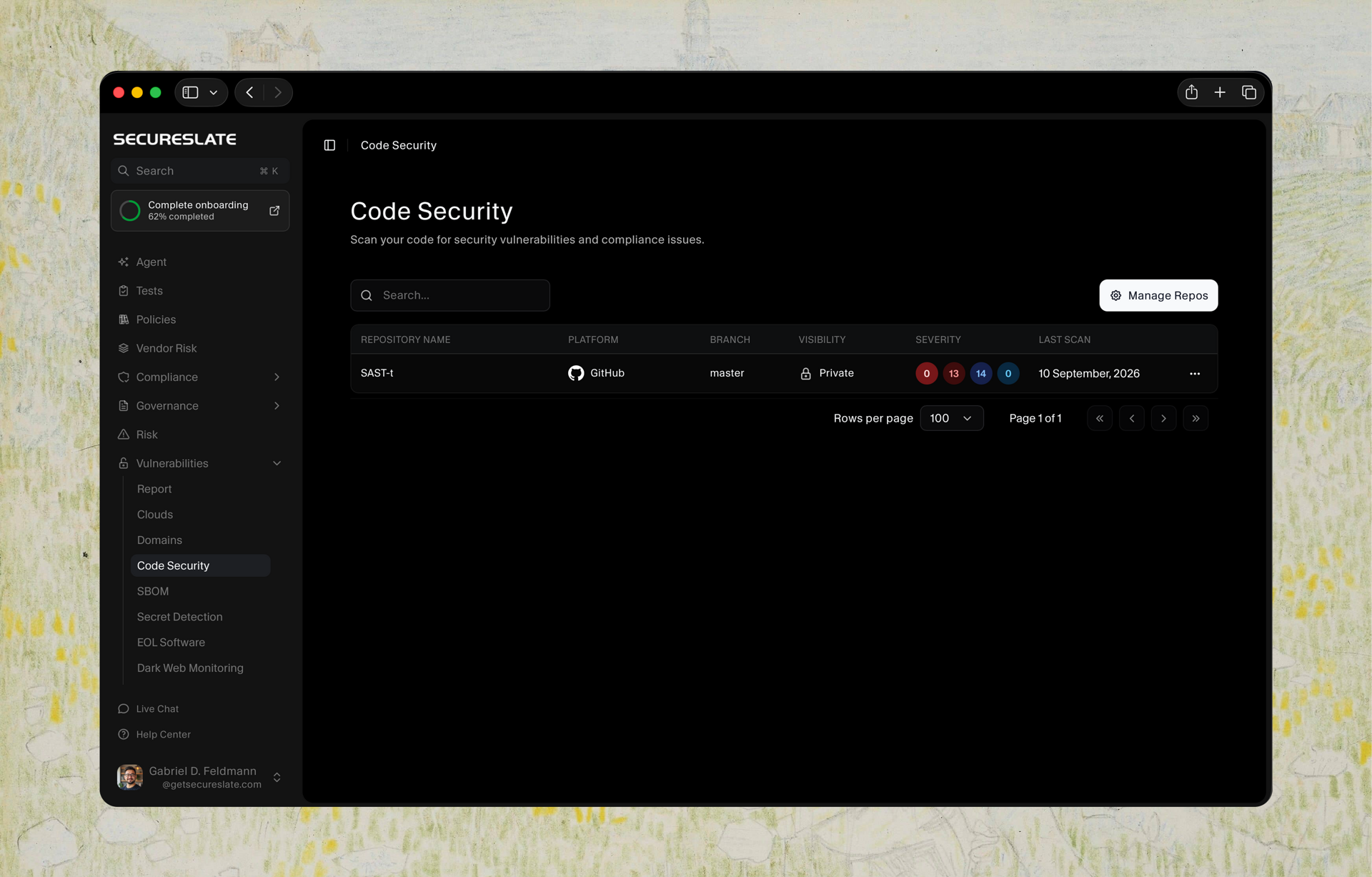
Code security scanning

The applications moving money and holding account data are scanned continuously, findings are classified by CWE and ranked by severity, and each one points at the vulnerable line with a fix your developers can act on.
Code security scanning

Secrets detection
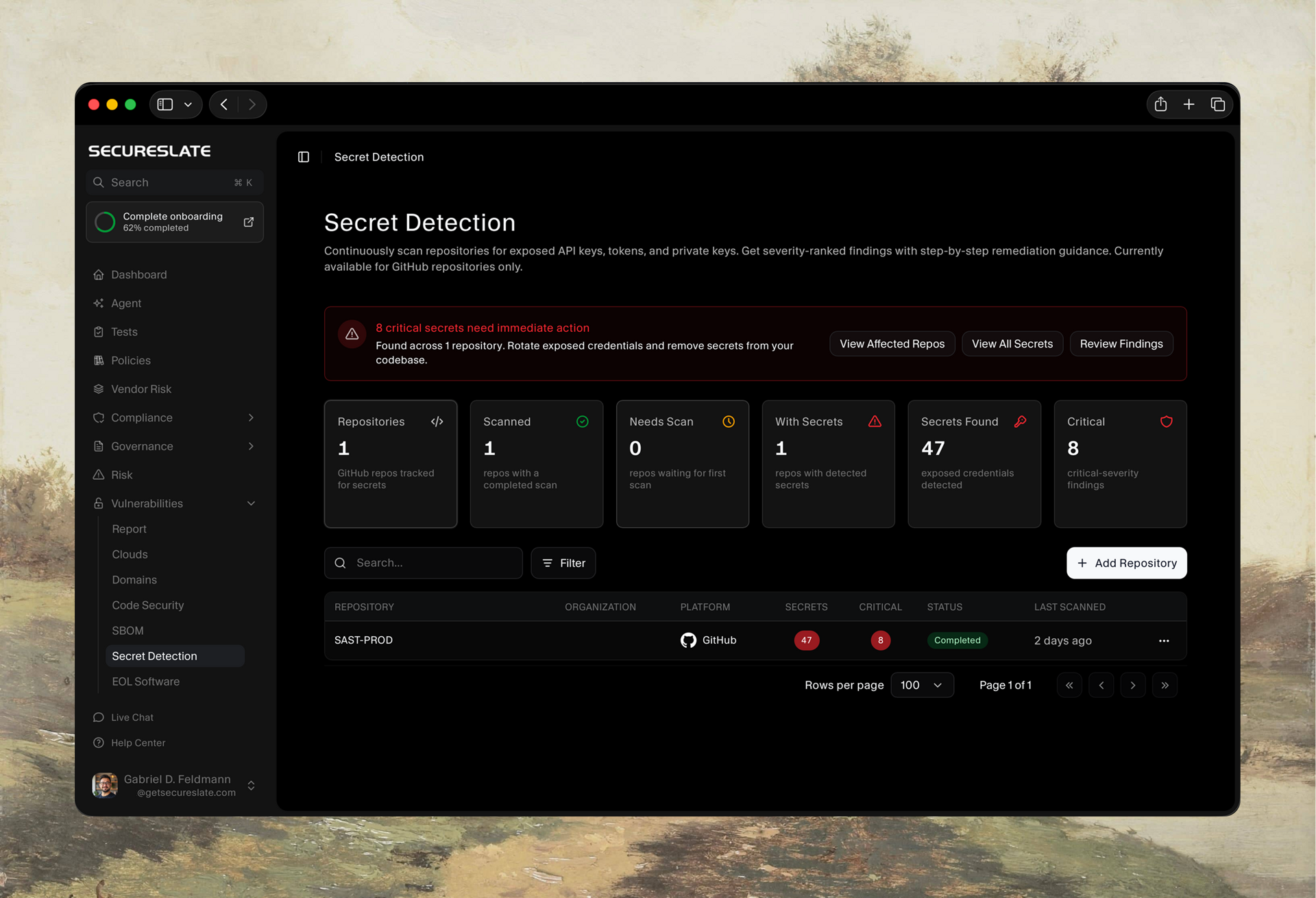
A payment provider key or database credential sitting in a repository is the finding that ends a due diligence call badly. Exposed secrets are pinpointed to the file and line so revocation happens in hours.
Secrets detection

Dependency and license risk
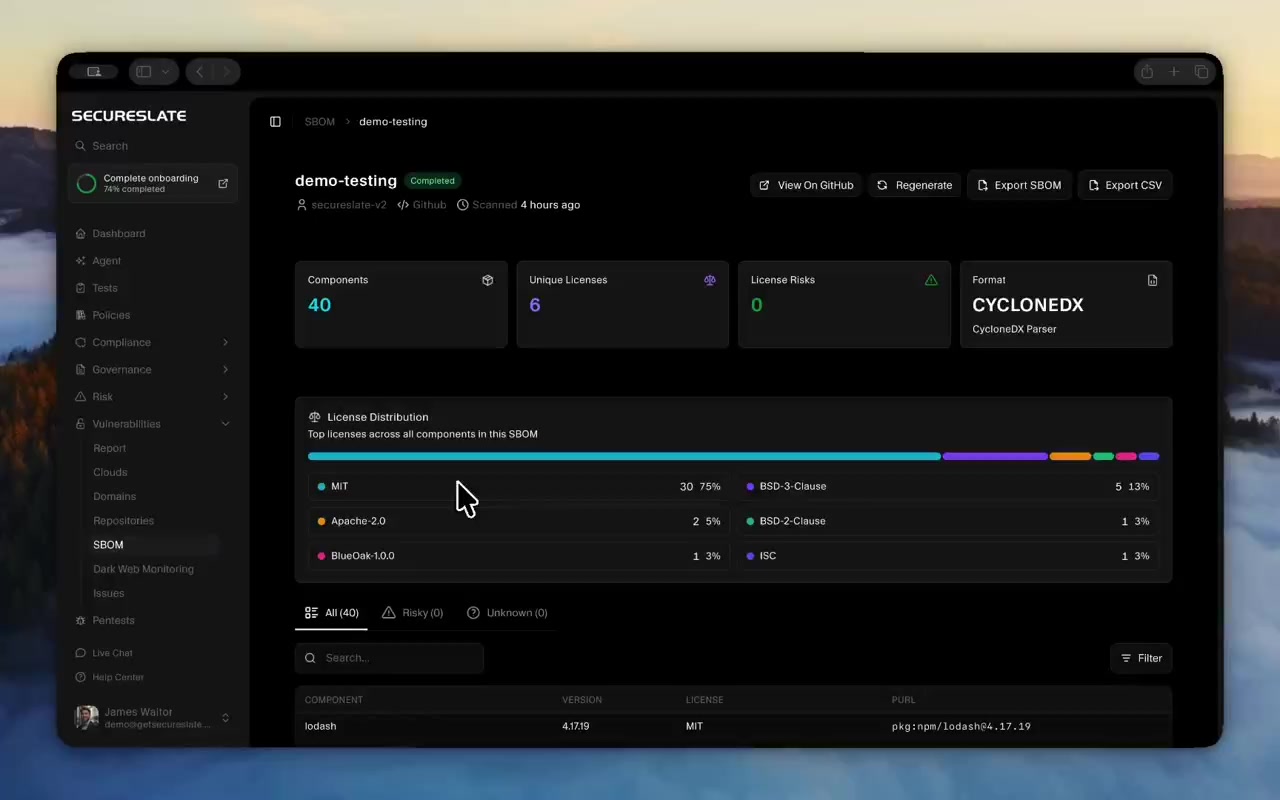
An SBOM for every repository, with the open source licenses that create real obligations flagged in plain language. Financial customers increasingly ask for the component inventory as part of supply chain diligence.

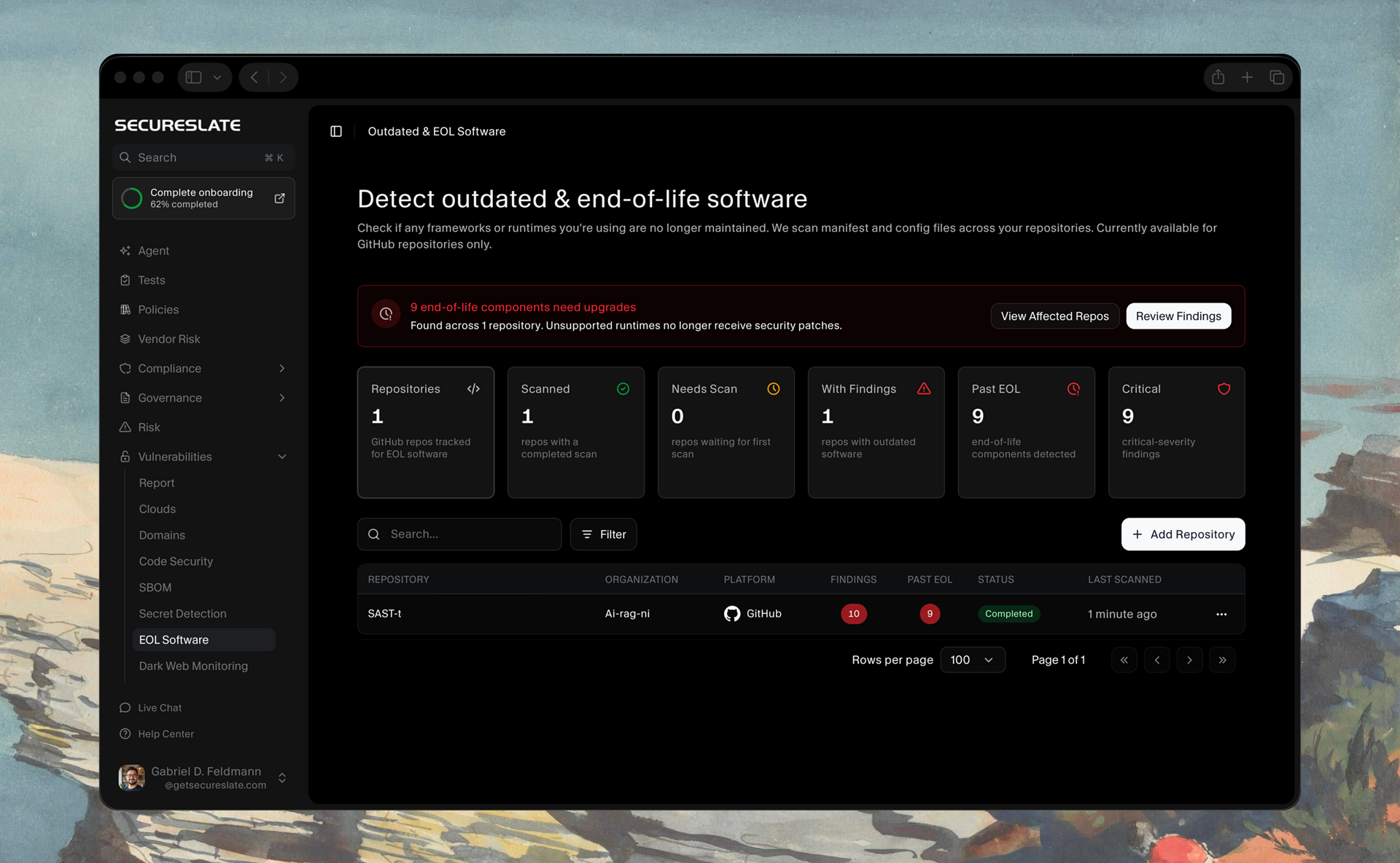
Outdated and end-of-life software

Unsupported components are a standing finding in financial services reviews because nobody can patch what the vendor stopped shipping. Each one is dated from the day support ended, traced to the file that pins it, with the upgrade target named.
Outdated and end-of-life software

Public surface monitoring
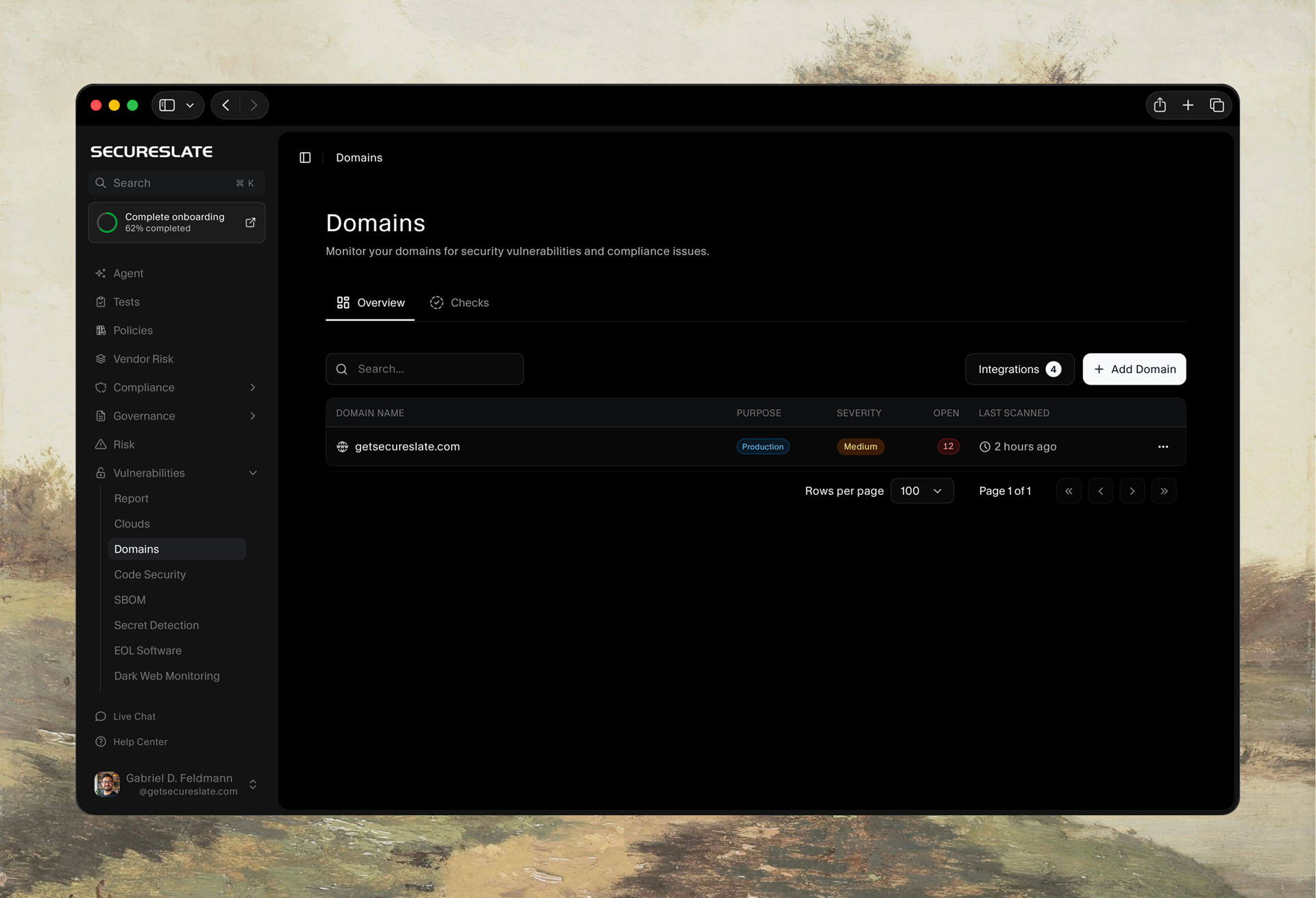
Customer portals, onboarding flows, and the subdomains nobody remembers standing up, scanned on a schedule and whenever you ship. Findings arrive explained in plain language with a recommended fix.
Public surface monitoring

Dark web monitoring
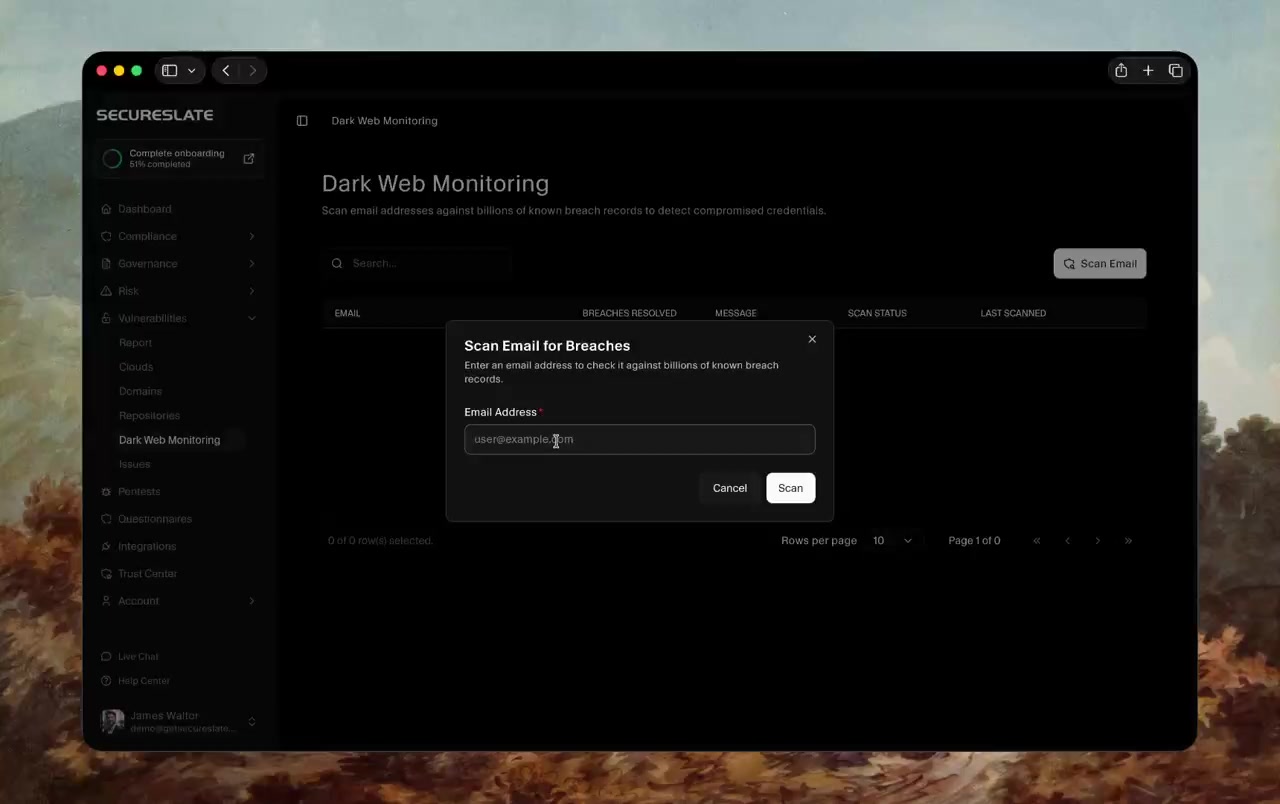
Workforce credentials checked against known breach corpora, with what was exposed, when, and whether it is verified. Reused staff passwords remain one of the most common ways an incident starts.
Frameworks

Implement once, then satisfy whichever regime the contract names.

DORA, NIS 2, and most bank questionnaires assume a working security program and add their own specifics on top. Build that layer once and each additional regime becomes a delta rather than a project. These collections walk through what each involves.

Testimonials

Teams that had the same reviews to pass

What operators say once one program started serving every audit.

We needed compliance that scaled with us. SecureSlate cut compliance costs while improving audit readiness. The ROI showed up immediately.

Michael
Michael CTO at Echonet

We always knew the next step. SecureSlate made ISO 27001 feel manageable for a non-security team, and we reclaimed 200+ hours while getting audit-ready in under seven weeks.

Catherine
Catherine Director at Quality Early Years

What used to take weeks now takes days. Automated workflows and real-time tracking eliminated the manual overhead. We always know our compliance status.

Sarah
Sarah Director of Security at Shortwave
Reasons teams wait

The obligations arrive with the contract, not with a warning.

We are the vendor, not the regulated entity.

Which is exactly how the requirements reach you. Rules like DORA make the financial entity accountable for the ICT services it depends on, and the only tool it has for that is your contract. You will not hear from a supervisor. You will hear from procurement, with the obligations already drafted.

We already have SOC 2. That should be enough.

It is the right foundation and it will not cover everything. Financial customers ask for exit plans, subcontractor chains, recovery objectives, and resilience testing that sit outside a standard report. The remaining gap is far smaller than a new program, and it is not nothing.

Every bank sends a different questionnaire anyway.

They do, and the answers all come from the same underlying evidence. That is the entire point of a maintained knowledge base and a published Trust Center. The formats stay different, the work behind them stops repeating.

Our compliance calendar is already full.

A full calendar is the symptom of running each review as its own project. Mapping one control set across every framework and customer request is what empties it, because the second audit becomes retrieval rather than another round of collection.
FAQs

What financial services teams ask before they start.

Turn the next due diligence pack into a retrieval

Send us the clauses your customers are asking you to sign. You will leave the call with a scope, a timeline, and a fixed price, whether or not you work with us.

Jamie
Virtual Agent

Hi! I'm Jamie. Curious about your current compliance challenges and how automation might help your team?