FedRAMP certification

Get FedRAMP certified without building a federal compliance team first.

FedRAMP certification is how cloud services earn the trust of US federal agencies, and the Consolidated Rules for 2026 replace a paperwork-heavy process with certification classes and measurable Key Security Indicators. A dedicated SecureSlate compliance lead picks the right class for your service, builds your Security Decision Record, and prepares you for the independent assessment, while our compliance automation platform keeps evidence current for quarterly reporting. One fixed price covers the work.

FedRAMP 20x KSIs46 indicators

FedRAMP 20x KSIs: 46 indicators, 1 Cybersecurity Education, 4 Change Management, 8 Cloud Native Architecture, 6 Identity and Access Management, 3 Incident Response, 5 Monitoring, Logging, and Auditing, 5 Policy and Inventory, 4 Recovery Planning, 2 Supply Chain Risk, 8 Service Configuration. 7 highlighted: Evidenced by included security scanning.

Evidenced by included security scanningScoped with your compliance lead
Rules
Consolidated Rules for 2026, mandatory from January 2027
Certification classes
A to D, increasing in assurance
Rev5
No new Rev5 certifications after June 2027
The standard

FedRAMP certification now scales by class, and 20x measures security instead of documenting it.

FedRAMP is the US government program for the security of cloud services used by federal agencies. Under the Consolidated Rules for 2026, a cloud service earns a certification class, and the modern 20x approach is based on measured outcomes rather than documented plans.

Four certification classes

Assurance increases from Class A to Class D. Class A lets a service with a recent SOC 2 Type II, GovRAMP, or FedRAMP Rev5 assessment enter the marketplace, though agencies should not rely on it for more than 12 months unless the service is working toward a higher class. Classes B and C need a fresh assessment from a FedRAMP Recognized assessor.

46 Key Security Indicators

On the 20x path, your security decisions are measured against 46 indicators in 10 themes, from identity and access management to supply chain risk. Class C requires at least two automated validation methods for every indicator and six months of historical metrics.

Reporting every quarter

Every certified provider supplies an Ongoing Certification Report every three months, and Class C and D providers must also host a quarterly review for agencies. Vulnerability detection, incident reporting, and significant change notifications follow timelines that tighten as the class increases.
How it works

We take your cloud service through FedRAMP certification, then keep it reporting every quarter.

Four stages from the scoping call to a certification you can maintain, with a named compliance lead accountable at every one.

Choose the right class

We look at the agencies you sell to, how widely your service will be used, and the assessments you already hold, then recommend a class, usually on the 20x path now that new Rev5 certifications end in June 2027. A current SOC 2 Type II report can be your route into Class A.

Map your Key Security Indicators

Your compliance lead maps how you already run identity, change management, logging, recovery, and supply chain security to each indicator, and ranks the gaps by what assessors and agencies will look at first.

Build the Security Decision Record and package

We document your security decisions, set up validation for each indicator, and assemble the certification package, then prepare you for the independent assessment where your class requires one.

Report every quarter

Ongoing Certification Reports, vulnerability detection, and significant change notifications run on schedule, with evidence collected continuously, so your certification stays current and agencies keep trusting the data.
What is included

Everything FedRAMP assessors and agency reviewers ask for, prepared before they ask.
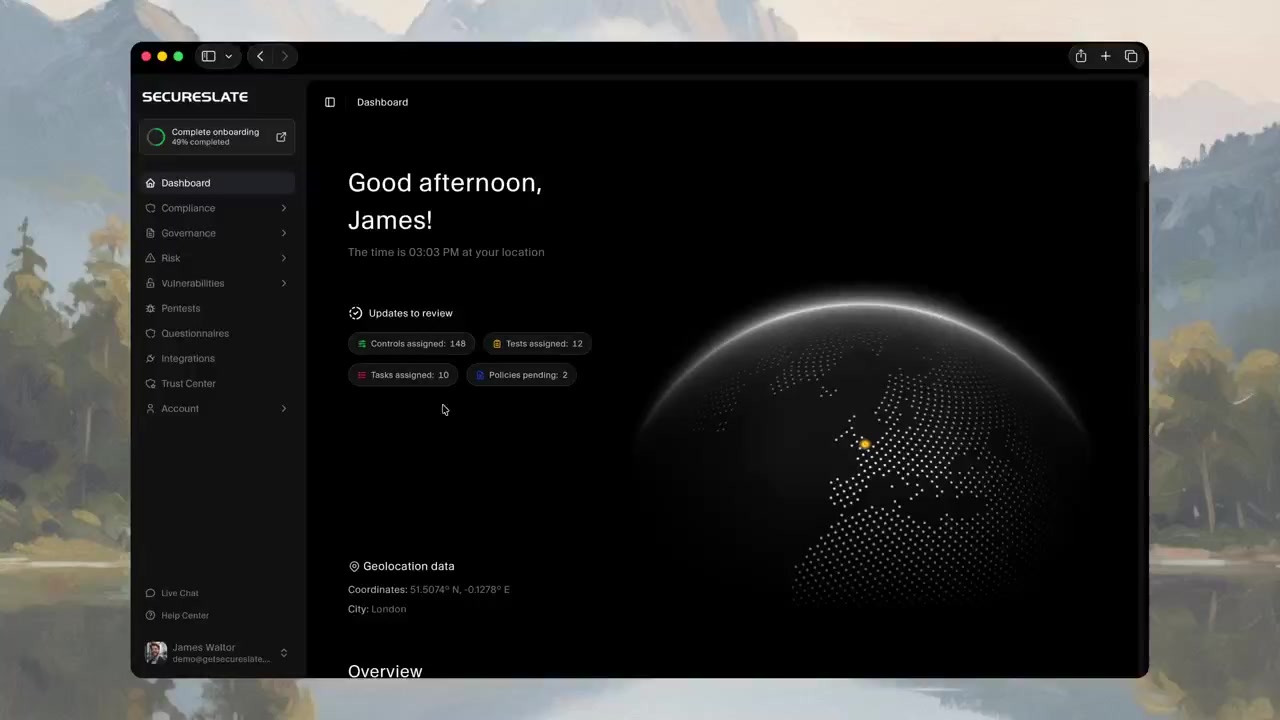
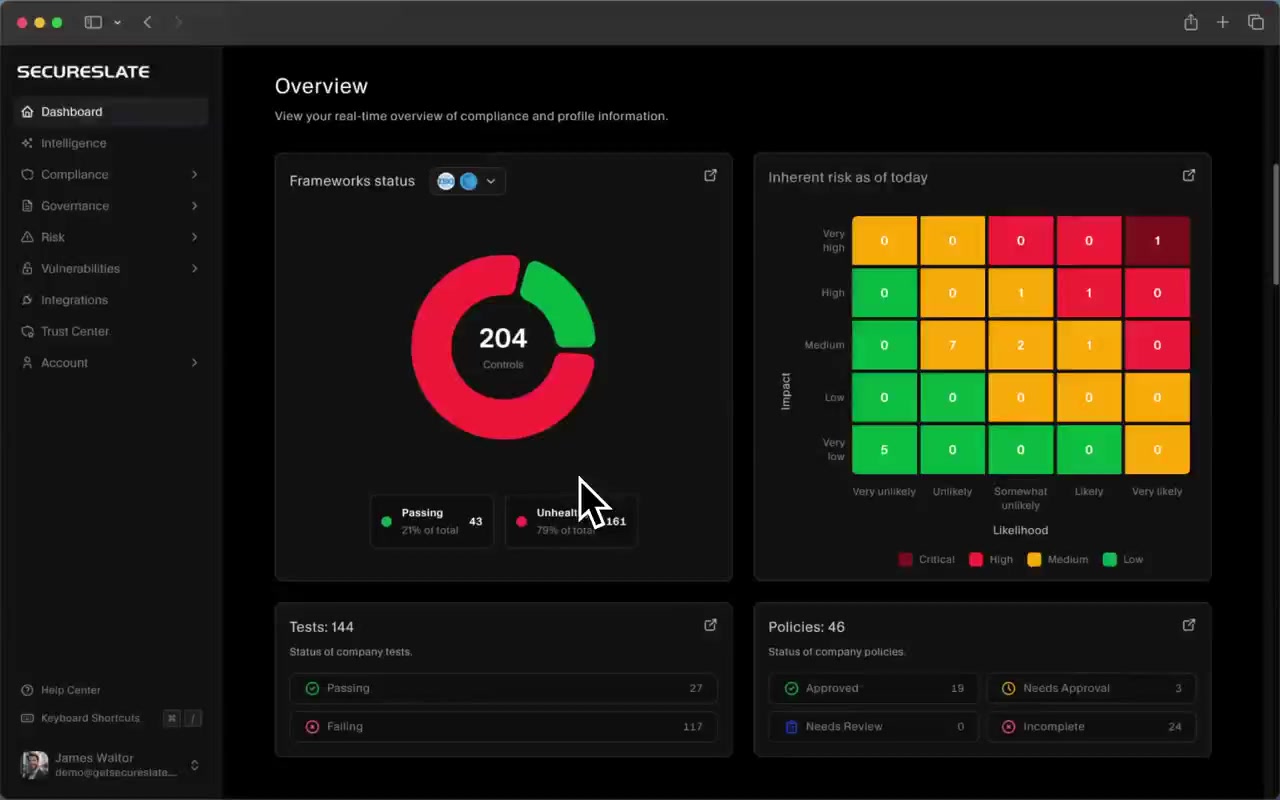
FedRAMP compliance software and the expert who runs it arrive together under one fixed price, so federal certification does not stall your product roadmap.

A dedicated compliance lead

One experienced practitioner owns your FedRAMP program end to end. They choose the class, map the indicators, write the Security Decision Record, and work with your assessor, so your engineers keep building instead of reading the Consolidated Rules.

Indicator mapping and a gap assessment
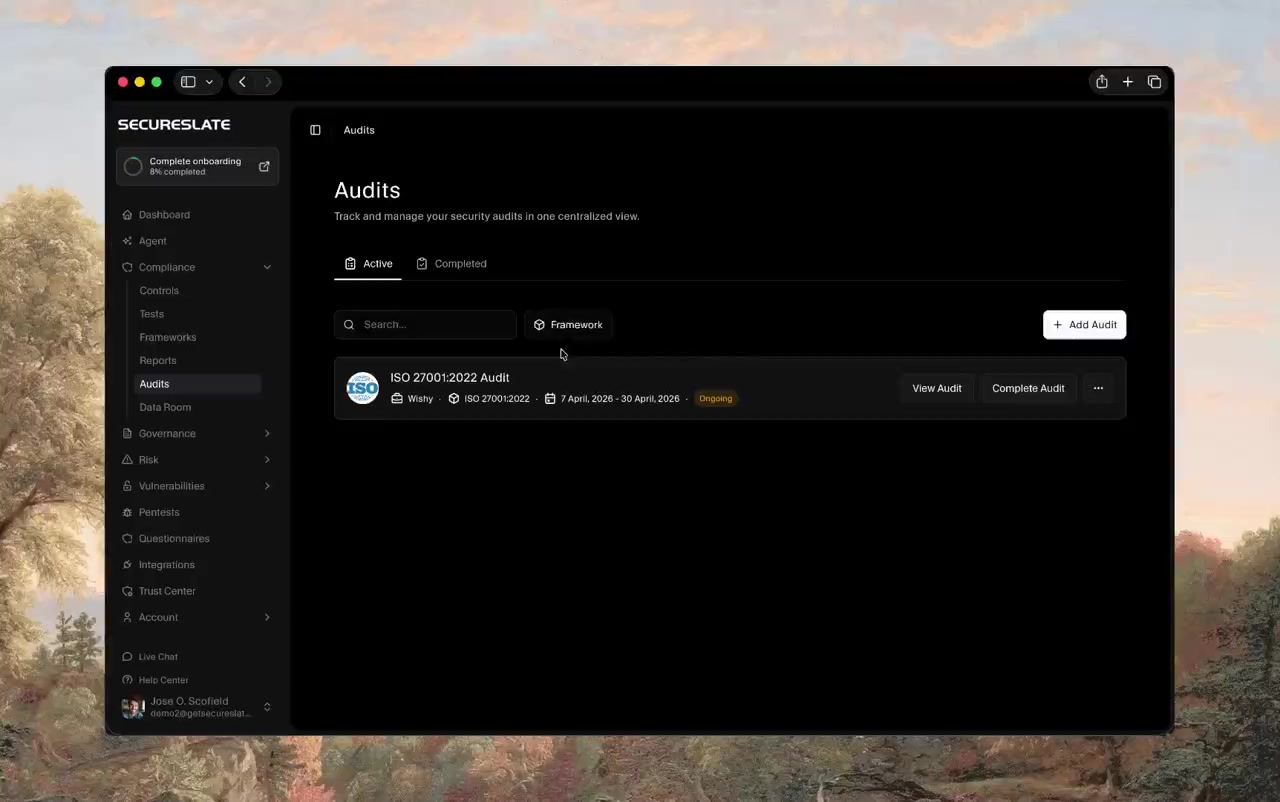
All 46 Key Security Indicators mapped to the controls, tests, and evidence that meet them, with each gap owned and scheduled, and the work that already counts toward SOC 2 or NIST CSF marked.

Continuous testing from your stack

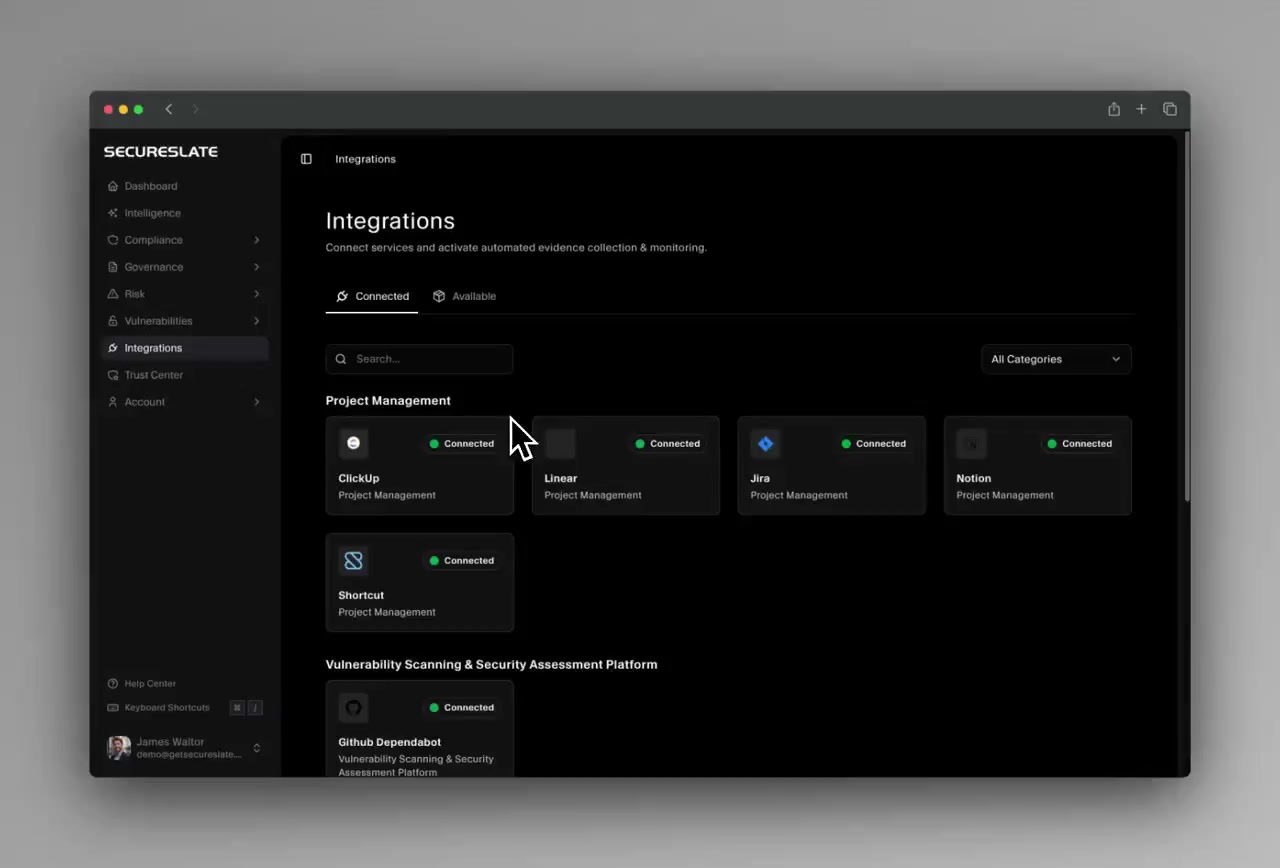
Connect your cloud provider, identity provider, code host, and devices once. Controls are tested continuously against live configuration, which supports the automated validation and historical metrics that higher classes expect.

Vulnerability detection and response

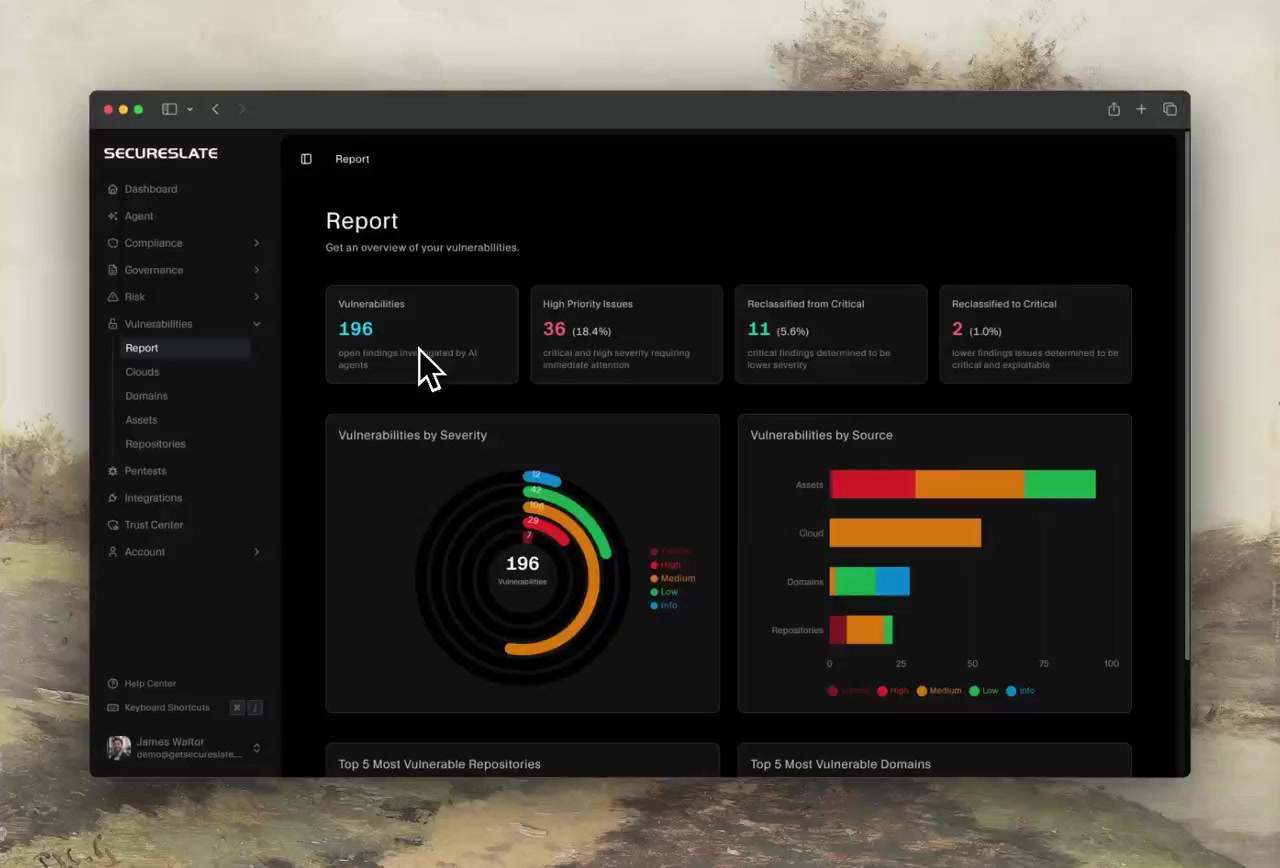
Code, dependency, cloud, and surface scanning on a schedule, with findings evaluated and tracked to remediation, supporting the detection and response timelines your class sets.

Supply chain and vendor risk

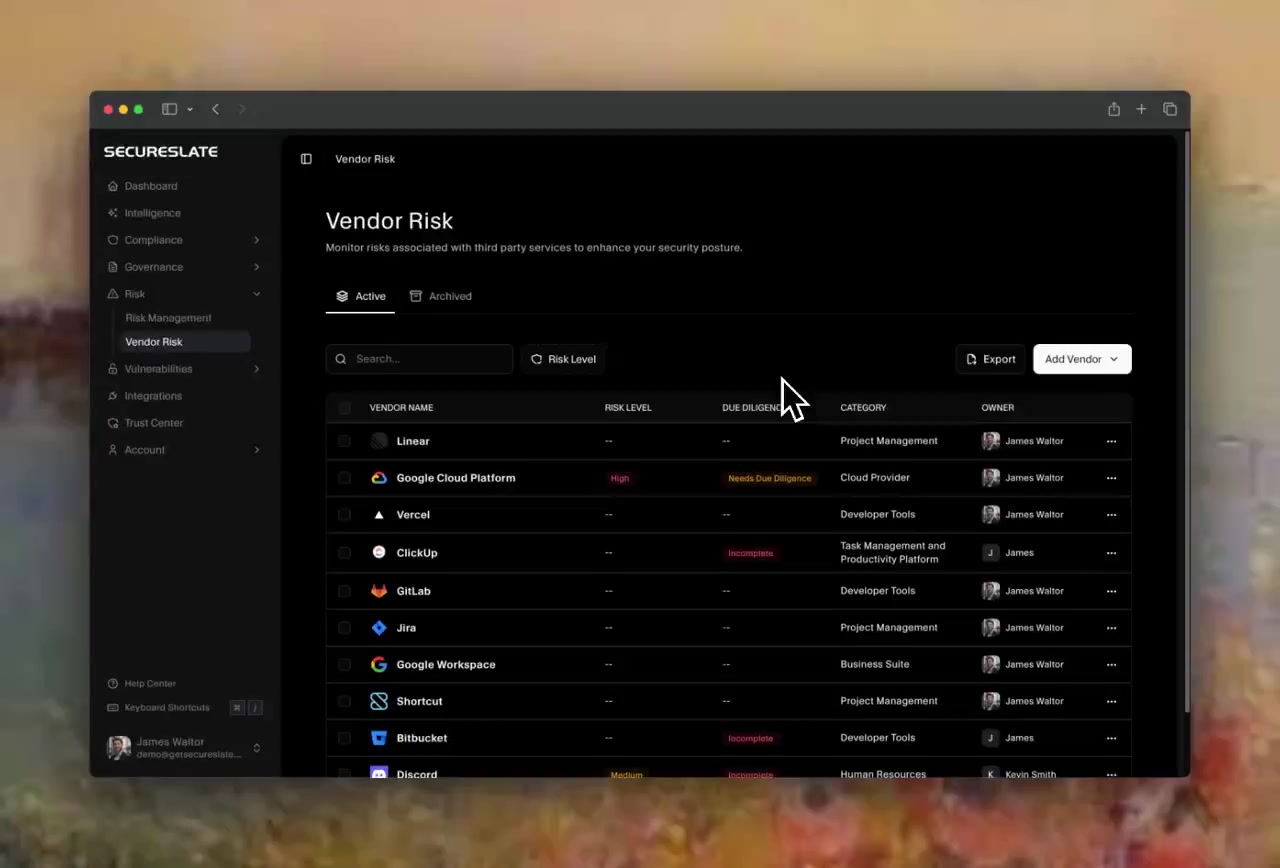
Third-party services and software inventoried and reviewed, with supply chain risks identified and mitigated as the Supply Chain Risk indicators expect.

Ongoing Certification Reports

Your compliance lead prepares the quarterly Ongoing Certification Report from current evidence and helps you run quarterly reviews with agency customers, so reporting does not become a quarterly scramble.
Included security scanning

Included security scanning evidences seven FedRAMP Key Security Indicators.

Every engagement includes scanning across code, dependencies, cloud, and your public surface. These are the indicators it evidences directly, which gives your validation work a head start.
KSI-PIY-RSD Reviewing Security in the SDLC

Code security scanning

Repositories scanned for vulnerable code, with findings ranked by severity and traced to the line, which shows security is built into your software development lifecycle.
KSI-SCR-MON Monitoring Supply Chain Risk

Dependency and license risk

An SBOM for every repository, with vulnerable open source components flagged, so third-party software is monitored for upstream vulnerabilities.
KSI-CNA-MAT Minimizing Attack Surface

Public surface monitoring

Your domains and forgotten subdomains scanned on a schedule and when you ship, keeping the attack surface of internet-facing resources small and reviewed.
KSI-SVC-ASM Automating Secret Management

Secrets detection

API keys, tokens, and credentials committed to source code, found and pinpointed to the file and line, so gaps in secret management surface before anyone exploits them.
KSI-MLA-EVC Evaluating Configurations, KSI-CNA-IBP Implementing Best Practices

Cloud misconfiguration checks

AWS, Azure, and GCP configurations checked through read-only access against provider best practices for encryption, access, logging, and networking.
KSI-IAM-SUS Responding to Suspicious Activity

Dark web monitoring

Company email addresses checked against known breach data, so accounts with exposed credentials are secured before anyone uses them.
Beyond FedRAMP

One FedRAMP program that also serves your other frameworks.

FedRAMP overlaps with the frameworks your commercial and government buyers already ask for, so shared controls count more than once.

SOC 2

A SOC 2 Type II report from the past 12 months is one of the routes into FedRAMP Class A, so the program you run for commercial buyers can open the federal market.

CMMC

Defense contractors handling controlled unclassified information need CMMC, and the cloud services they use to store it are expected to meet FedRAMP Moderate or an equivalent.

GovRAMP

The state and local government counterpart to FedRAMP. A GovRAMP assessment is also one of the routes into FedRAMP Class A.

NIST CSF

The CSF comes from the same institute as NIST SP 800-53. Its Govern, Protect, Detect, and Respond outcomes line up with many of FedRAMP's Key Security Indicators.

ISO 27001

Global buyers ask for ISO 27001 alongside FedRAMP. Access, change, logging, and supplier controls serve both programs.

HIPAA

Cloud services for federal health programs often handle protected health information too, so HIPAA safeguards and FedRAMP indicators share much of the same evidence.
FedRAMP guides

What FedRAMP actually asks of your team

Three guides your team can read before the scoping call, from the 20x approach to how FedRAMP compares with SOC 2.

20x
FedRAMP 20x explained: goals, challenges, and readiness steps
SOC 2
FedRAMP vs SOC 2: key differences for cloud service providers
Marketplace
The FedRAMP Marketplace: how listings work and what agencies see
Resources

Read up before your scoping call.

Practical guides to FedRAMP, from who needs it to how it compares with other government programs.

FAQs

What teams ask before starting FedRAMP.

Find out what FedRAMP certification will take for your service

Bring the agencies you want to sell to and the assessments you already hold. You will leave the call with a recommended class, a gap summary, and a fixed price, whether or not you work with us.

Jamie
Virtual Agent

Hi! I'm Jamie. Curious about your current compliance challenges and how automation might help your team?